
EARTHBOAT Shirakabako by PAN- PROJECTS
Accomodation | Nagano, Japan
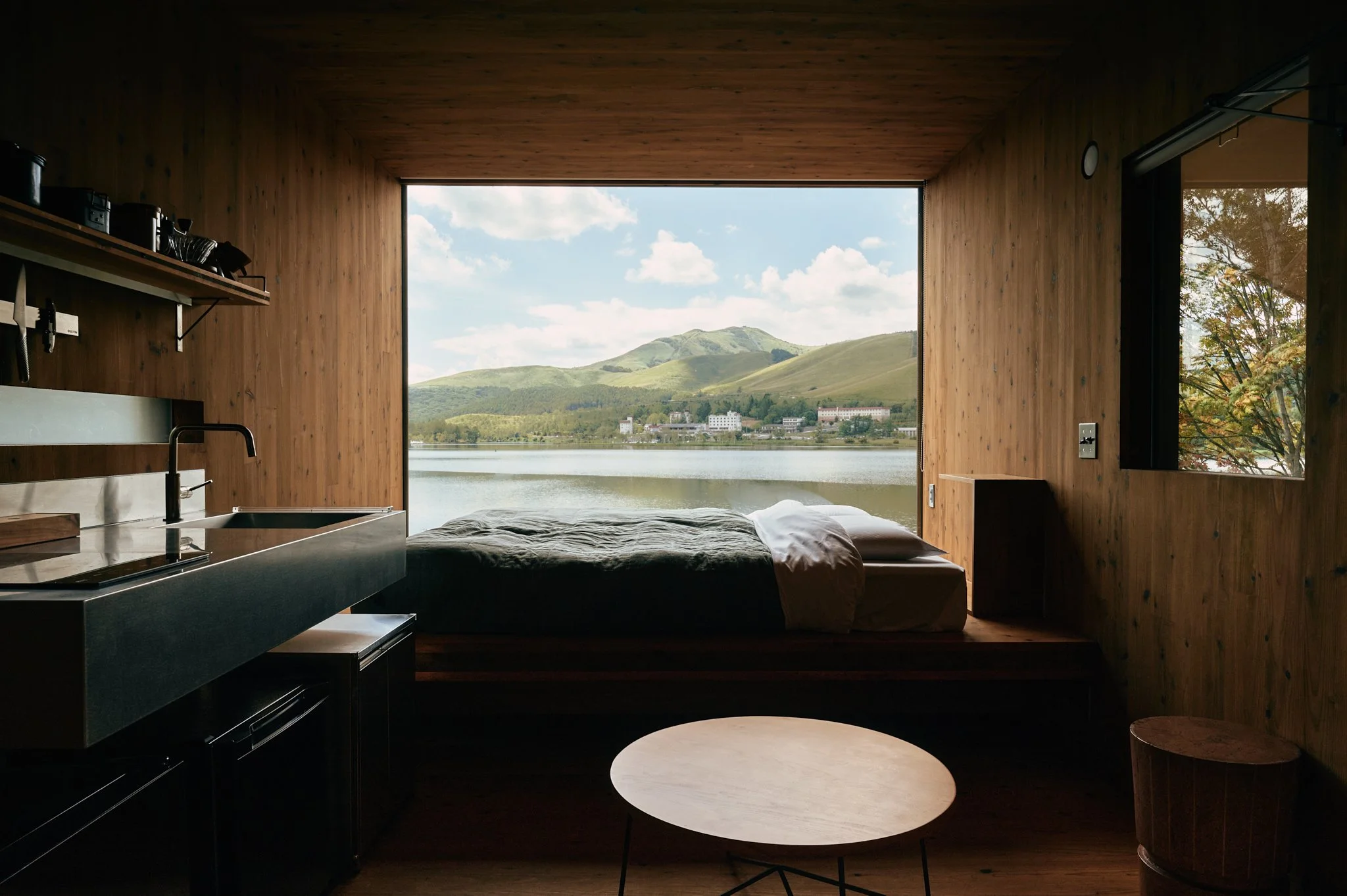
EARTHBOAT Shirakabako | PAN- PROJECTS | photography: Yuta Sawamura
DESIGN NOTE
Custom-designed trailer house with sauna, built in CLT
Sash-free openings realised through precise detail
design approach that reduces on-site labour
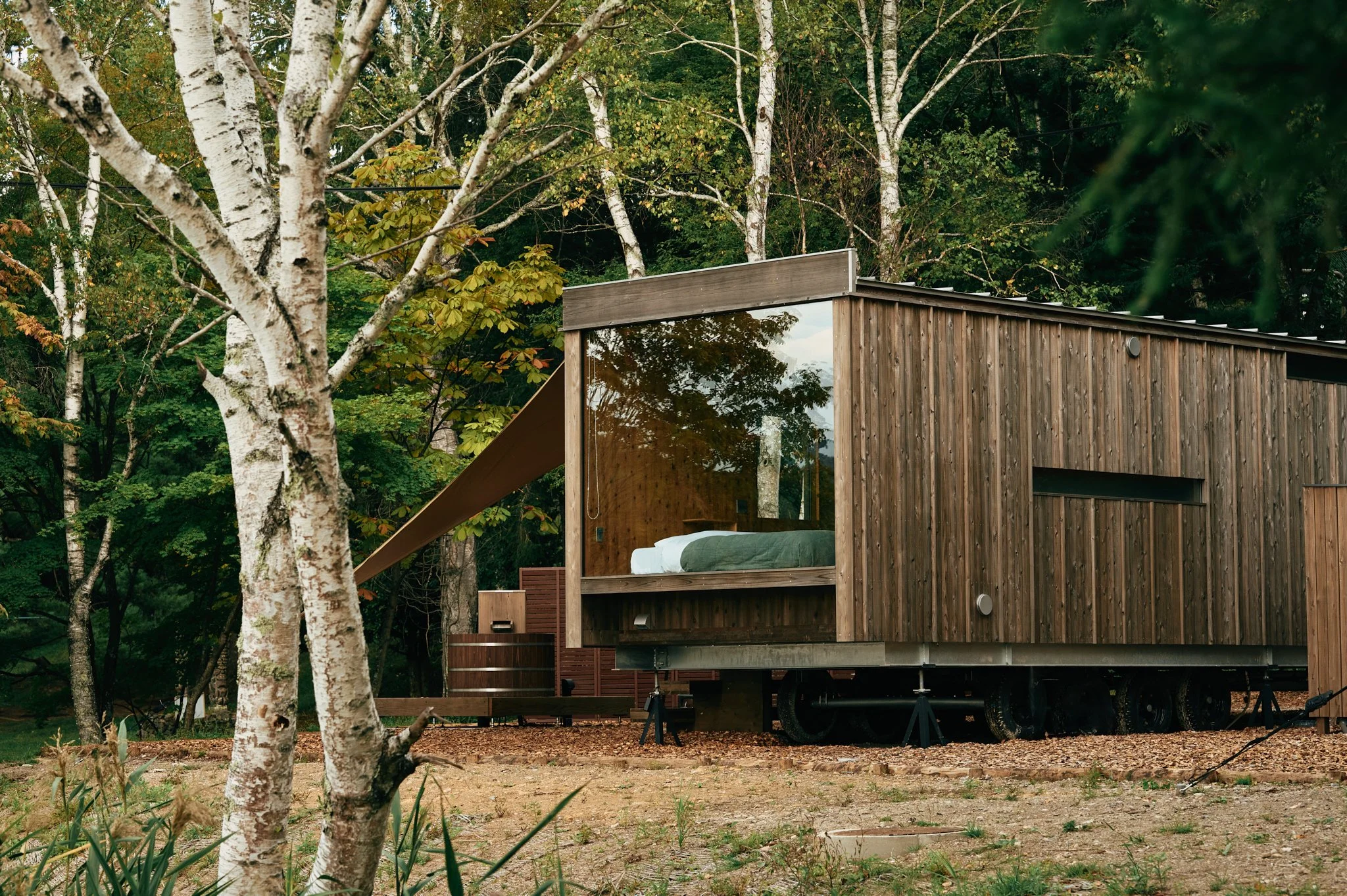
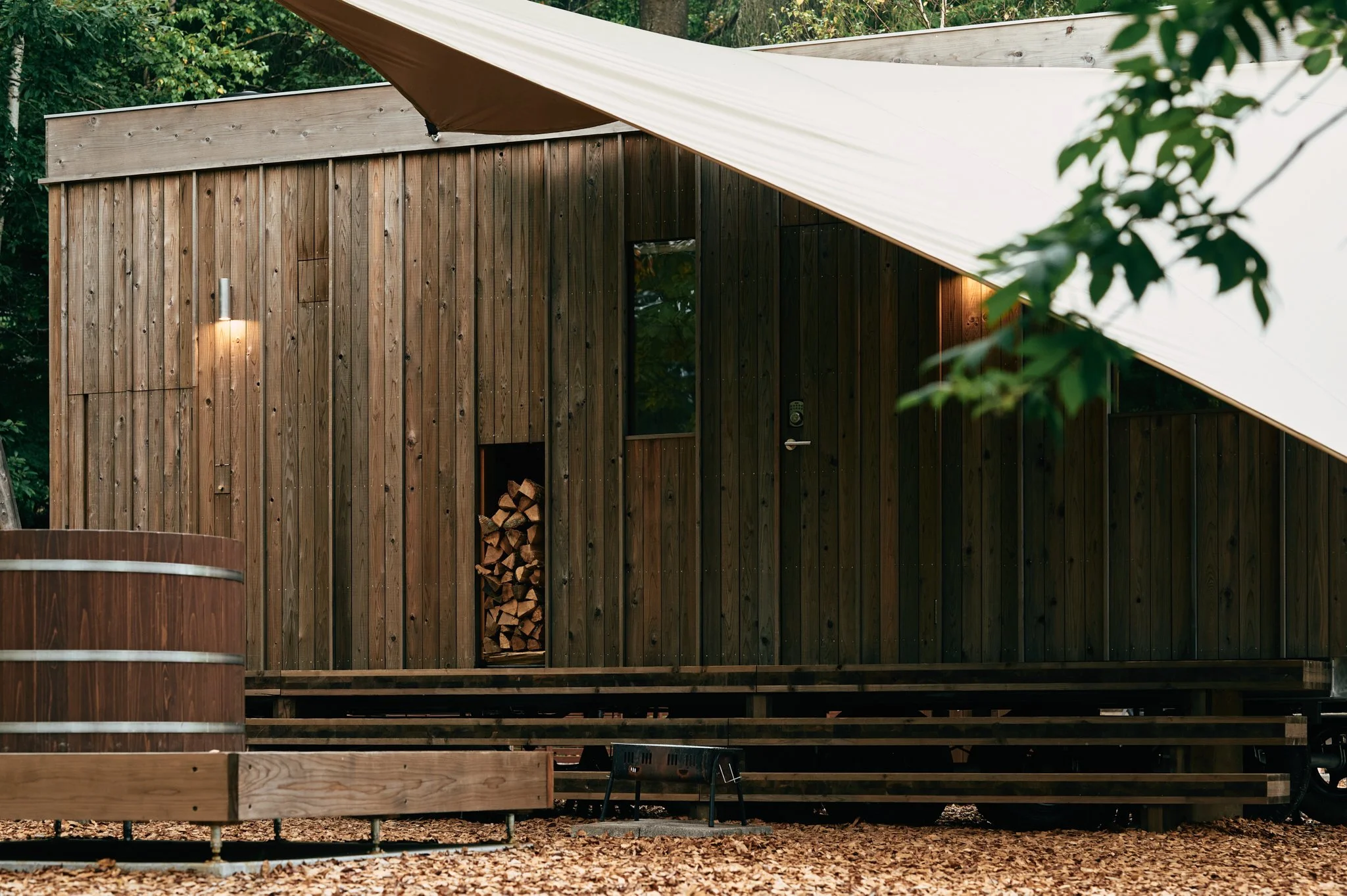
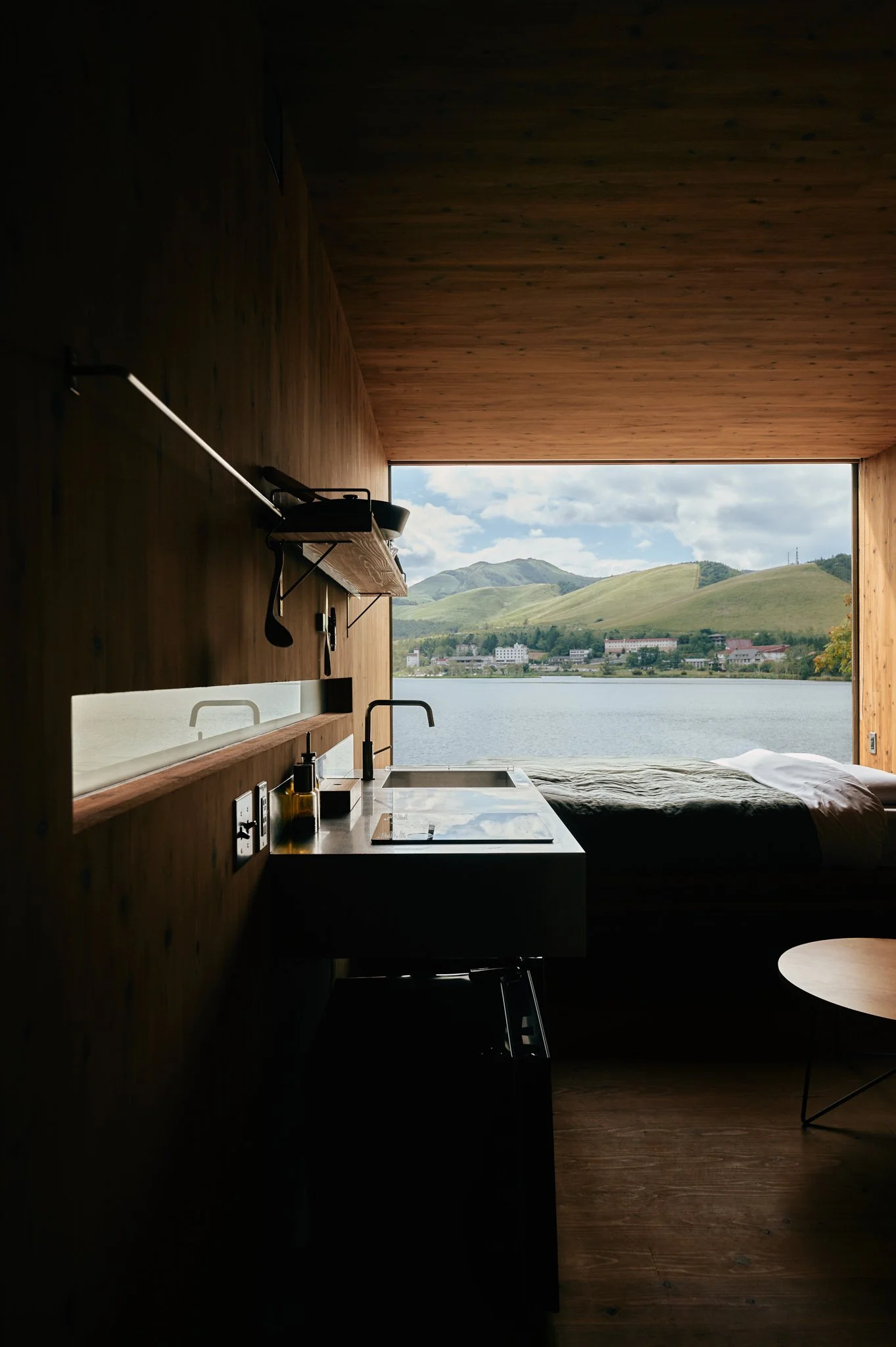
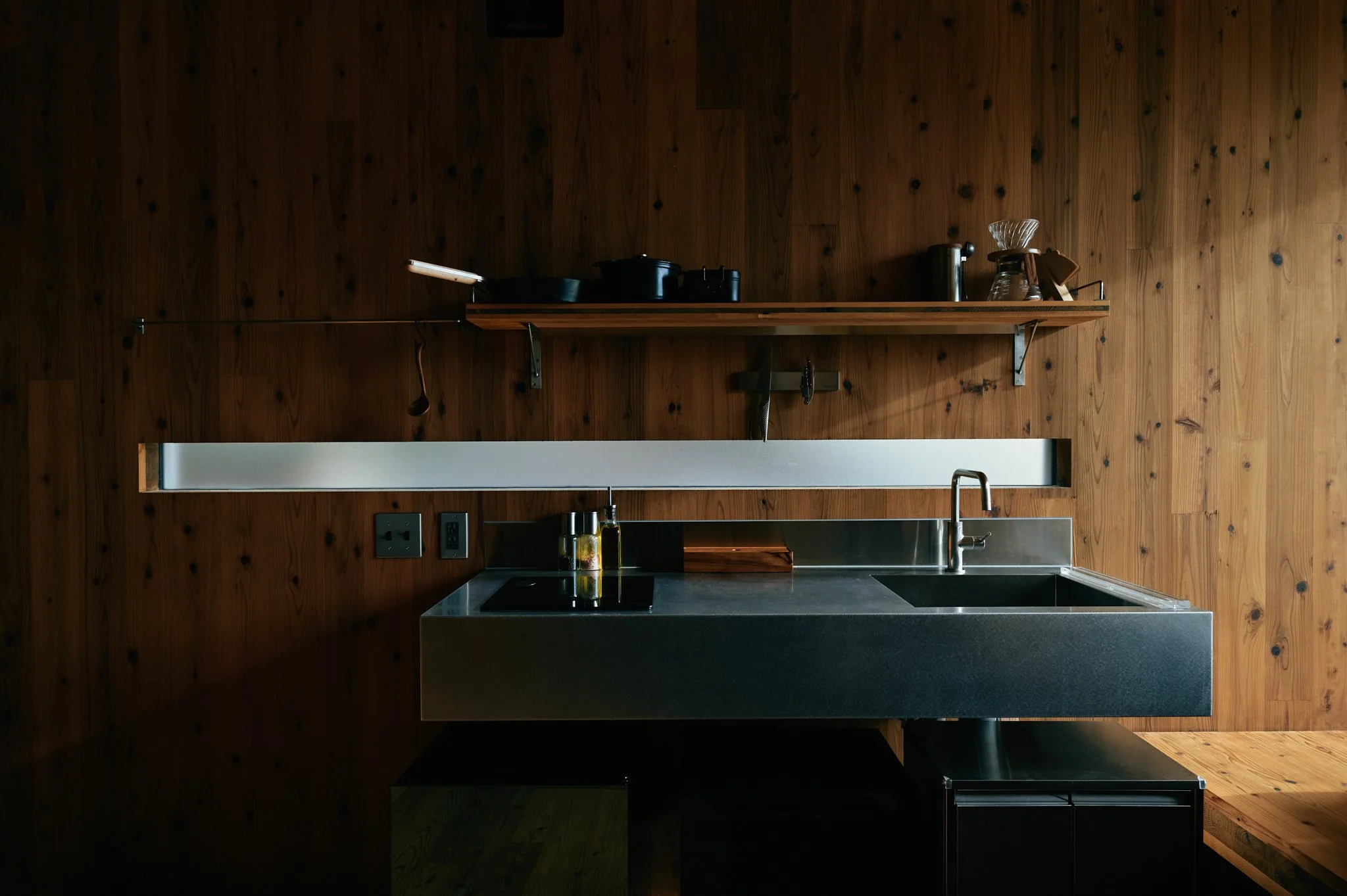
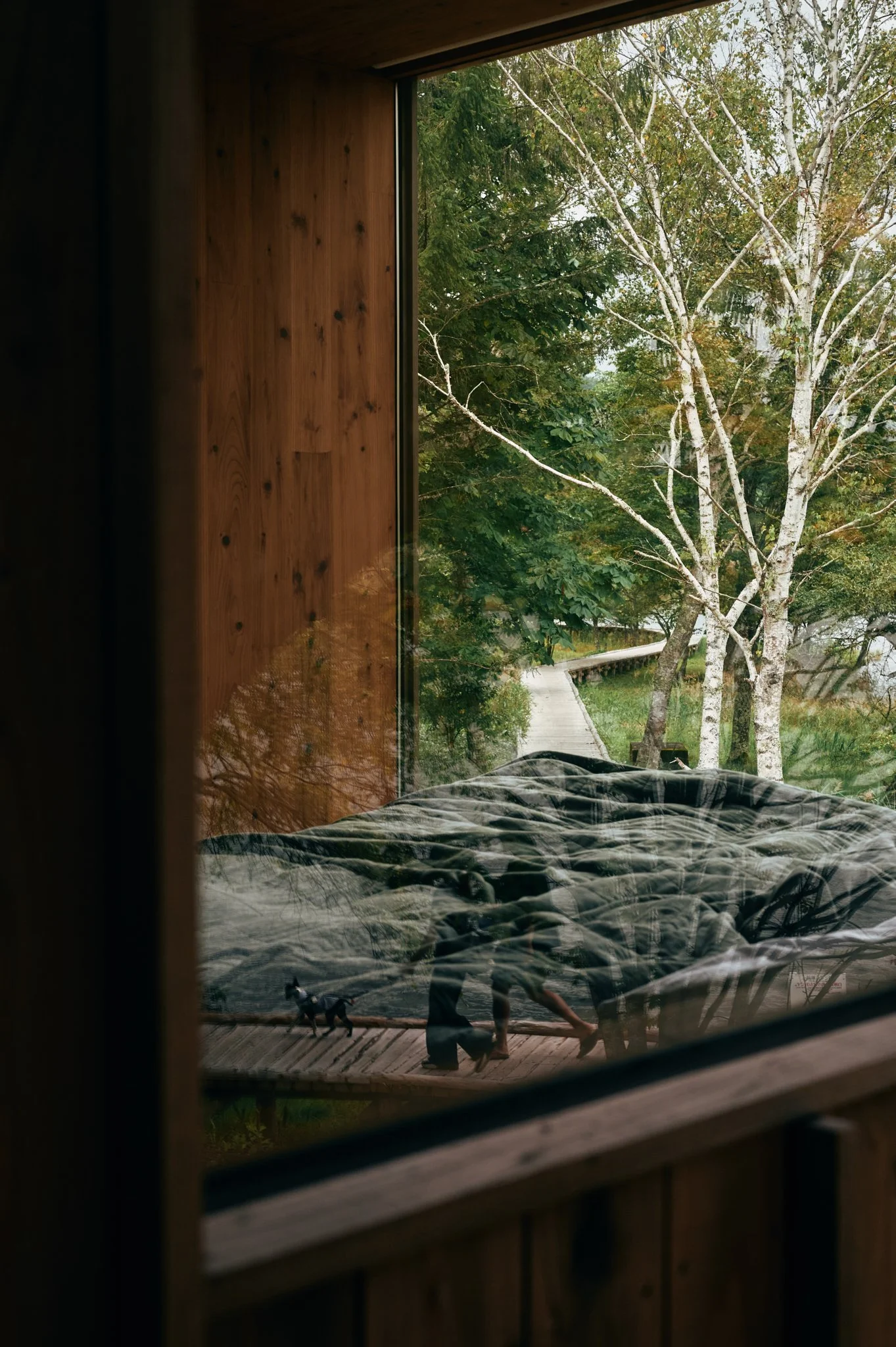
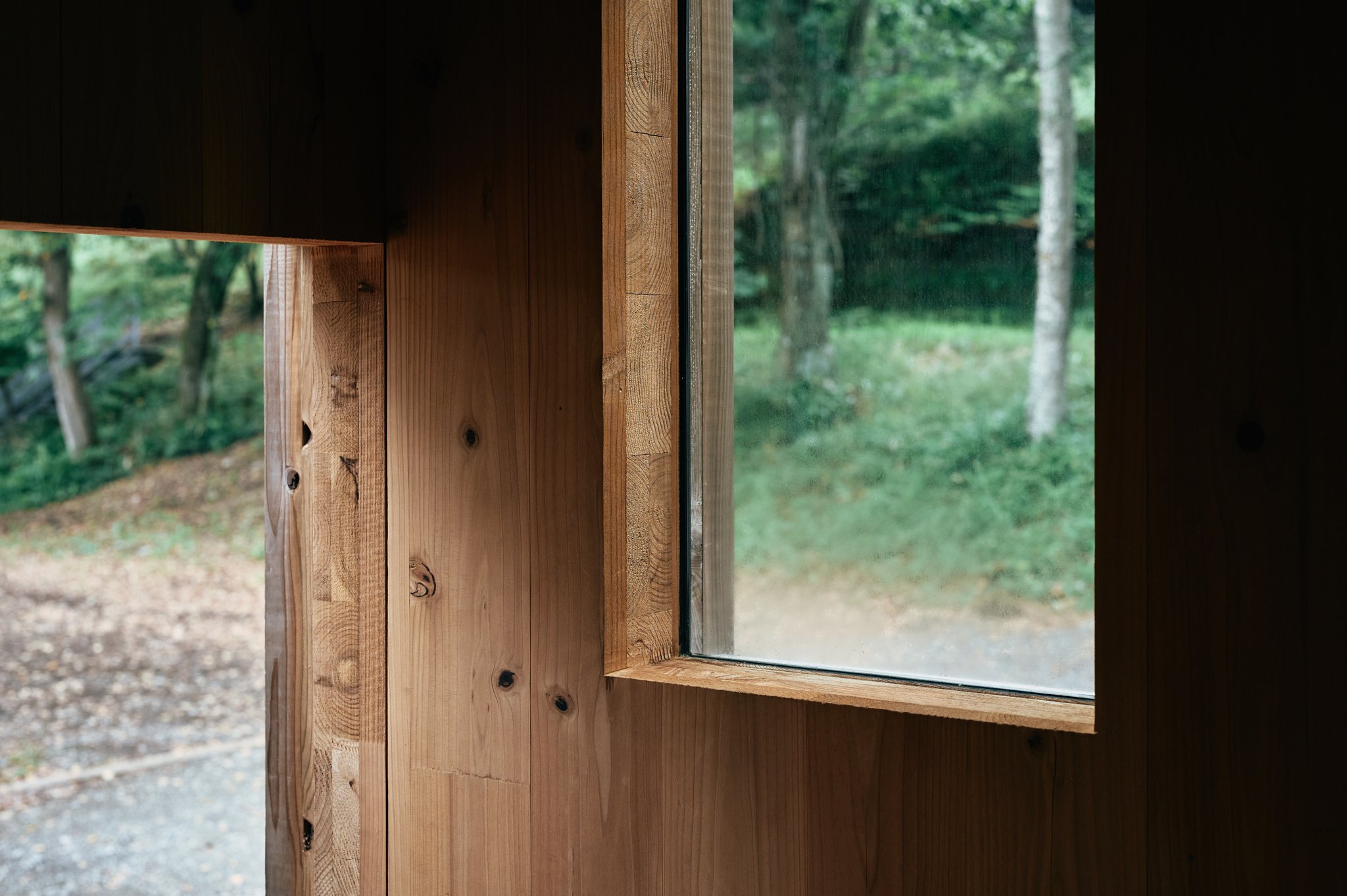
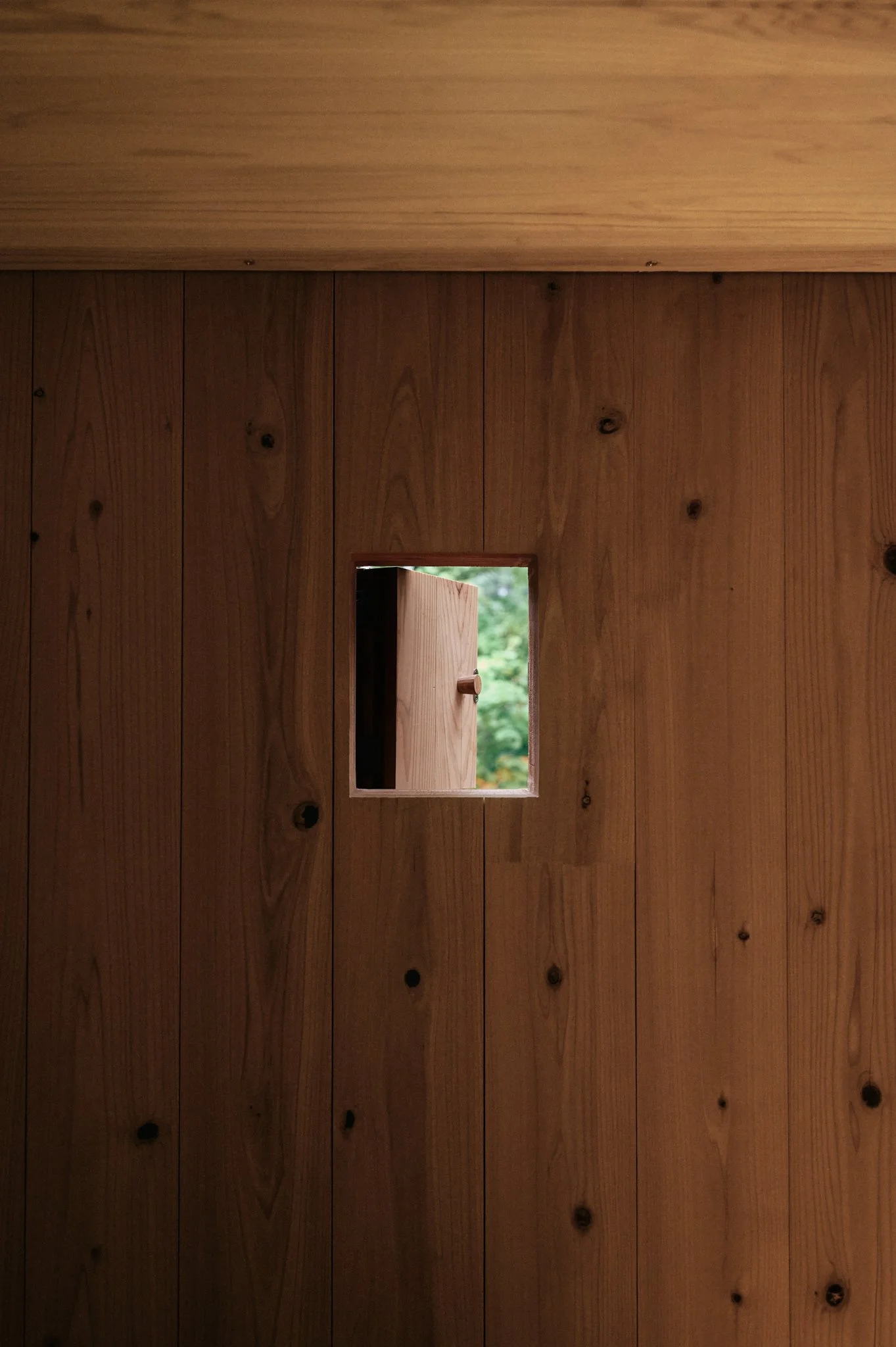
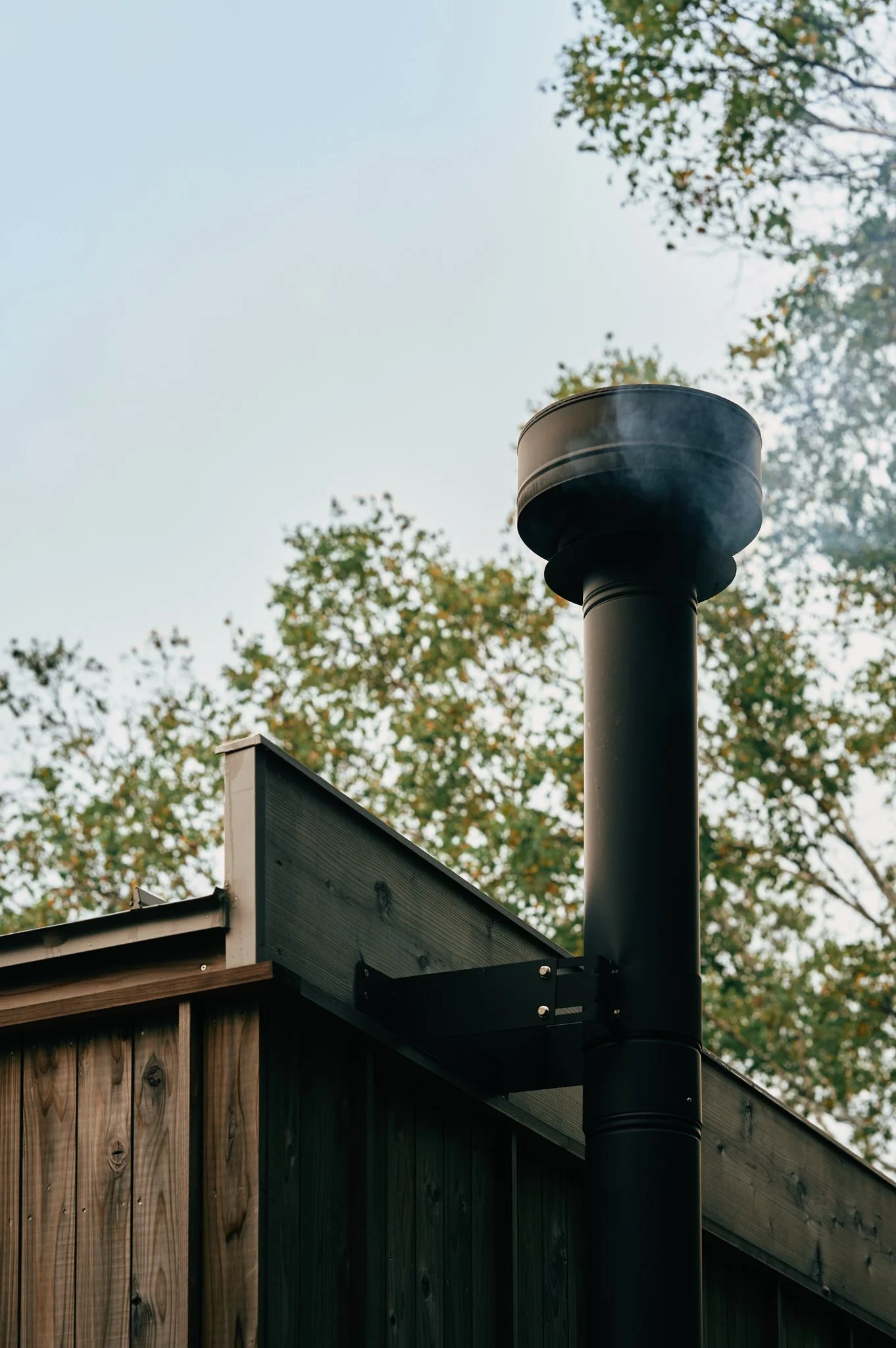
photography: Yuta Sawamura
words : Reiji Yamakura/IDREIT
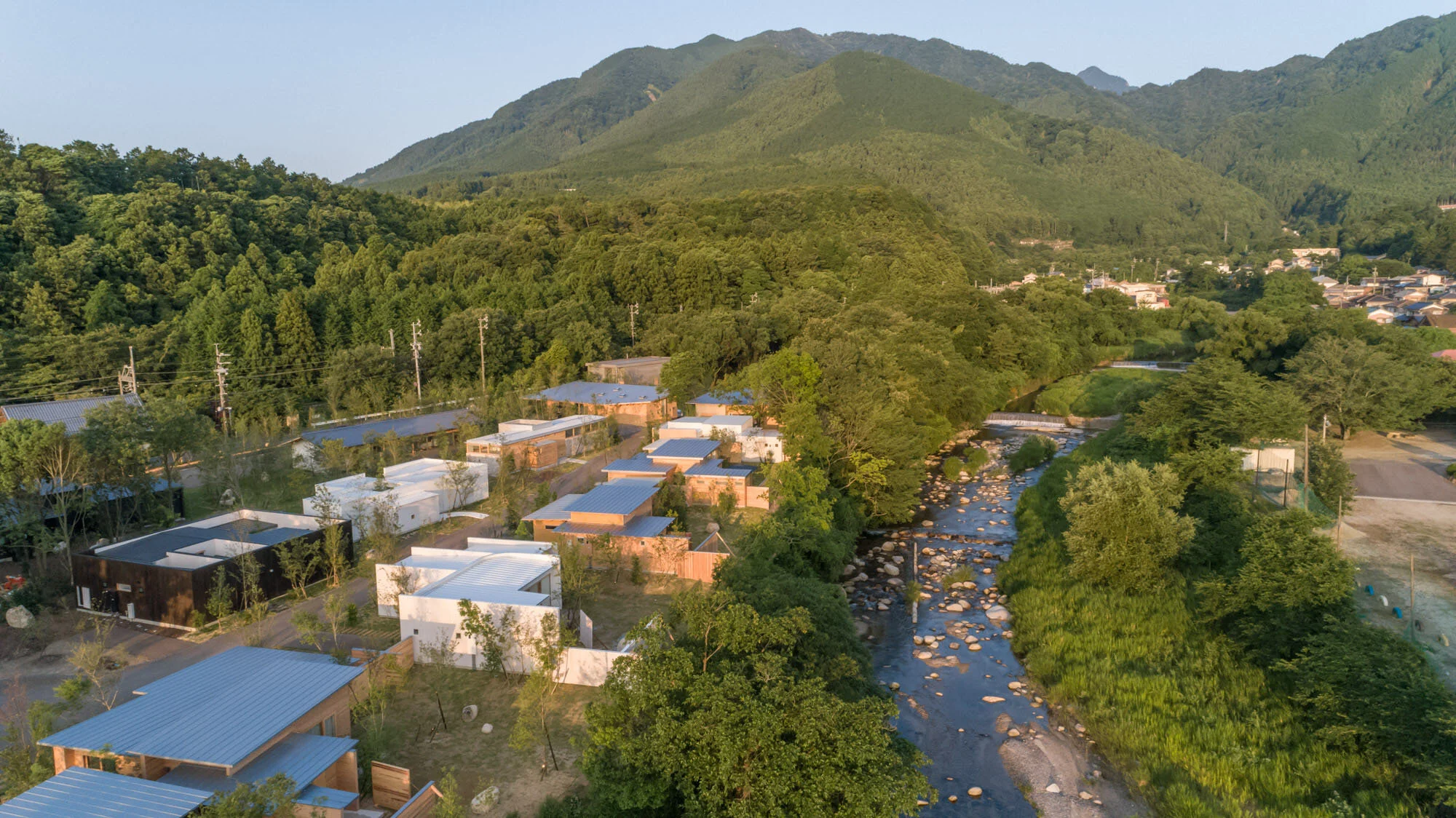
London-based architectural design practice PAN- PROJECTS, co-founded by Japanese architect duo Yuriko Yagi and Kazumasa Takada, has been central to the design development of Earthboat Shirakabako, a trailer house accommodation facility that has recently opened within the Ikenotaira Hotel & Resort in Nagano Prefecture. The guest accommodation unit at the centre of the project is the Earthboat Cave, an original trailer house developed for Earthboat, centred on the concept of nature escape. Cave is the second model in the series, following the Earthboat Hut, the inaugural model developed for heavy-snowfall regions, and incorporates a range of considered refinements throughout.
The project began when the duo was approached by a client based in Shinanomachi, Nagano, the operator behind accommodation facilities including LAMP, who was exploring a business concept built around trailer houses. "They'd seen the temporary and ephemeral projects we'd done, like the paper pavilion in Copenhagen, and reached out through a mutual contact," recalls Takada. "What stayed with us from that very first meeting was the owner's vision. He spoke about the number of places in Japan that were developed for leisure, ski resorts and the like, but are now largely fallen into disuse. His ambition was to bring people back to those places; to breathe new life into them. The logic was compelling: a ski resort only draws visitors in winter, but a genuinely appealing accommodation offering could generate economic activity across all seasons."
The client chose trailer houses for two practical reasons: they leave no permanent mark on the land, and can be used where building is not permitted. Yagi and Takada were strongly drawn to the vision, and when the first model went into development, they proposed building the trailer house from CLT (Cross Laminated Timber), an unusual choice for a structure of this modest scale.
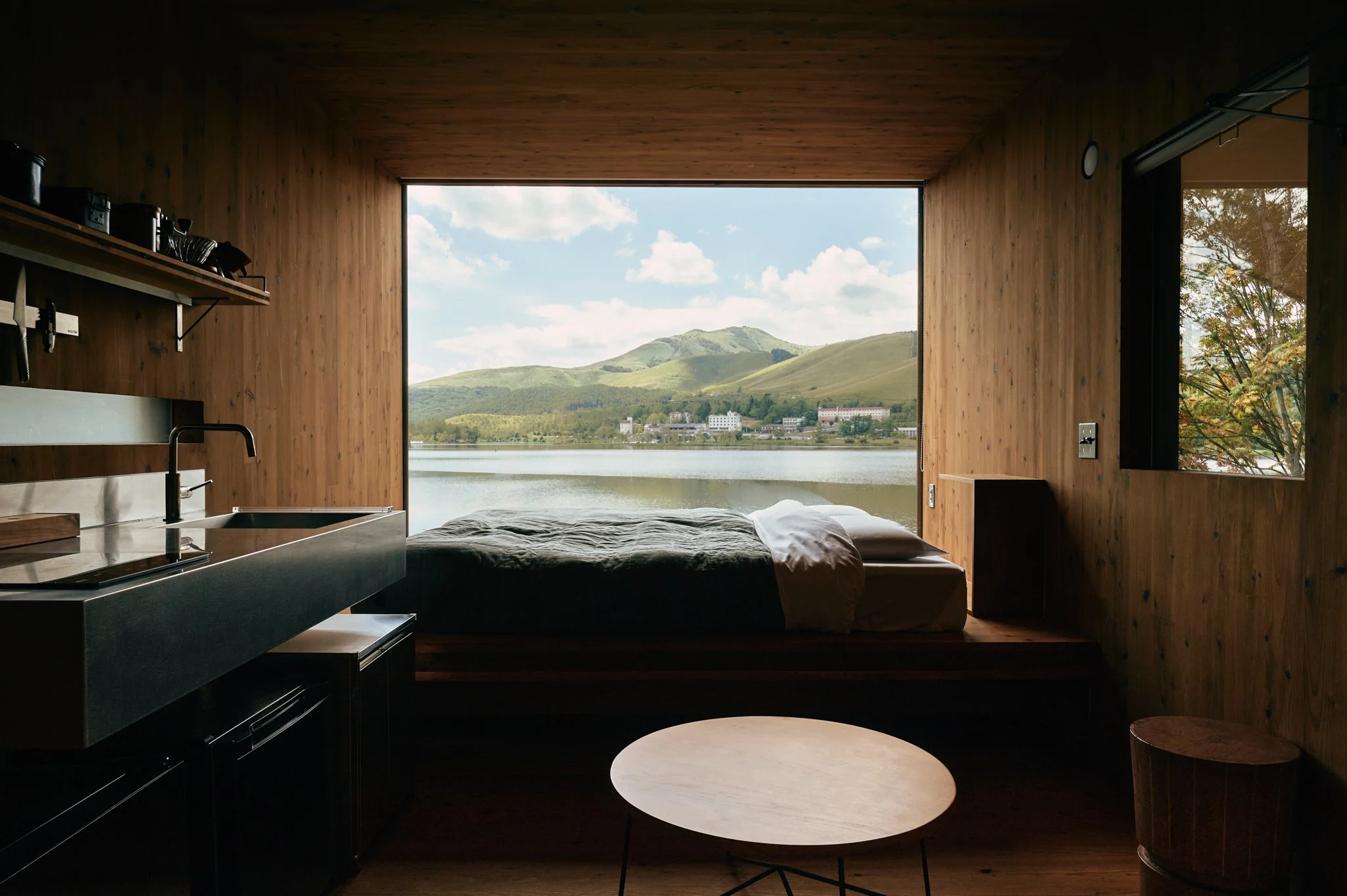
"Trailer houses are typically built using light-frame construction, two-by-four timber or light-gauge steel being the most common choices, because keeping the weight down is a priority," Takada explains. "But that tends to give them a flimsy feel. CLT lends itself well to mass production, and because the material itself has real thickness, it communicates a genuine sense of mass. There's also the thermal performance: the depth of the CLT panels provides insulation on its own, which means you don't need to introduce synthetic insulating materials as you would with conventional methods. That mattered to us enormously. These structures exist in nature, and if you think beyond their working life as accommodation, fifty or a hundred years from now, they should be able to return to the earth. We wanted to minimise chemical materials and keep the materials as natural as possible."
The economics were also brought into alignment: by rigorously reducing the number of on-site assembly steps, costs were pushed toward viability. The client, having previously built a log house, already understood CLT's thermal qualities, which helped move the proposal forward without friction.
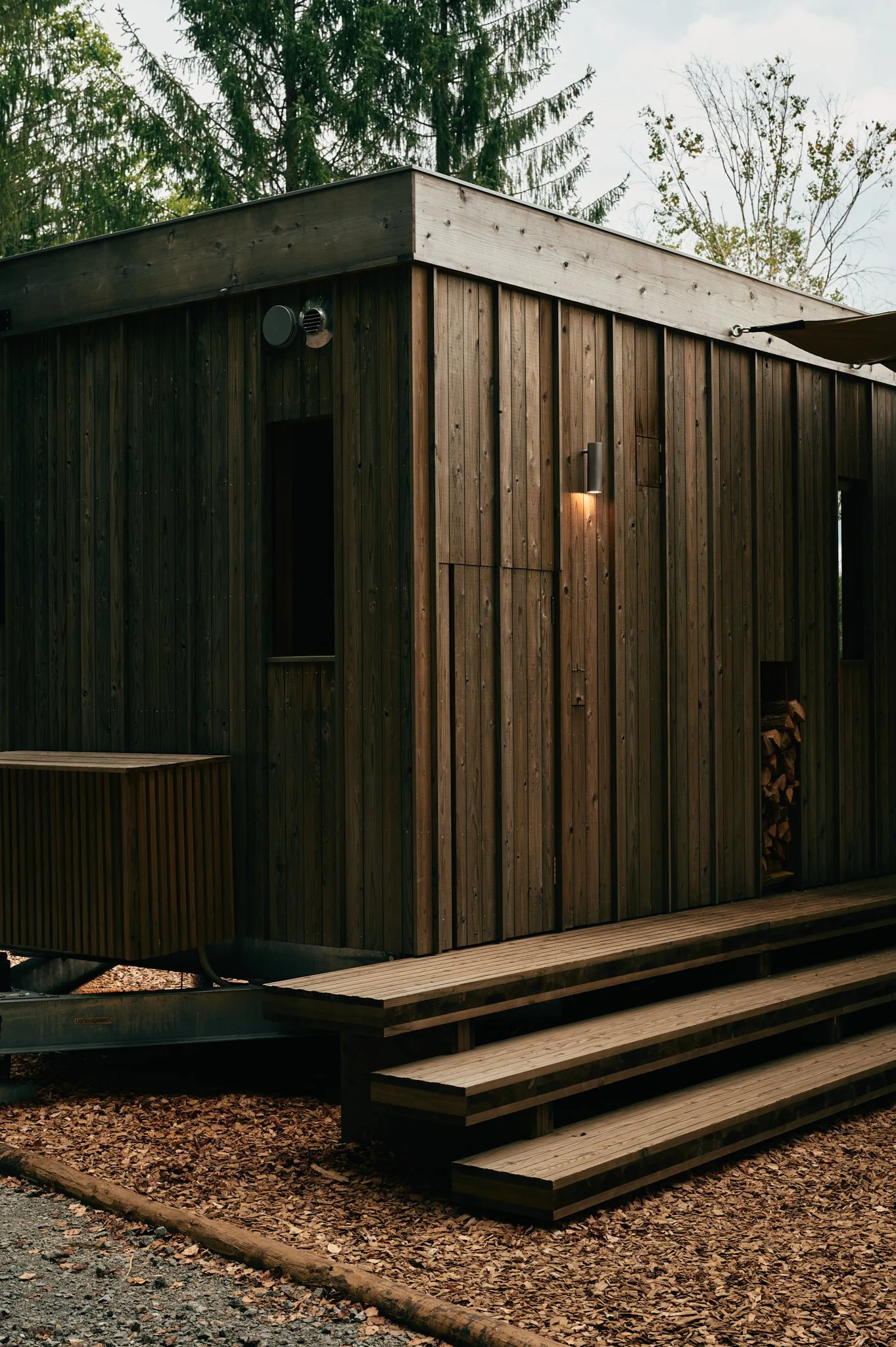
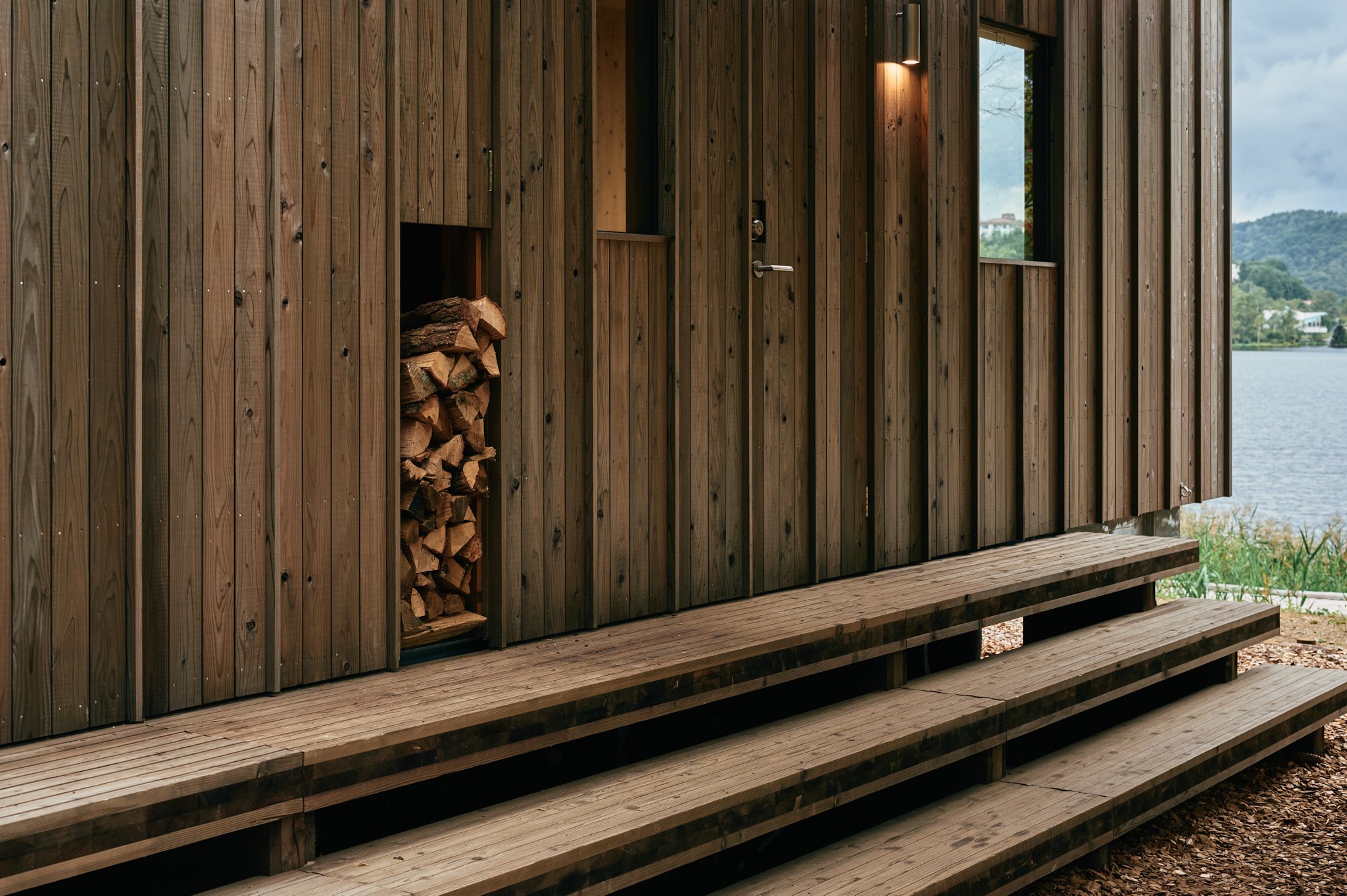
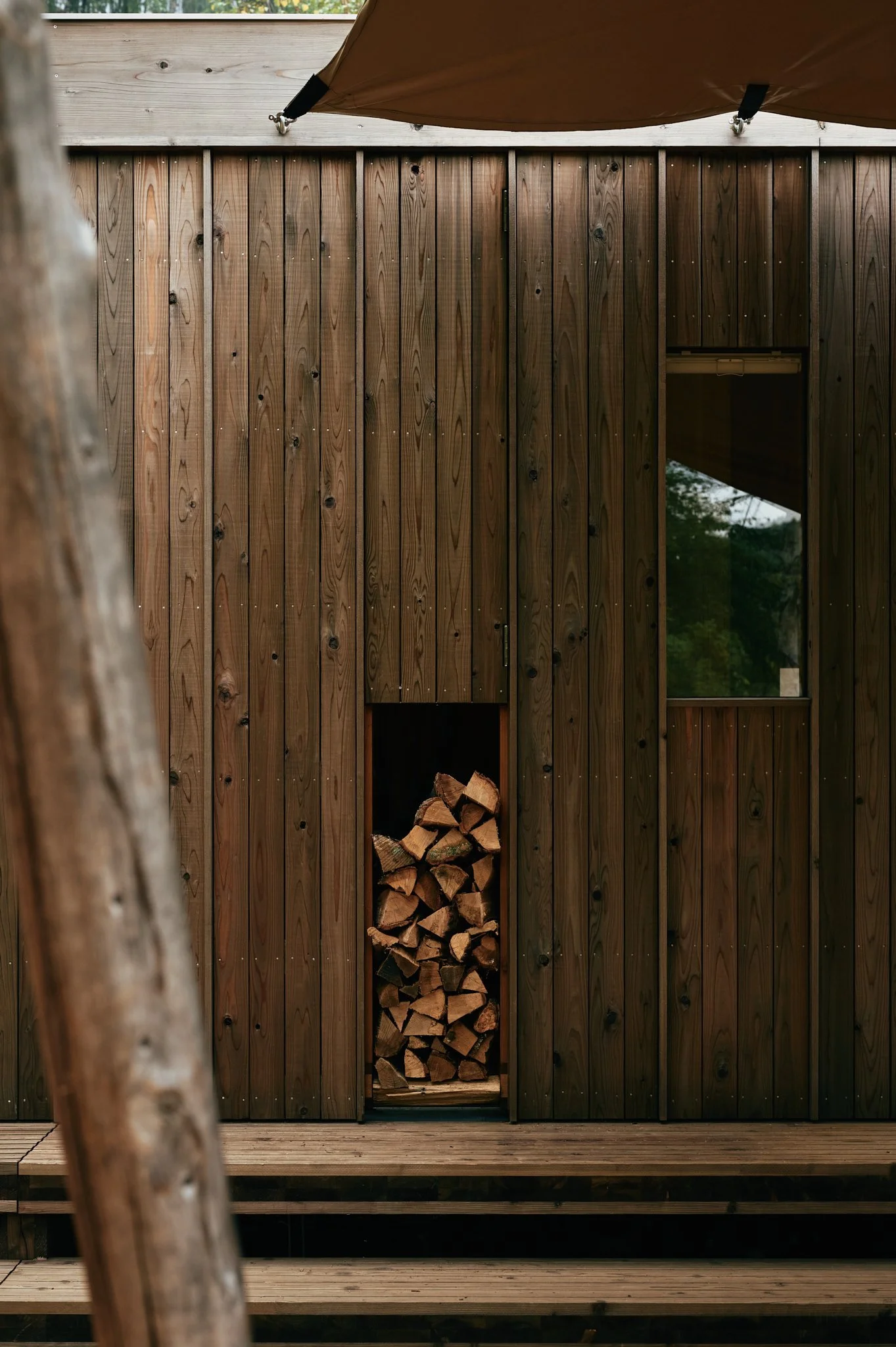
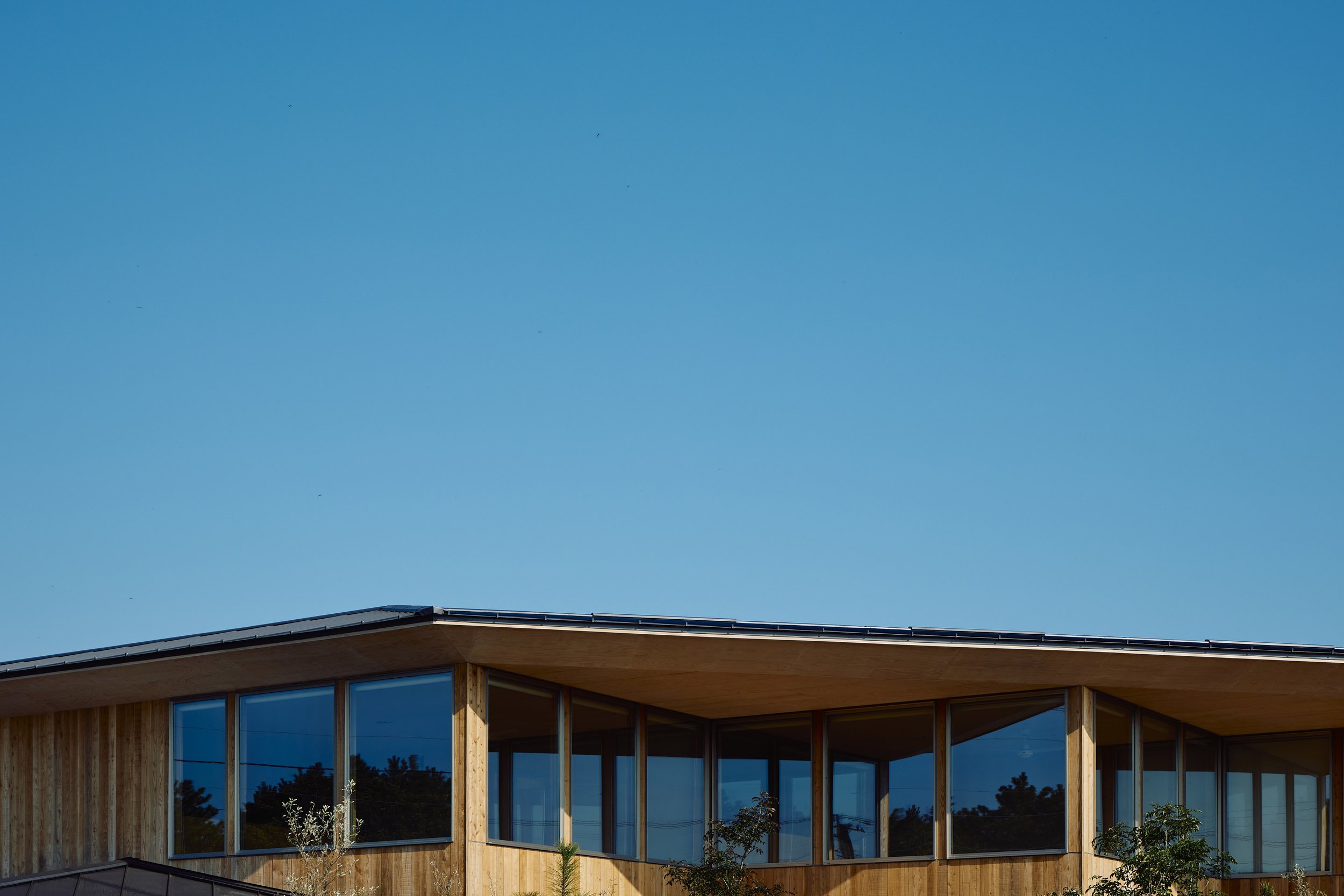
The Earthboat Cave, deployed at Shirakabako, carries a distinct set of design intentions. "With the first model, site conditions and regulations meant we had to use a gabled roof, which created complexity at the wall-to-roof junction," Takada explains. "When you're working with CLT, a rectilinear box is the most efficient geometry, so for Cave, we went with that. But a plain box risks reading as a large container and sitting poorly in its surroundings. To address that, we established a module system and applied a set of ribs to the external wall under a consistent rule, breaking down what would otherwise be an undifferentiated surface." The external wall assembly layers outward from the CLT structure: a breathable waterproofing membrane, then vertical cladding boards interspersed with the ribs. Every opening, and practical elements such as the firewood store, is planned in alignment with the module, producing a disciplined, rhythmically ordered exterior.
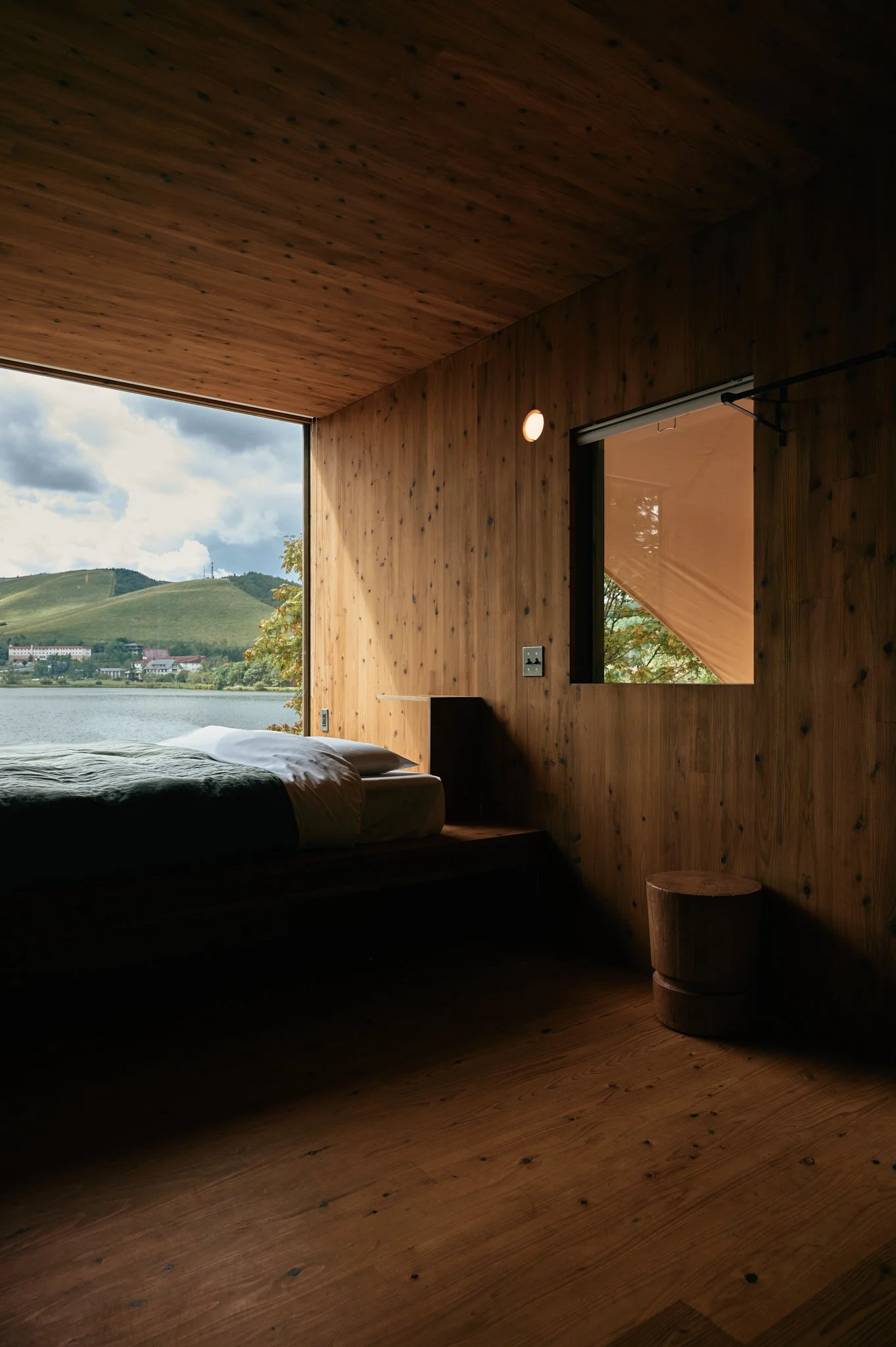
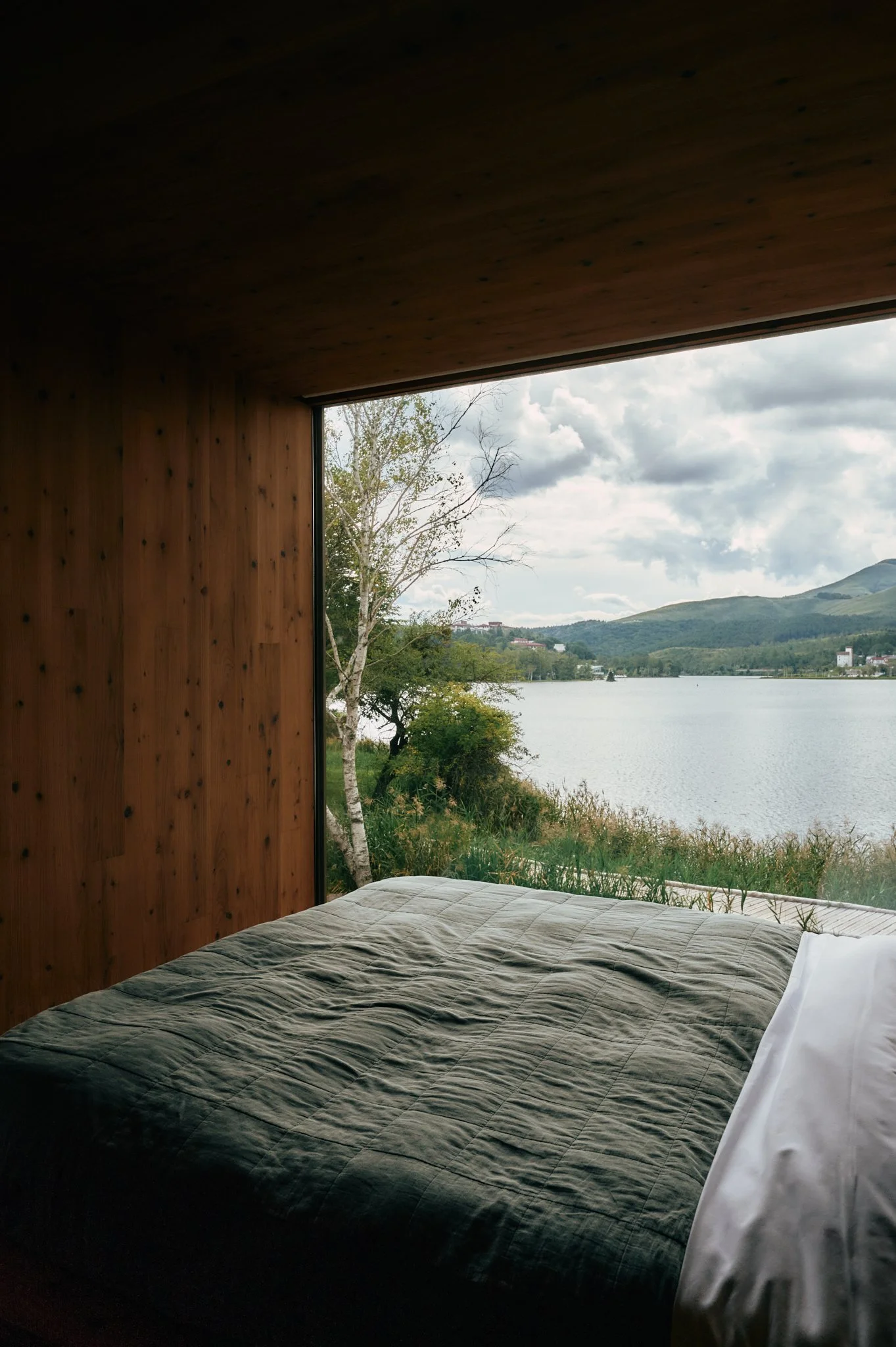
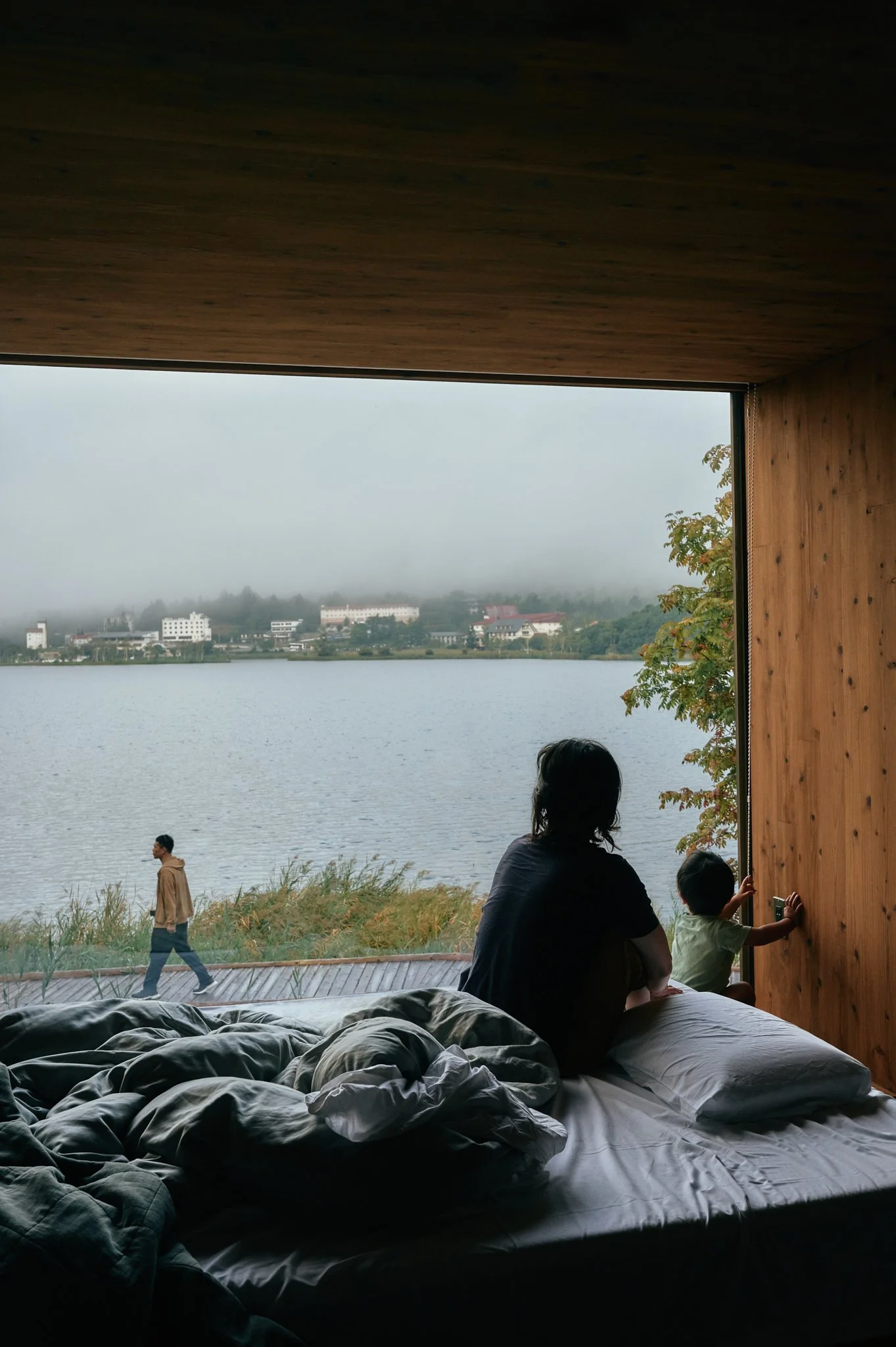
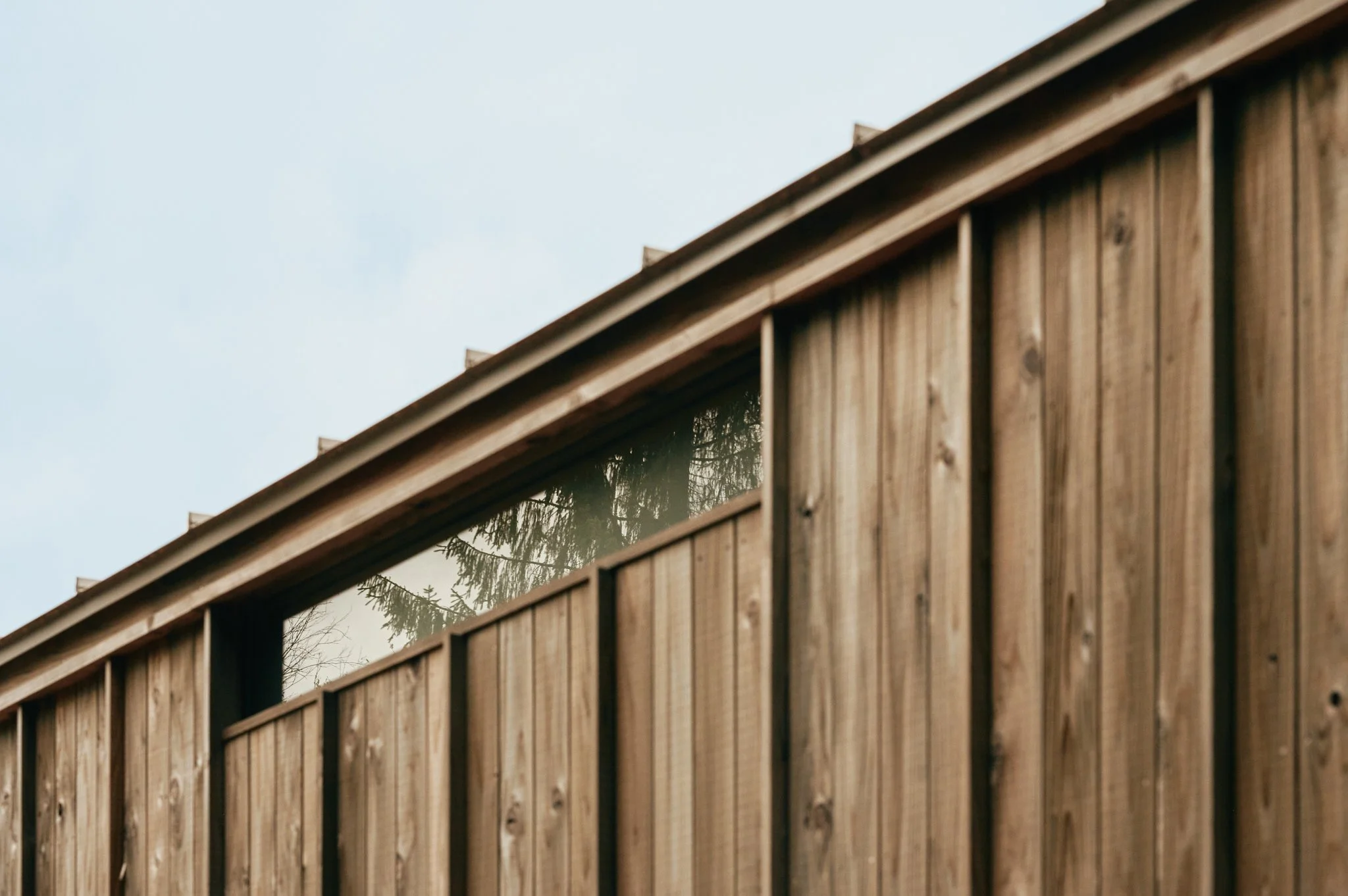
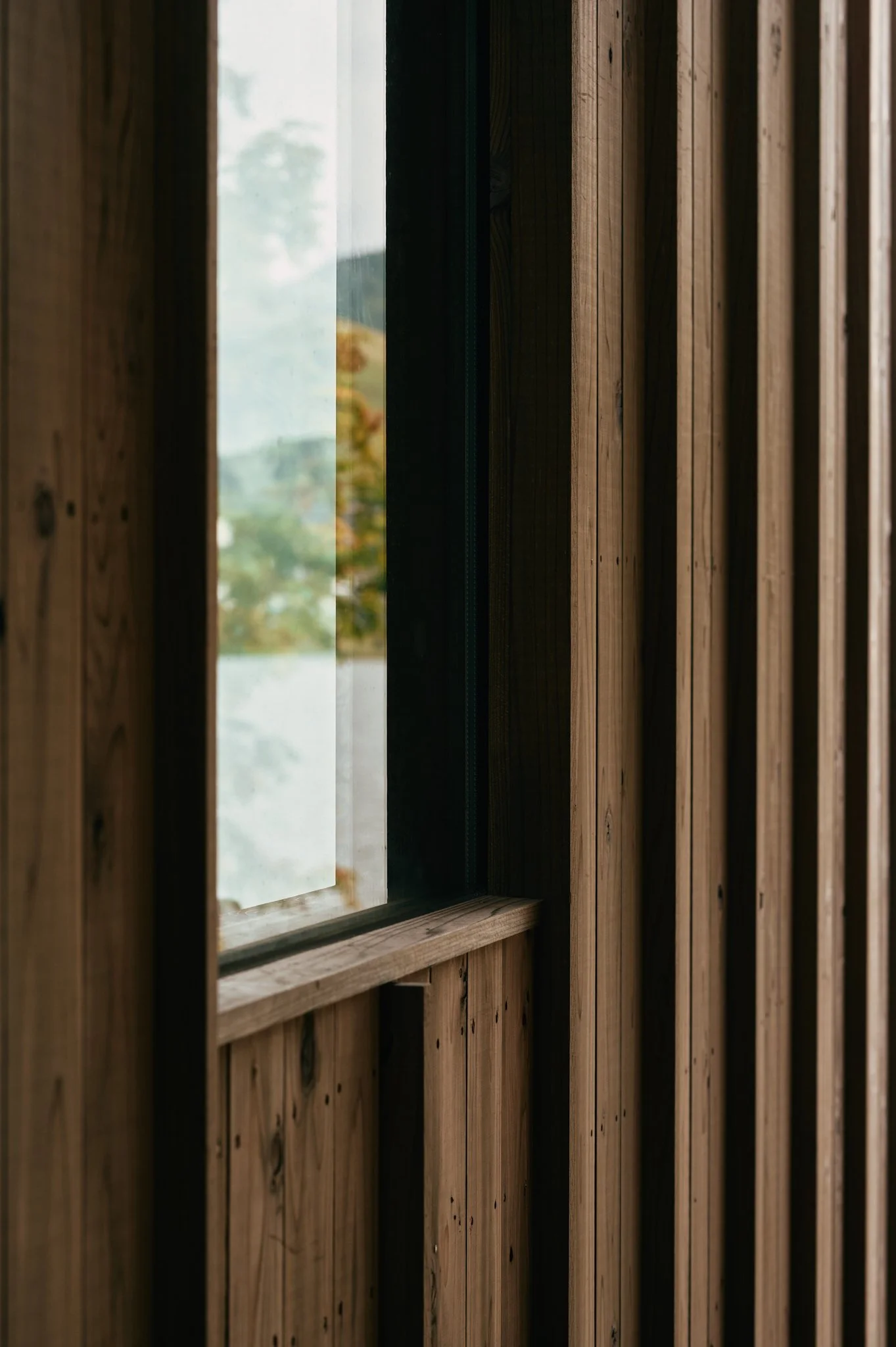
One of the interior's most arresting features is the full-width picture window that opens an entire wall to the landscape. "With other construction methods such as two-by-four, beams and other protrusions tend to appear around the windows," Takada notes. "This expansive window is something that could only be achieved through a structure that combines CLT panels. There's nothing else in the way." Equally notable is the decision to detail every single opening without a sash. The units are mechanically ventilated, so all windows are fixed-glazed with double glazing for insect exclusion. The glazing is fitted against precisely cut openings in the CLT from the outside, and held in place from the exterior; the only metalwork is a small sill flashing below each window. Eliminating the sash was partly about cost, and partly a continuation of the same ethos that drove the insulation decision: a commitment to using as little non-timber material as possible, so that the structure can ultimately return to the landscape.
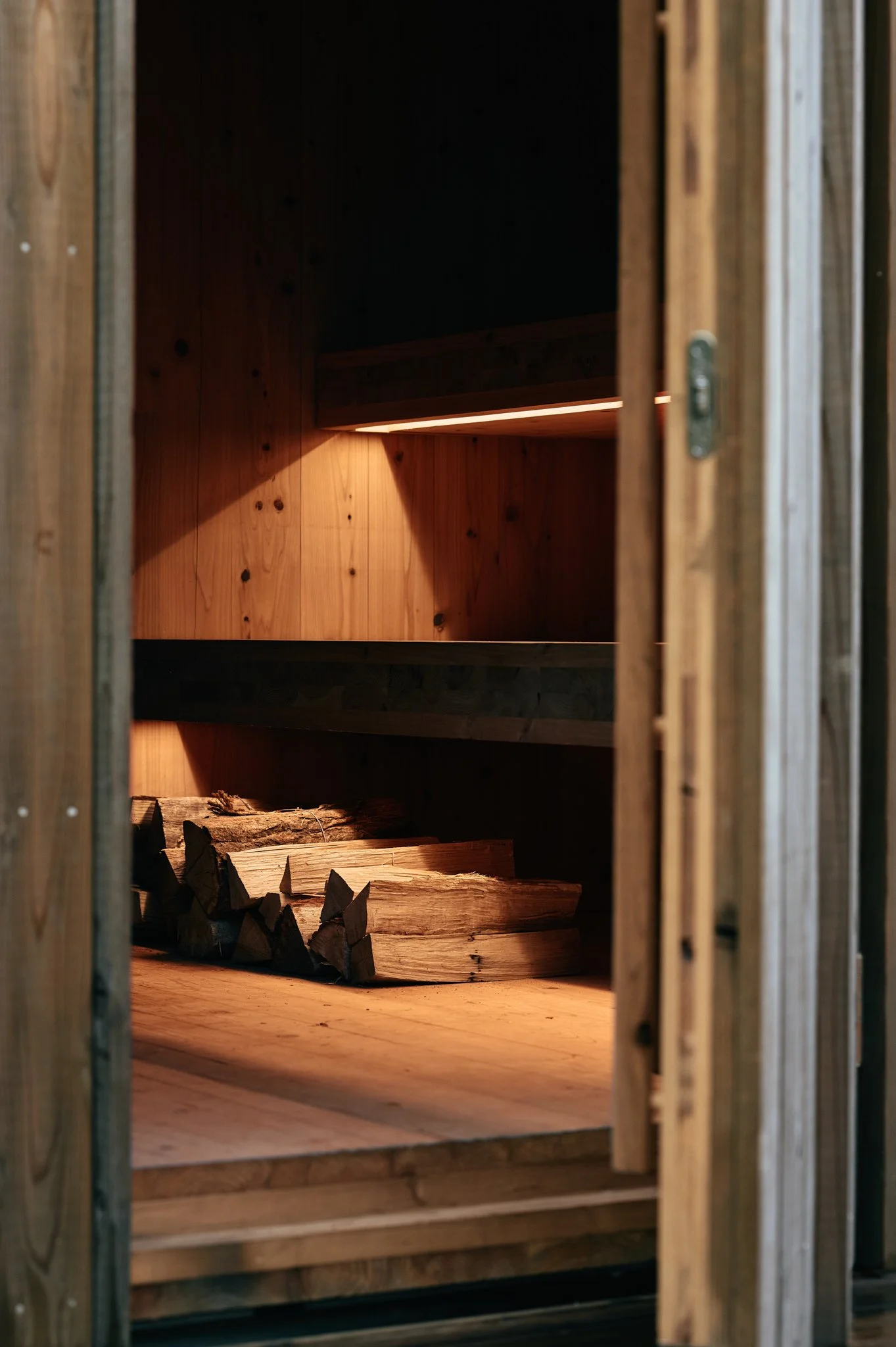
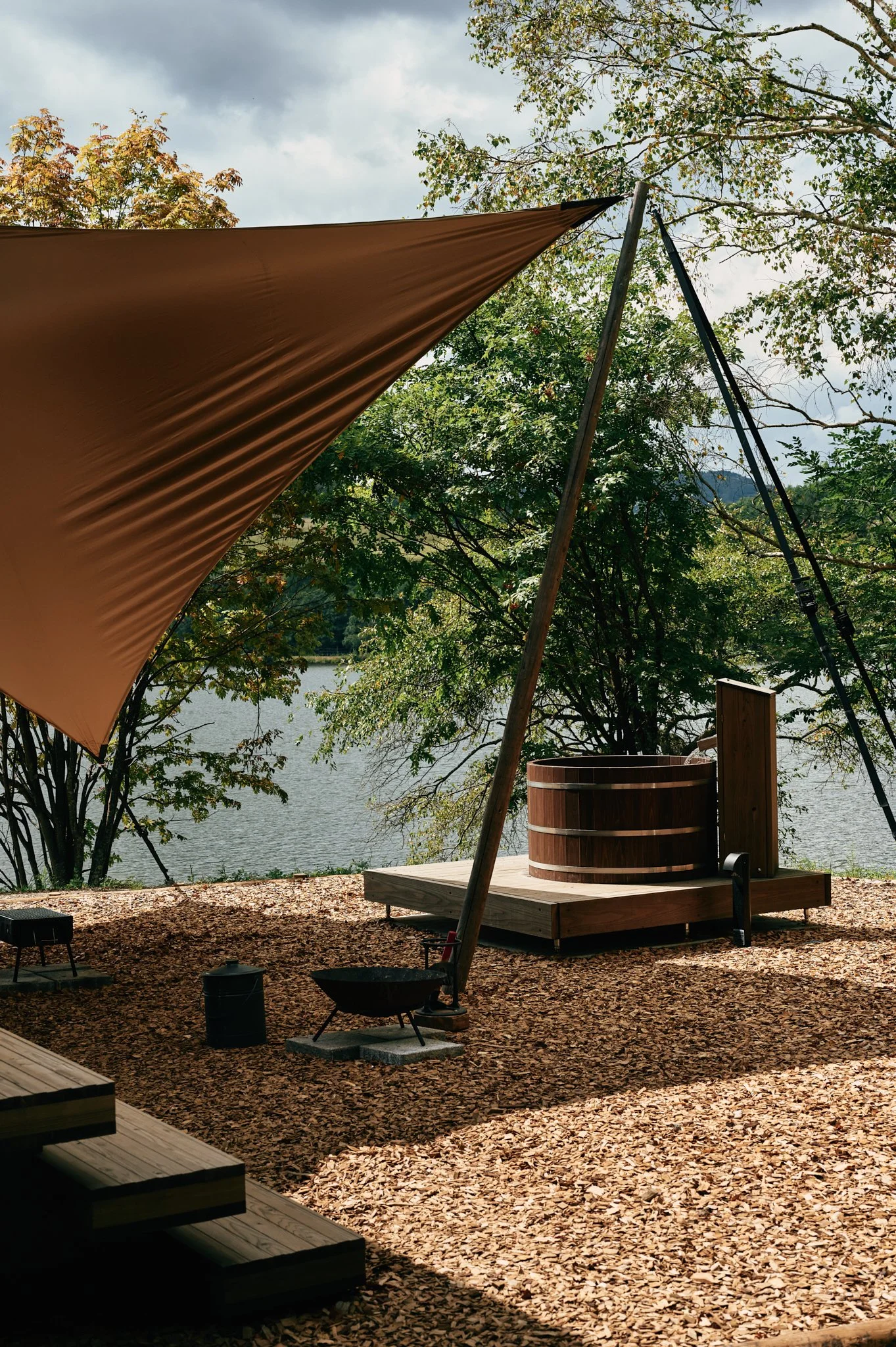
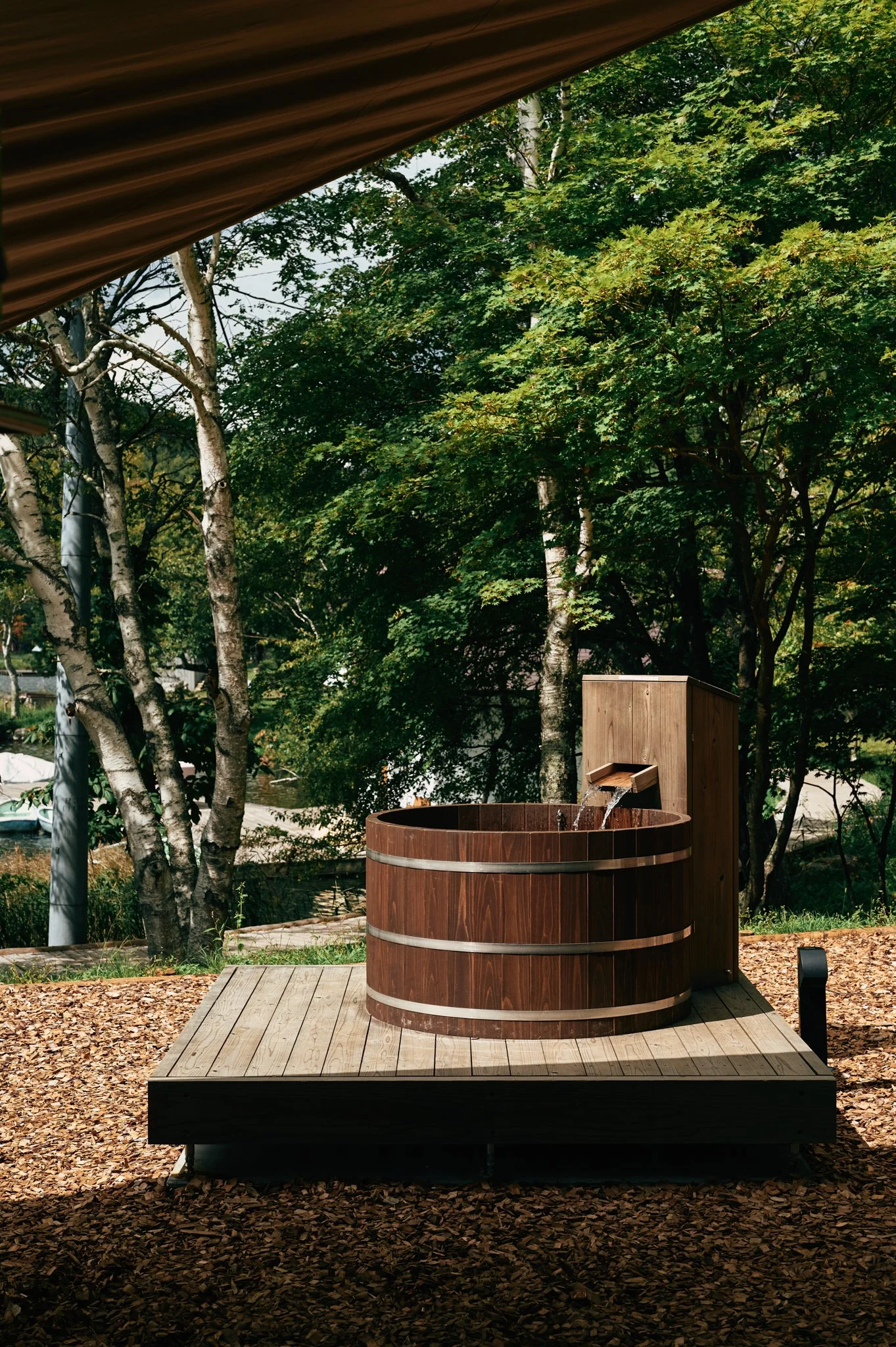
A defining feature of the Earthboat offer is the private sauna included with every room. Accessed from the outside, the sauna of the trailer house embodies the facility's conviction that the bathing experience itself, without hot springs or other established tourism drawcards, can be a complete destination in its own right. "The owner had already established 'The Sauna' at LAMP on Lake Nojiri, which became something of a landmark in the Japanese sauna scene, so he had a deep understanding of what sauna can offer," says Takada. "From the very first model, the brief assumed a sauna in every unit. And having experienced firsthand the thermal mass and comfort of a log sauna during our time in Denmark, the heat-retention properties of CLT were also part of why we chose it as a material." The Earthboat sauna is built entirely from CLT, not just the floor and walls, but the interior benches as well. The decision to approach the sauna from outside reinforces a broader philosophy: the outdoors is the living room. Guests are encouraged to move freely between sauna, bedroom and kitchen, with the outdoors acting as the living space that connects them all.
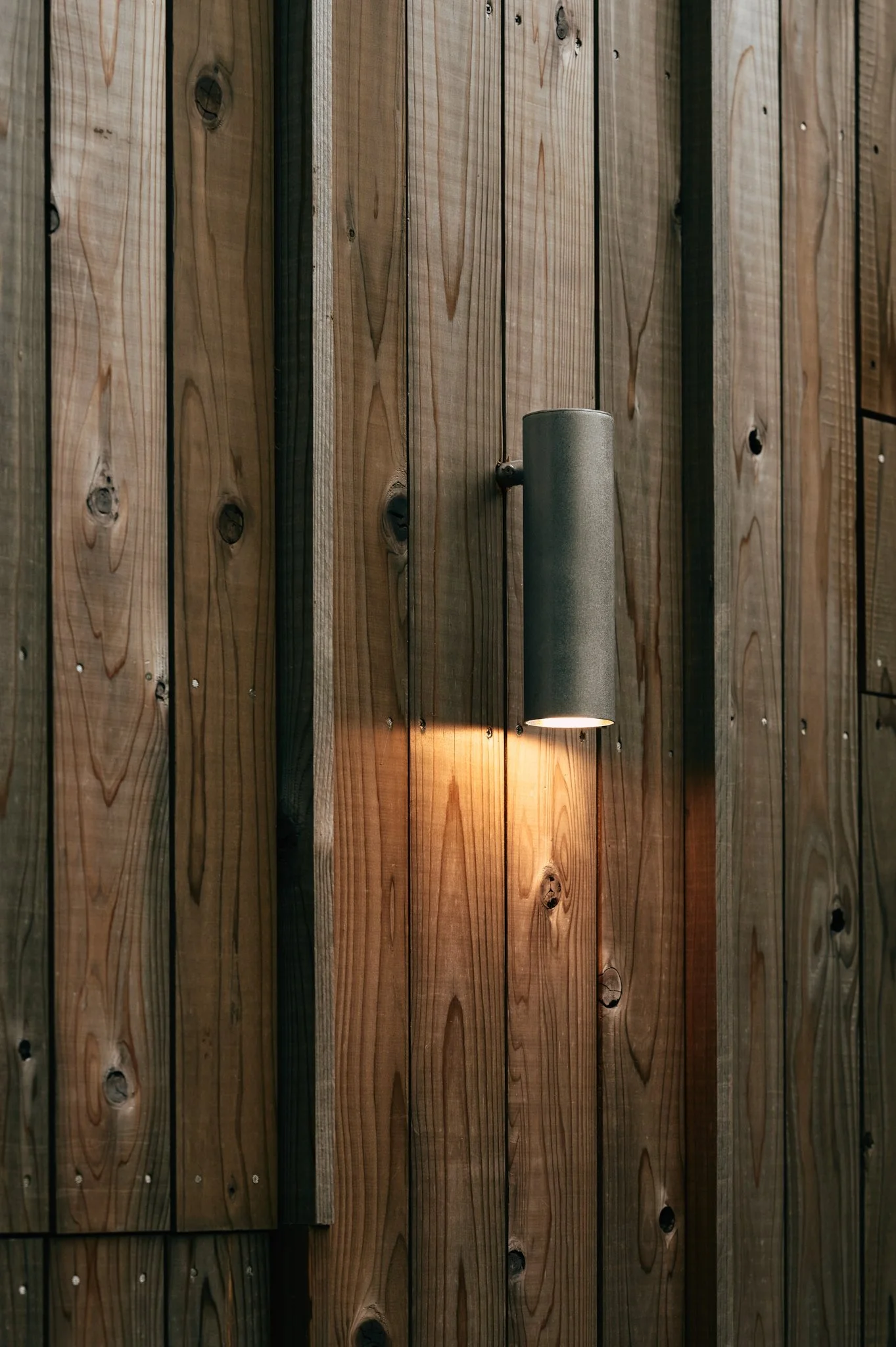
From the initial model to the completion of Cave, the duo invested roughly two and a half years in the first model's development and close to a year on Cave, with iterative refinement running continuously throughout. "We started with mass production in mind, but there were quite a few things we only discovered once construction began," Takada reflects. "Now, the electrical conduit routing and LED lighting recesses are all pre-cut at the factory, and setting-out lines are marked there too, so nothing needs to be laid out on site. Working in constant millimetre-level dialogue with the CLT fabricator and the builder, and taking responsibility for every shop drawing ourselves, taught us an enormous amount. As a result of that sustained effort to reduce site labour, the builder can now assemble roughly one and a half units in a single day."
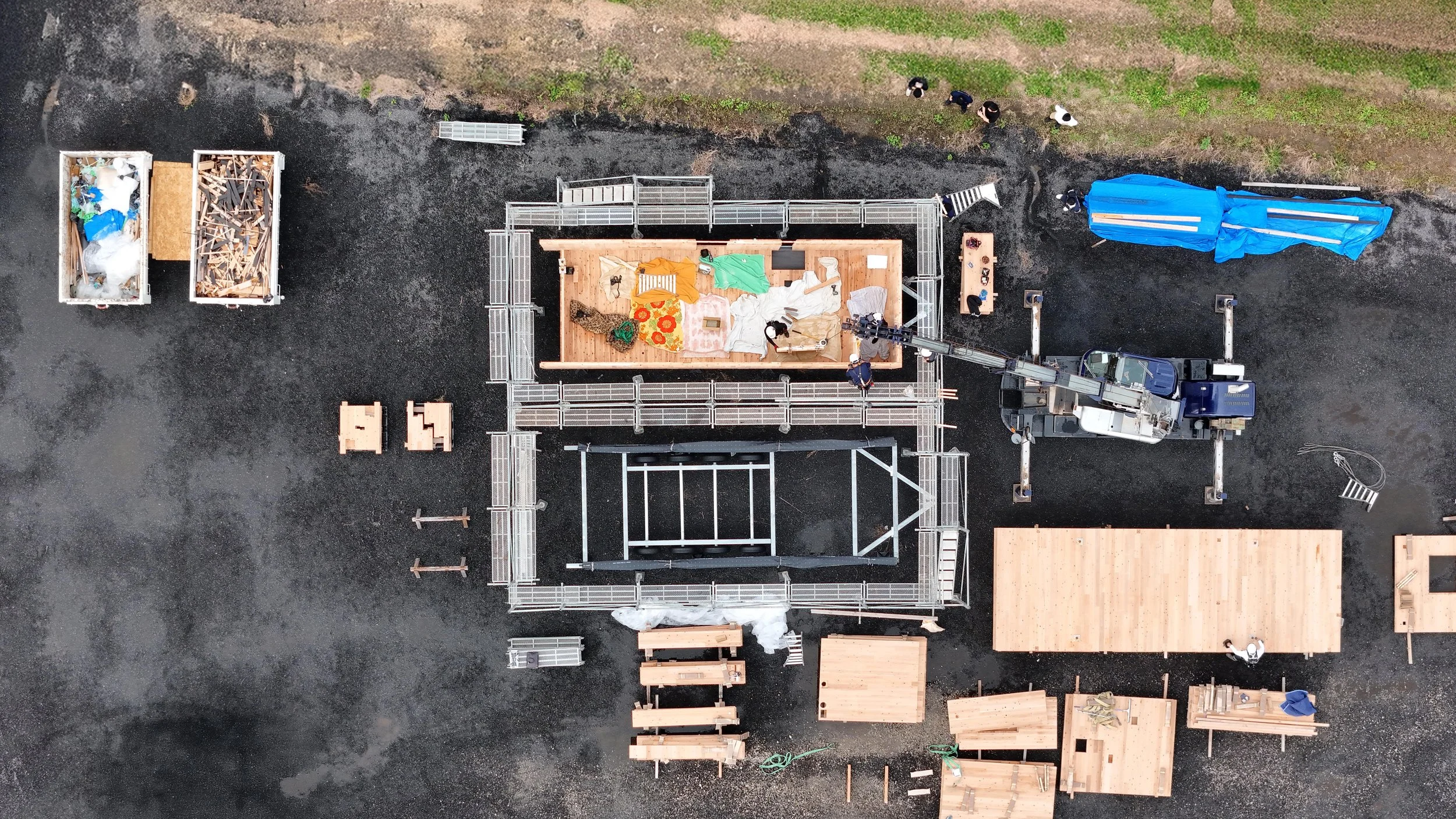
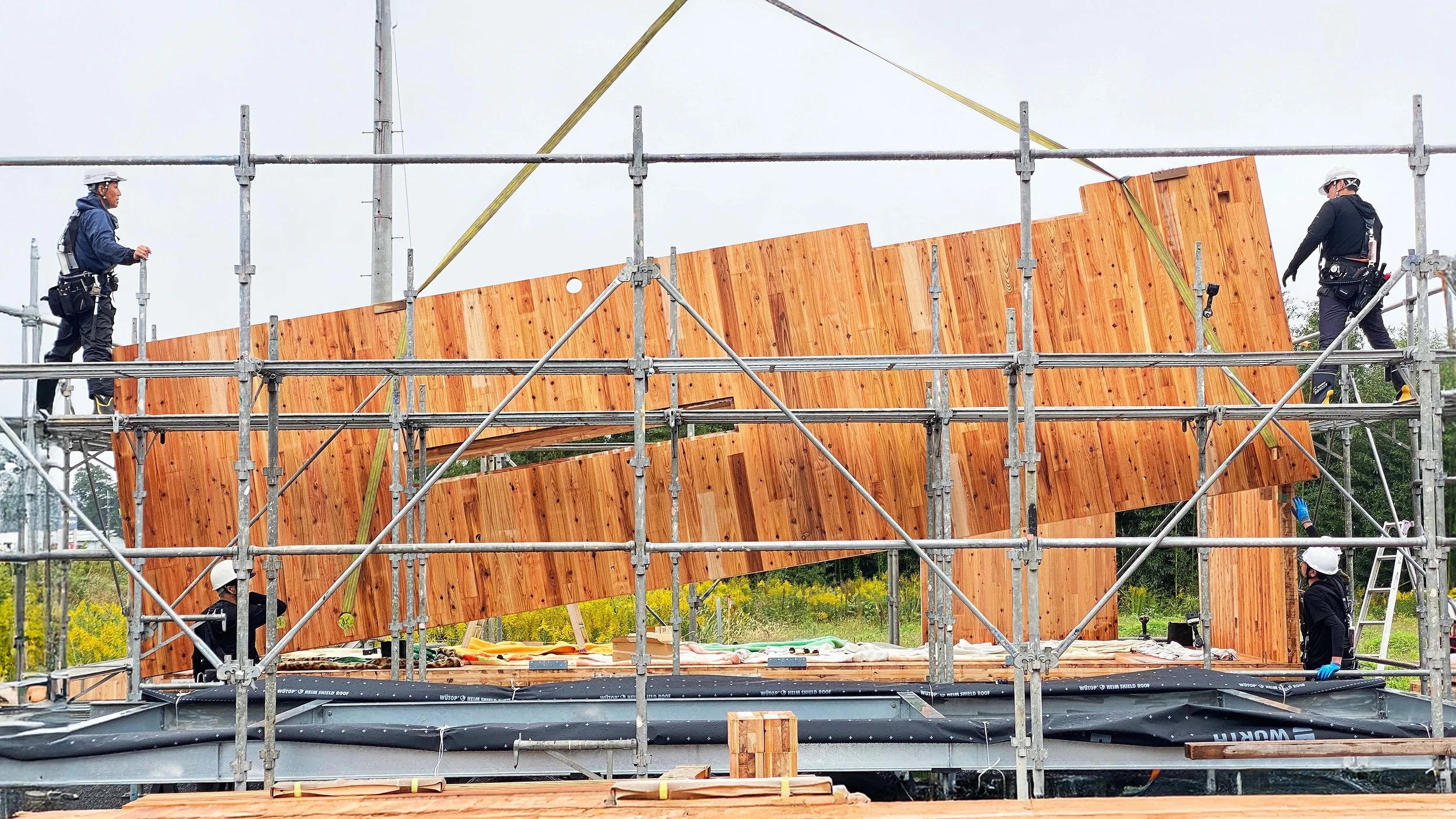
Earthboat Cave during construction. (Photography: PAN- PROJECTS)
In closing, Yagi and Takada offered a perspective on the intersection of digital fabrication and architectural design that is characteristic of PAN- PROJECTS' thinking. "A lot of contemporary architecture seems to be drifting toward minimalism driven by economic rationalism," they observe. "But there's a counter-argument: that CNC technology makes it possible to refocus on detail and craftsmanship without driving up costs. The sash-free openings we developed for Earthboat are a case in point; they were only achievable through precise three-dimensional design. By reducing processes and components, you can bring the overall cost down. To us, the real significance of the digital revolution in architecture lies in its capacity to generate meaningful change at a building scale. Through this project, we've spent over two years in very close dialogue with the CLT fabricators. Beyond technical feasibility, we've built a genuine understanding of the cost structure at a detailed level. Knowledge we expect to carry into many future projects."
Following the Shirakabako project, Earthboat Saitama Kawajima opened in April 2026 within a previously underutilised park on the outskirts of Saitama, introducing a new room model designed by PAN- PROJECTS for peri-urban settings: the Earthboat Nomad. With Nomad, the practice has taken on the challenge of reducing overall weight; the design advances that follow promise to be just as considered.
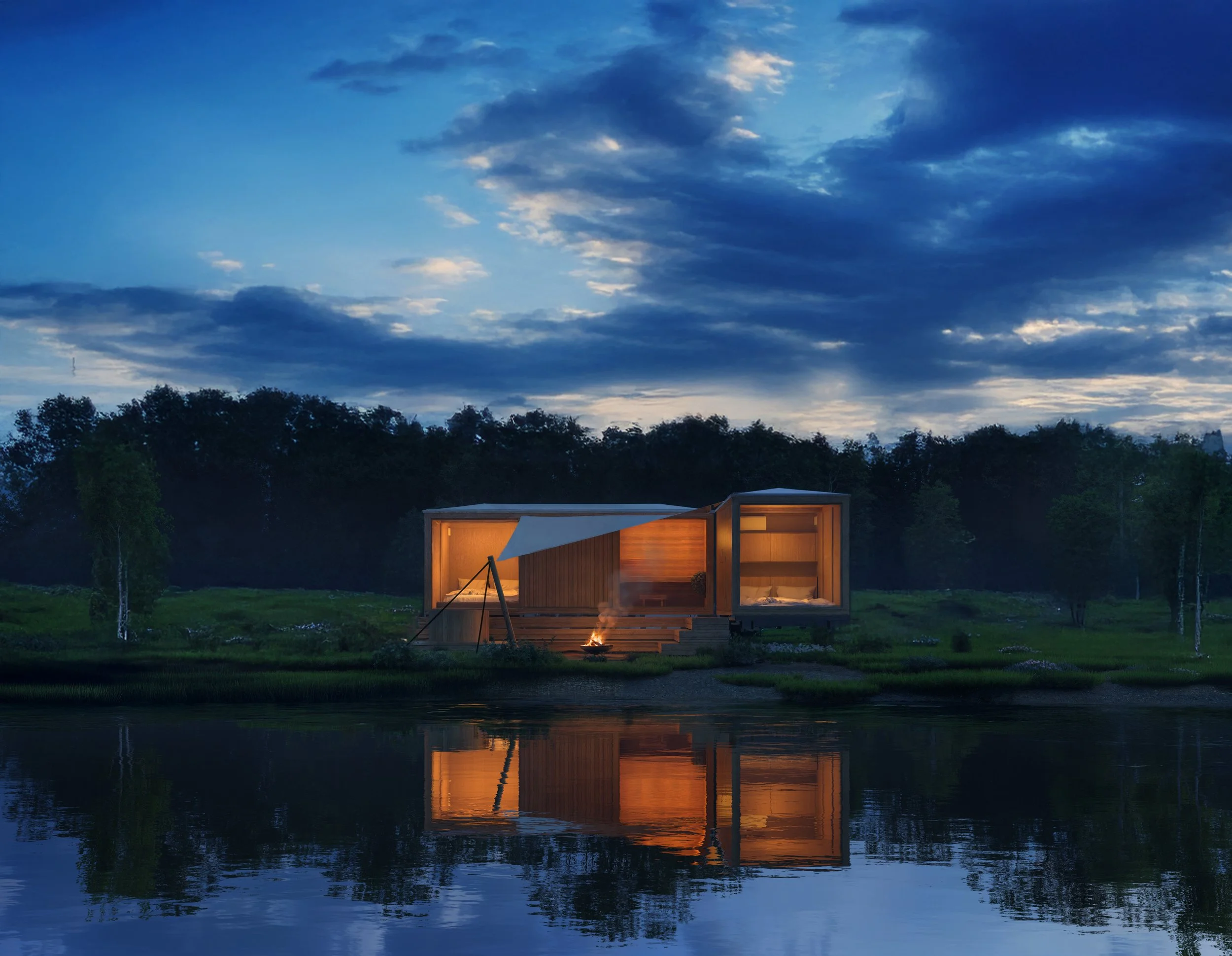
CG image of Earthboat Saitama Kawajima (PAN- PROJECTS)
DETAIL
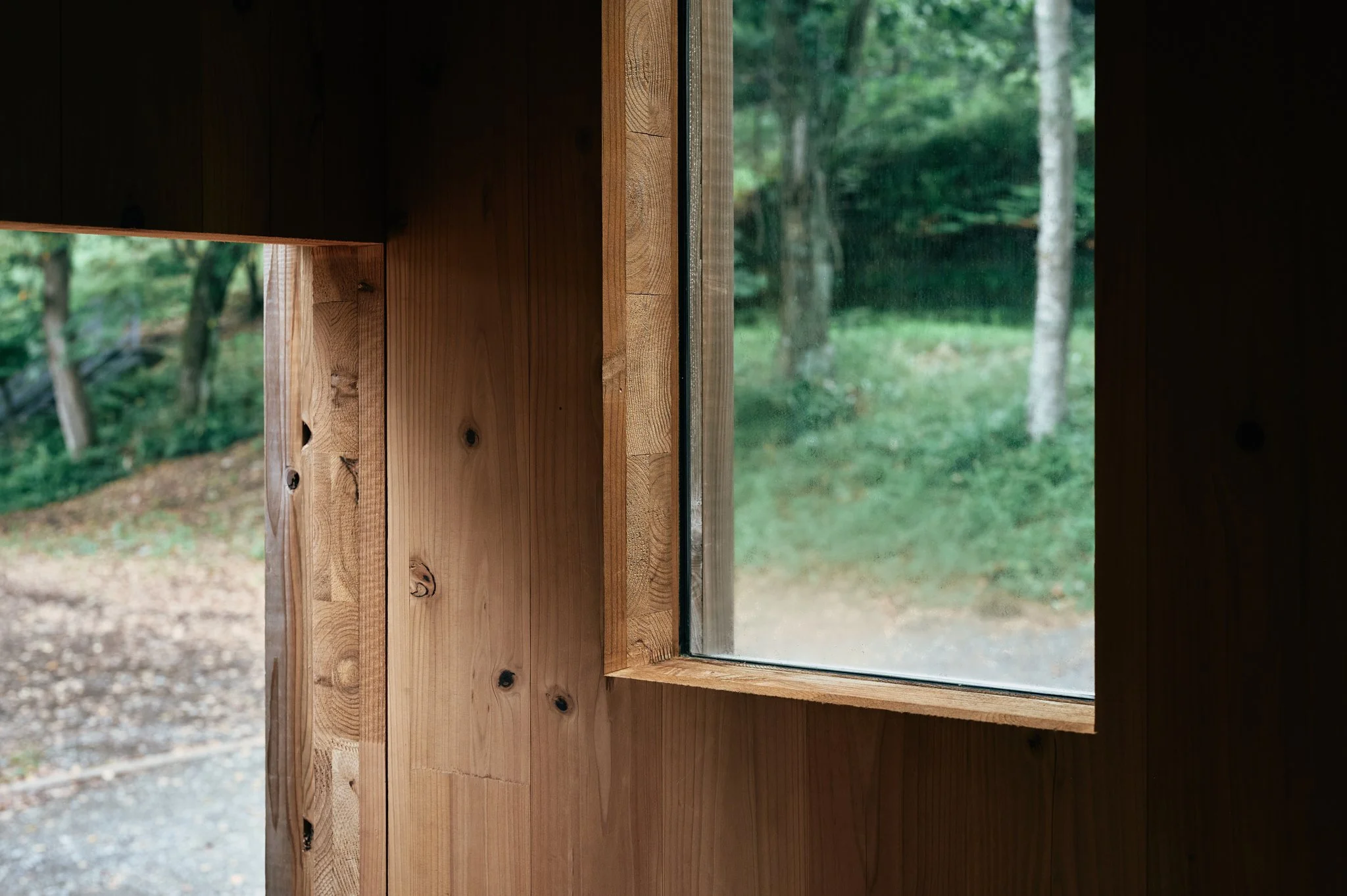
A fixed window fitted into CNC-cut rebates in the CLT without a sash.
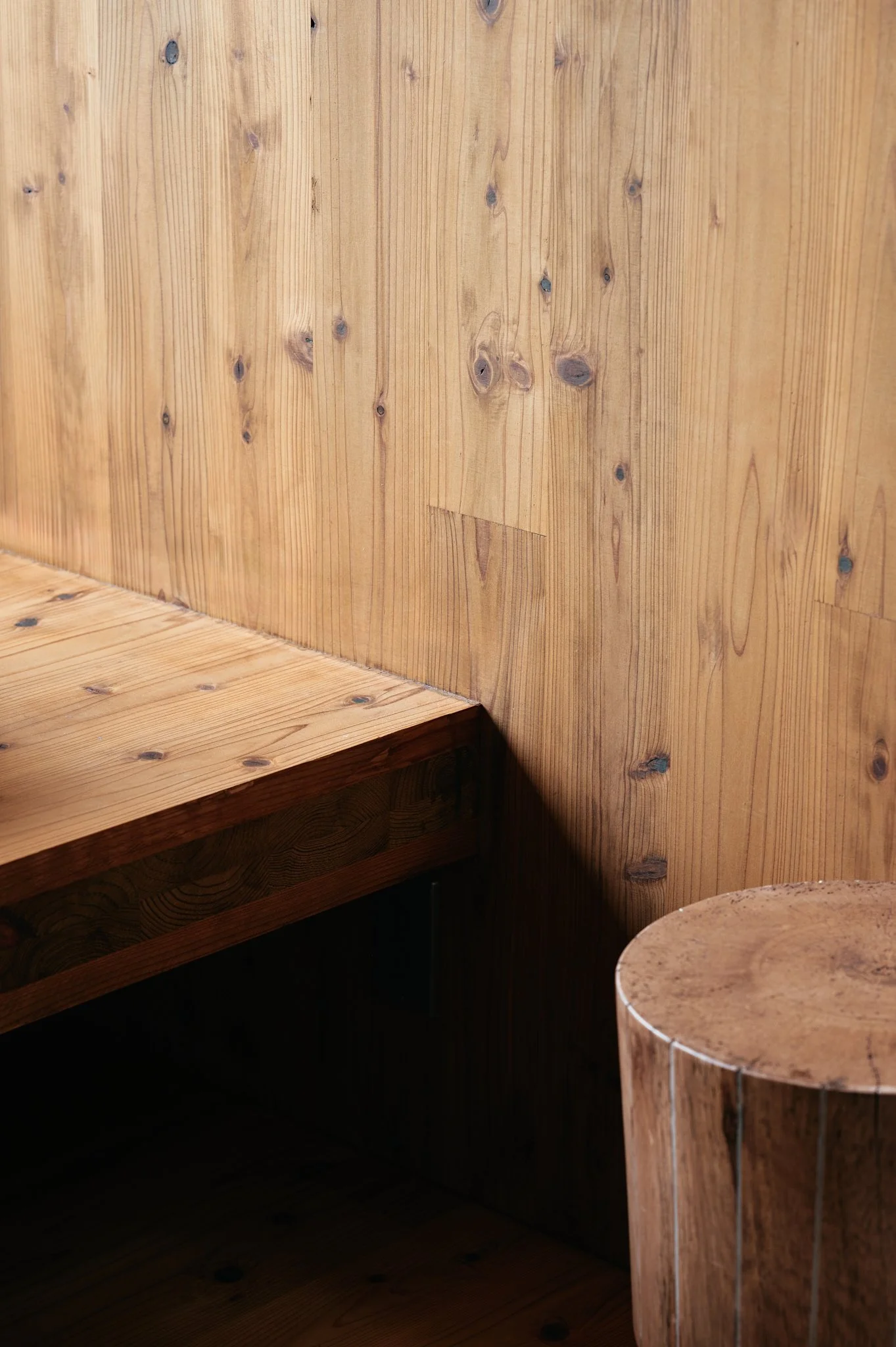
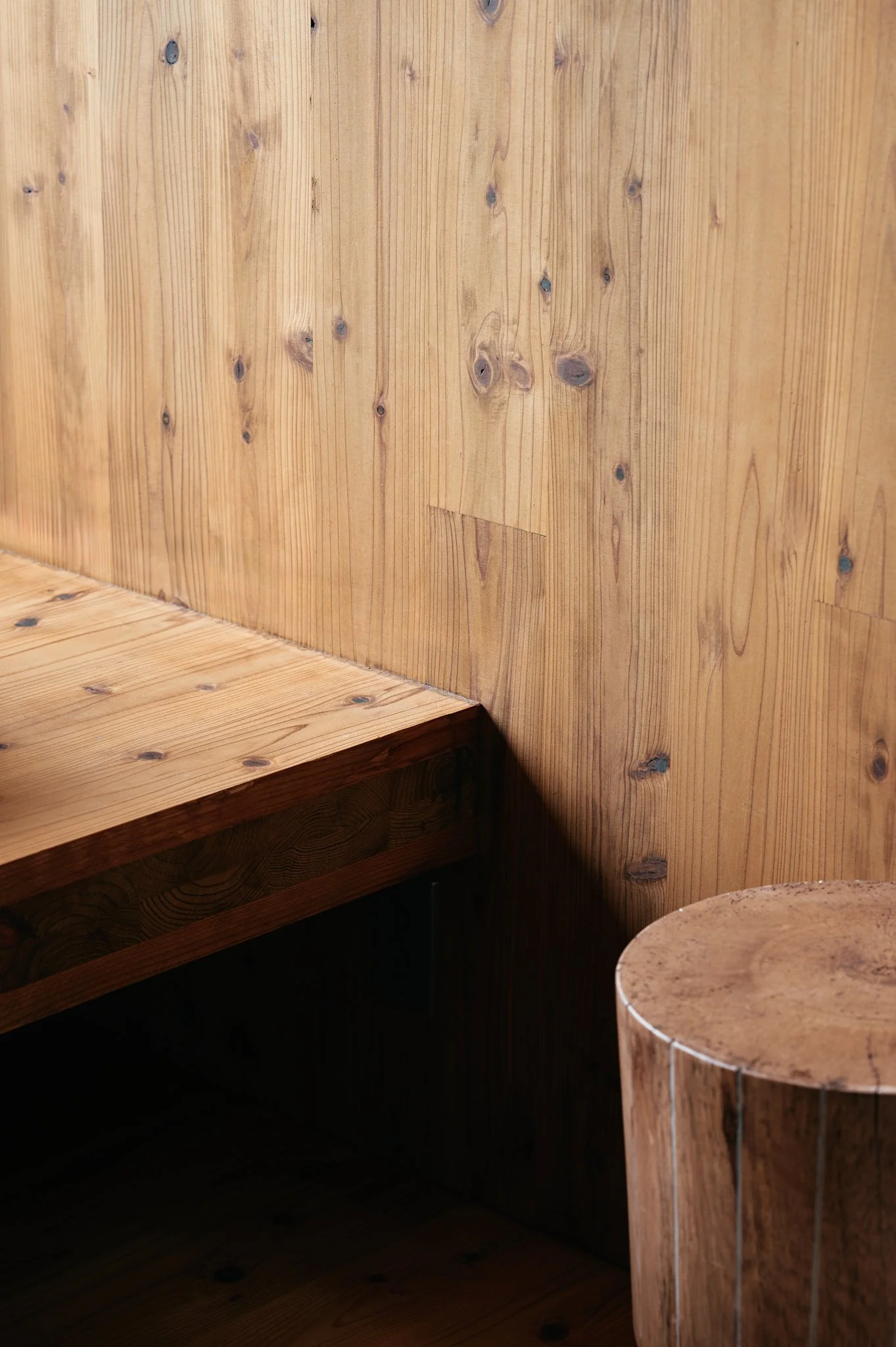
Built-in furniture, like the bed platform and sauna benches, is fabricated in CLT.
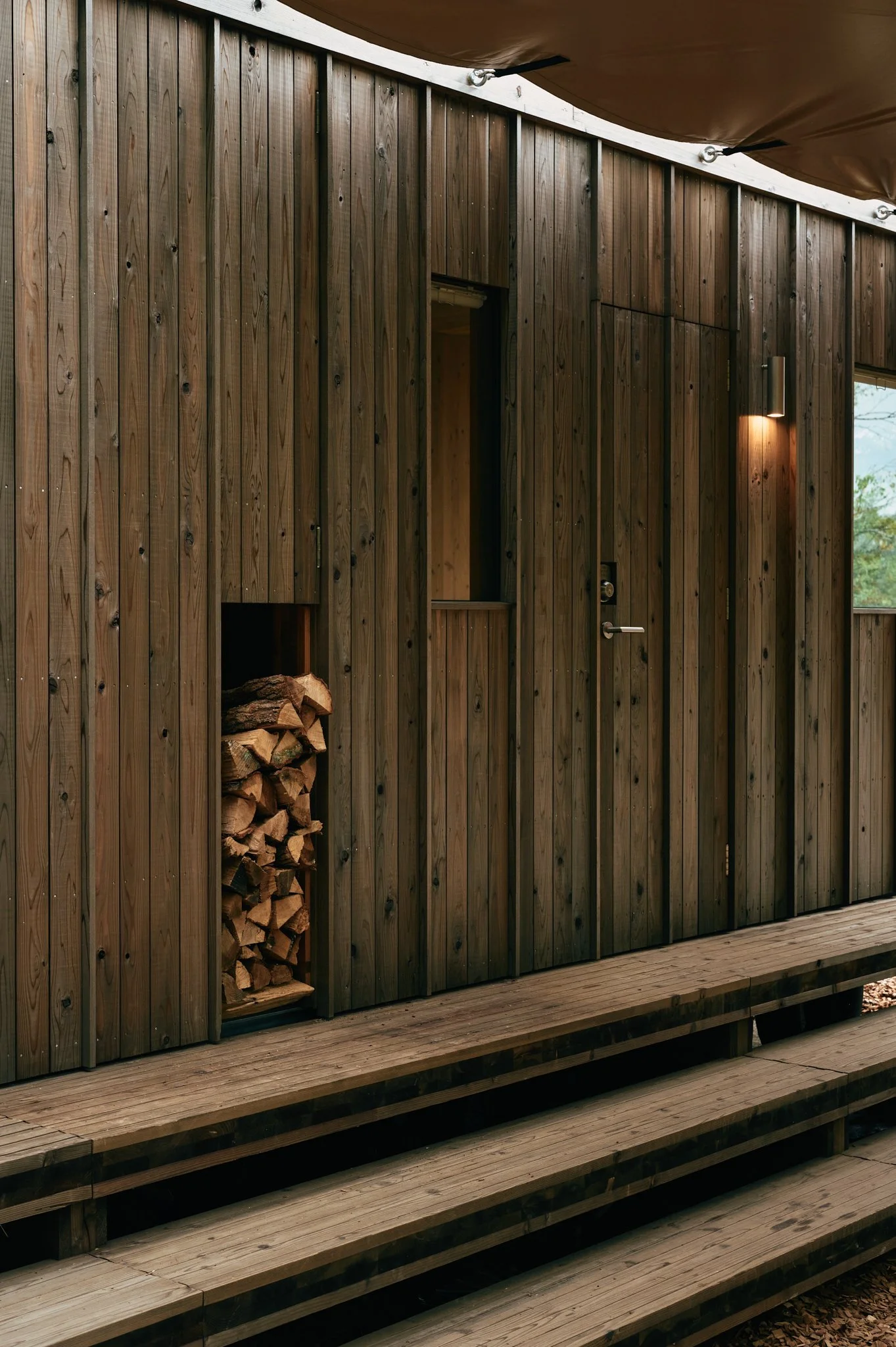
The floors, deck and exterior steps are also all built in CLT.
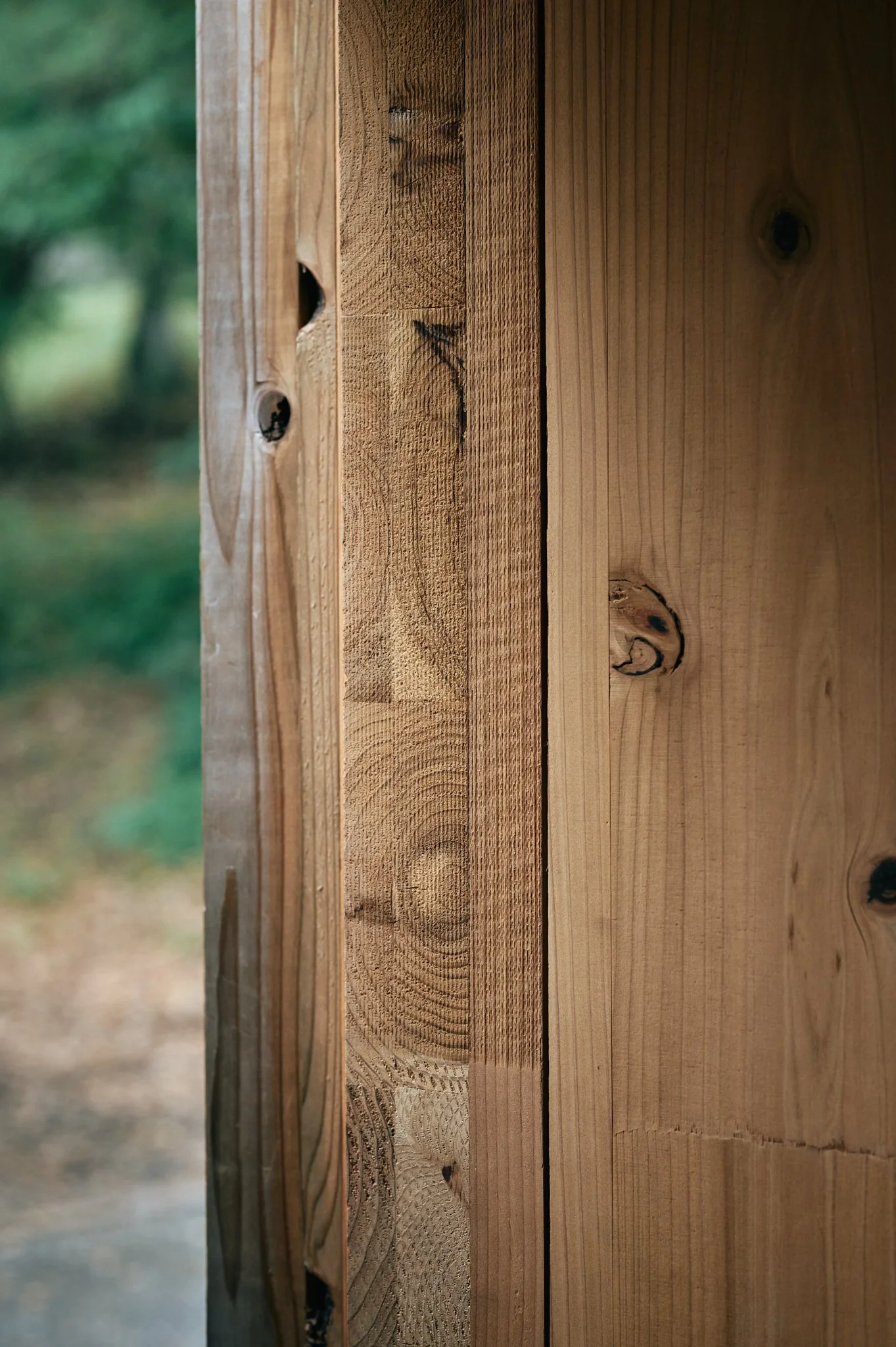
CLT (Cross Laminated Timber) is an engineered wood made by layering boards in alternating directions for added strength. In the corners, the cross-section is exposed.
CREDIT
Name: EARTHBOAT Shirakabako
Design: Yuriko Yagi, Kazumasa Takada / PAN- PROJECTS
Structural engineer: ARSTR
CLT Supplier: Cypress Sunadaya
Timber Consultant: SHINMIRAI INC.
Contractor: TIC PLAN
・
Location: 1579-1 Ashitahakkano, Tateshina-cho, Kitasaku-gun, Nagano, Japan
Owner: Earthboat
Completion: October 2025
Floor area: 25.6 sqm per unit
Main use: accomodation
・
Material
floor, wall, ceiling: Japanese cedar CLT t120mm + oil stain finish (LIVOS KARDET No.270)
exterior wall: Japanese cedar t18mm + wood protection agent (Wood Long Eco)
roof: galvalume steel roofing





_