
ECCO Tokyo Shibuya by Keisuke Fujiwara Design Office
Shoe shop | Tokyo, Japan
ECCO Tokyo Shibuya | Keisuke Fujiwara Design Office | photography: Satoshi Asakawa
DESIGN NOTE
A shoe specialty store developed with a laboratory concept
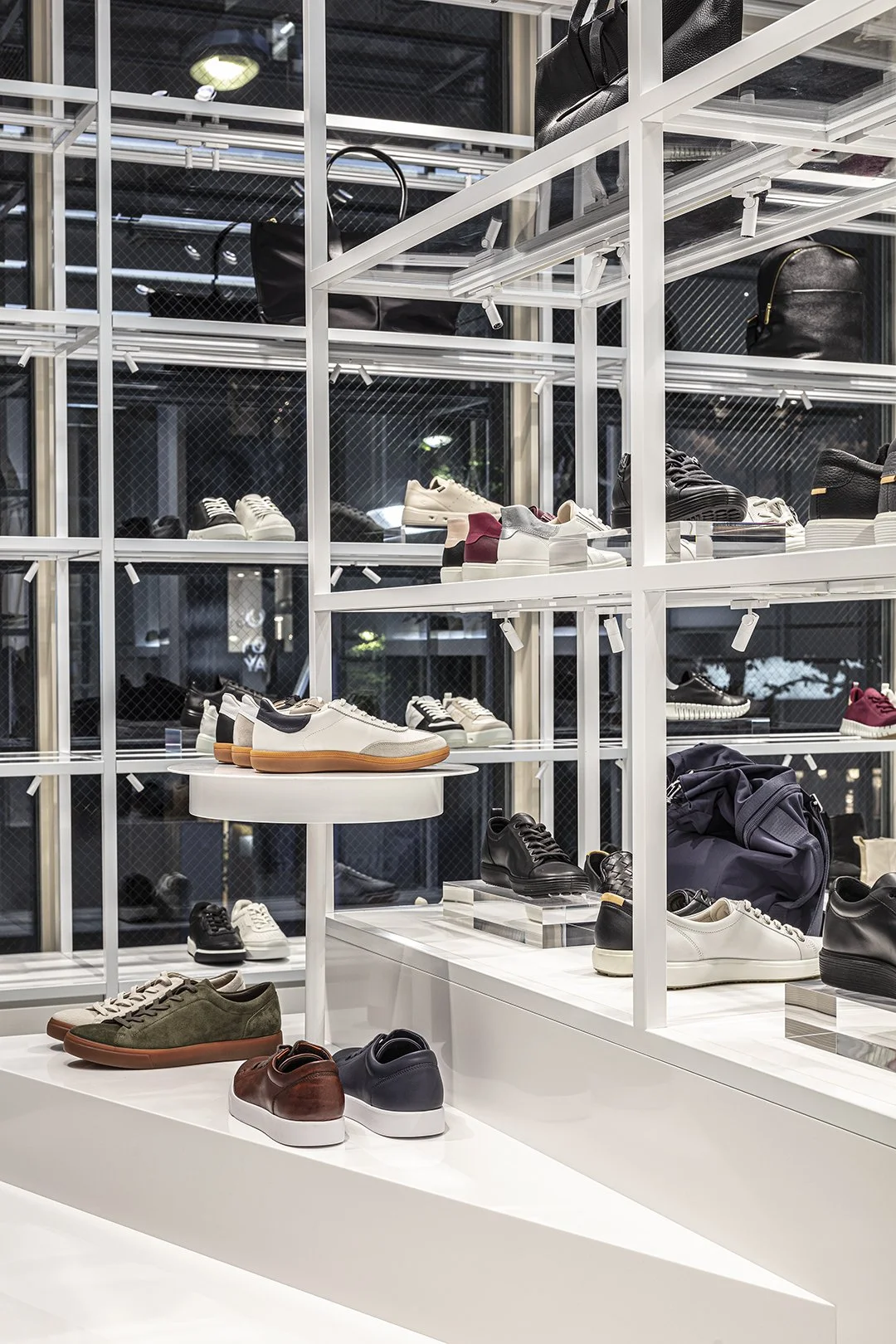
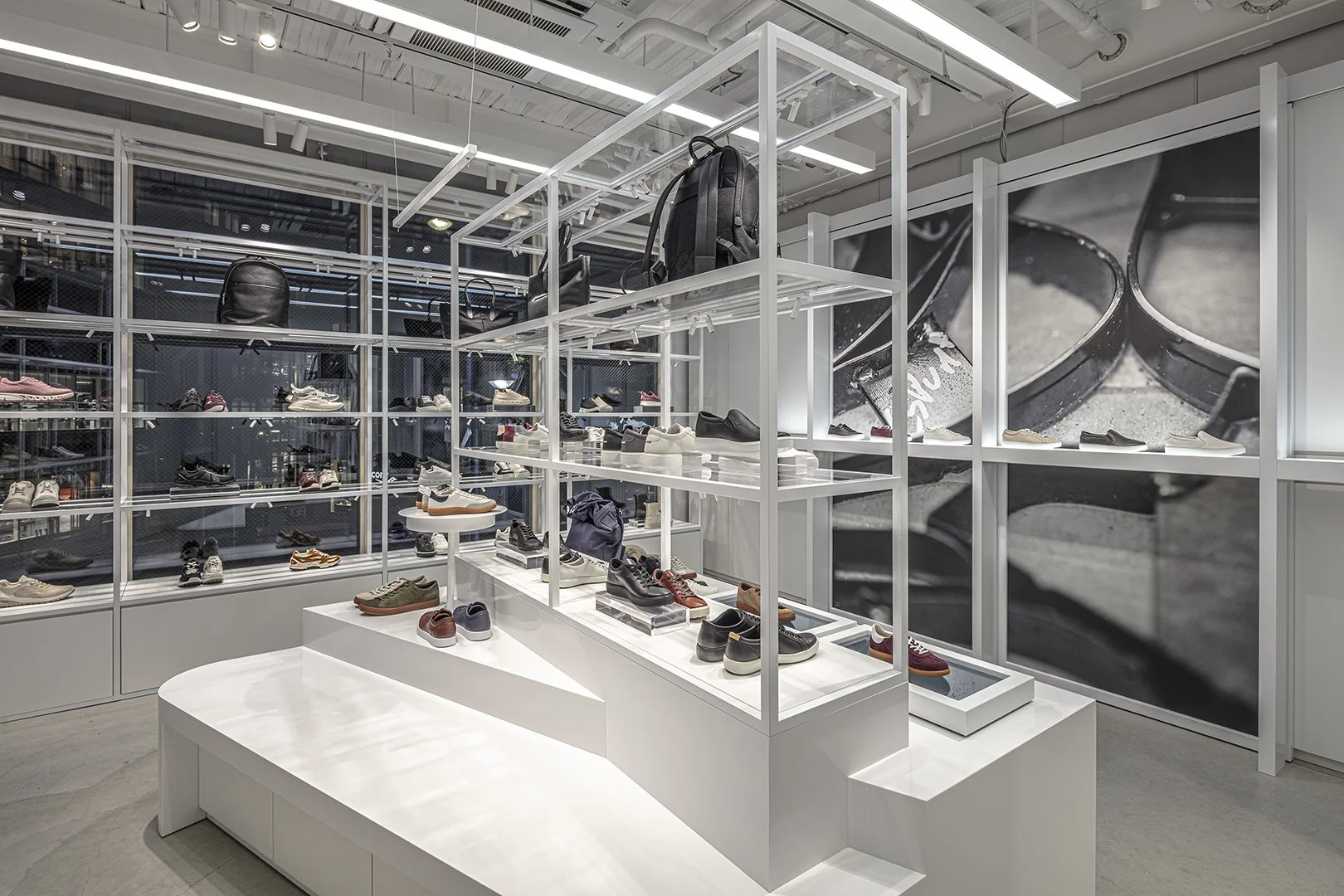
A finely detailed grid shelving system with interactive monitor
Lighting plan using ultra-compact spotlights
photography: Satoshi Asakawa
words : Reiji Yamakura/IDREIT
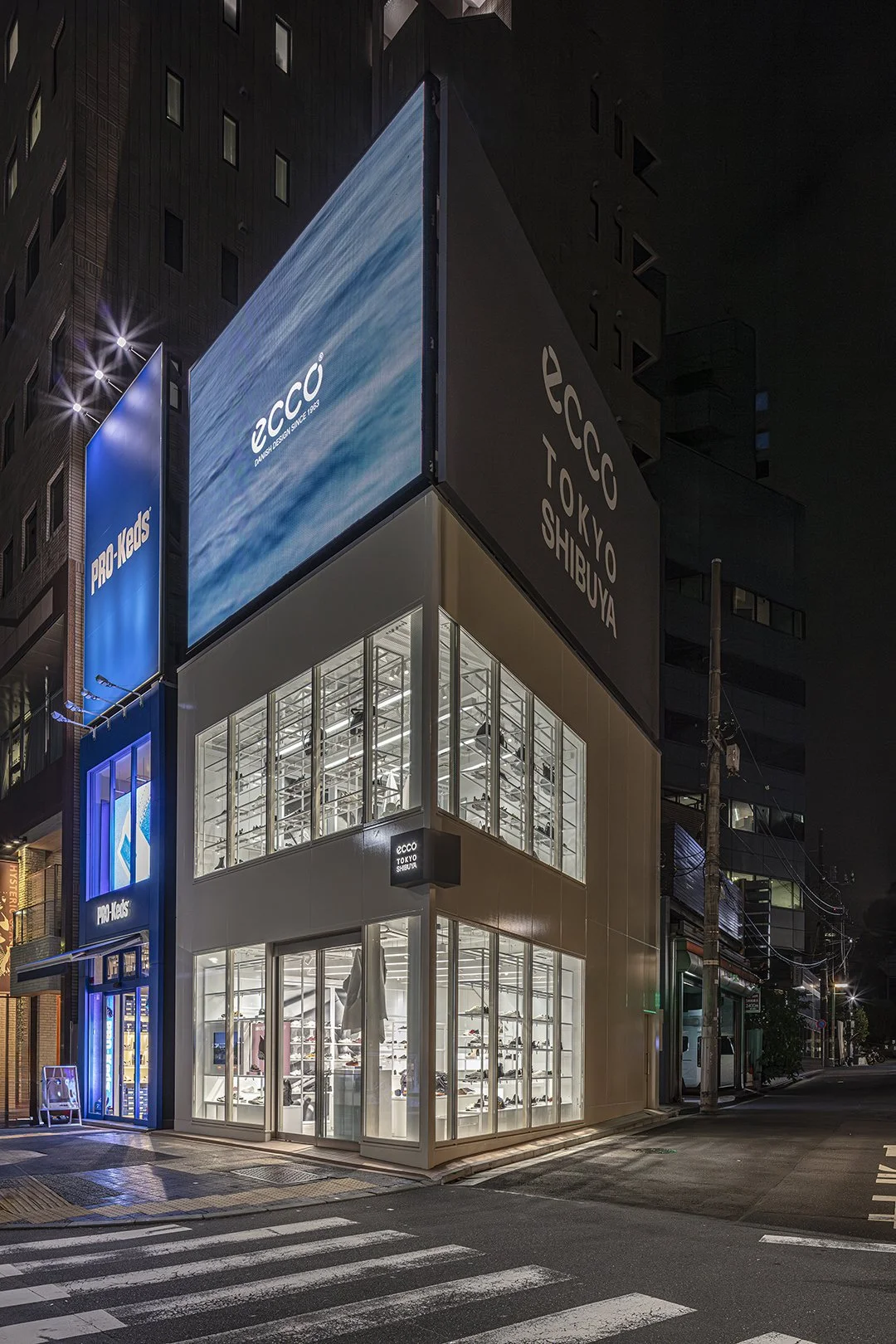
Designed by Keisuke Fujiwara of Keisuke Fujiwara Design Office, ECCO Tokyo Shibuya is the flagship store for ECCO, a Danish footwear brand. According to Fujiwara, once the ground floor retail site in Shibuya was secured, he was commissioned to develop a new store concept that moved beyond the brand’s existing design guidelines. Together with the client, he visited several stores across Tokyo, reviewing each location and conducting interviews to identify key issues before beginning the design process.
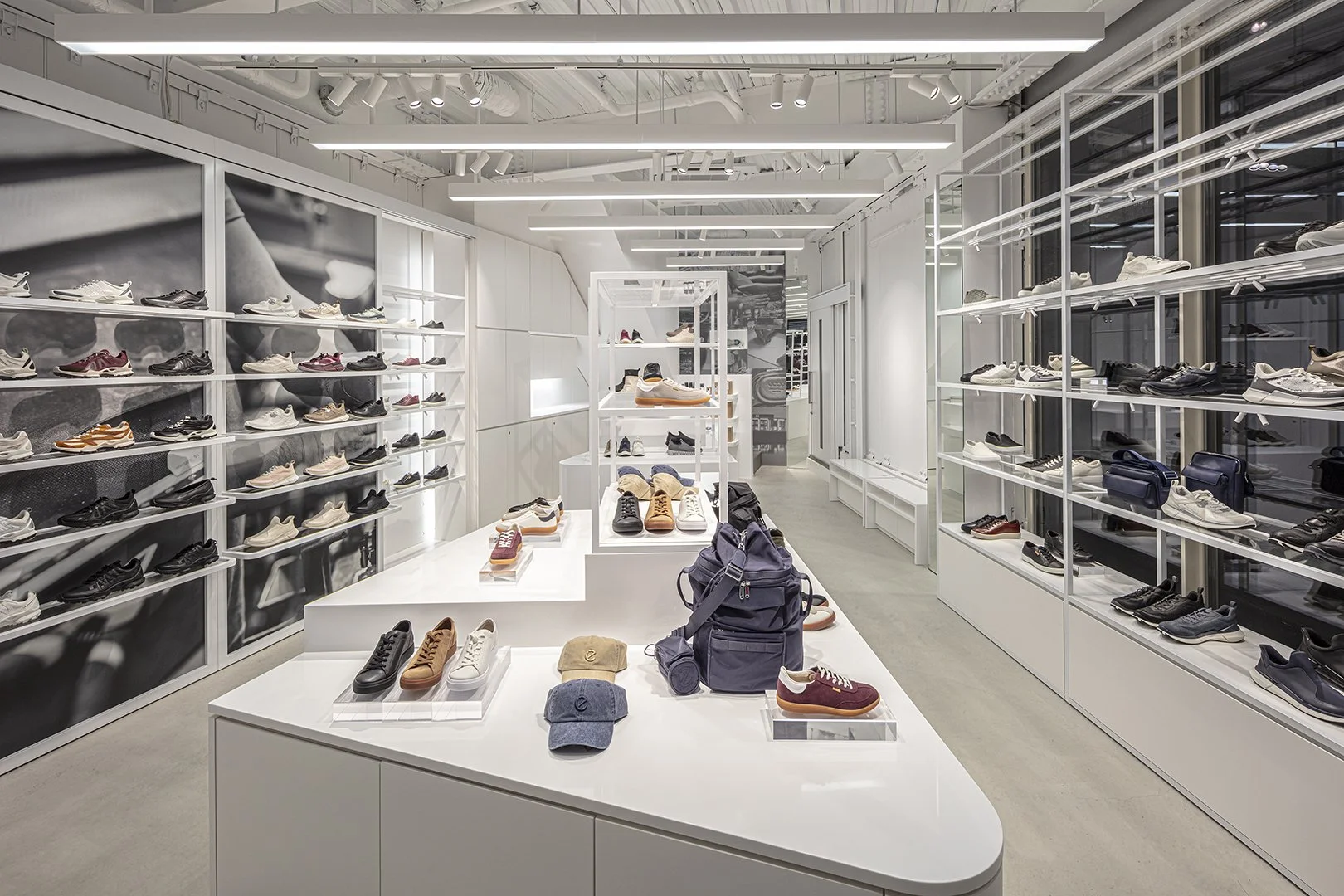
Reflecting on the early stages, Fujiwara explains that existing stores often presented a natural atmosphere with extensive use of timber. As he became more familiar with ECCO’s products, he recognised the brand as being deeply research driven and experimental in its approach to shoemaking. Based on this understanding, they proposed the concept of ECCO Lab, imagining the space as a laboratory. Drawing from references such as beakers, microscopes and lab coats, they extracted elements including glass, metal, luminous surfaces and regular geometries. These ideas were then translated into more spatial design themes such as movement, framing, variation in level and visible stock, gradually shaping a space aligned with ECCO’s identity.
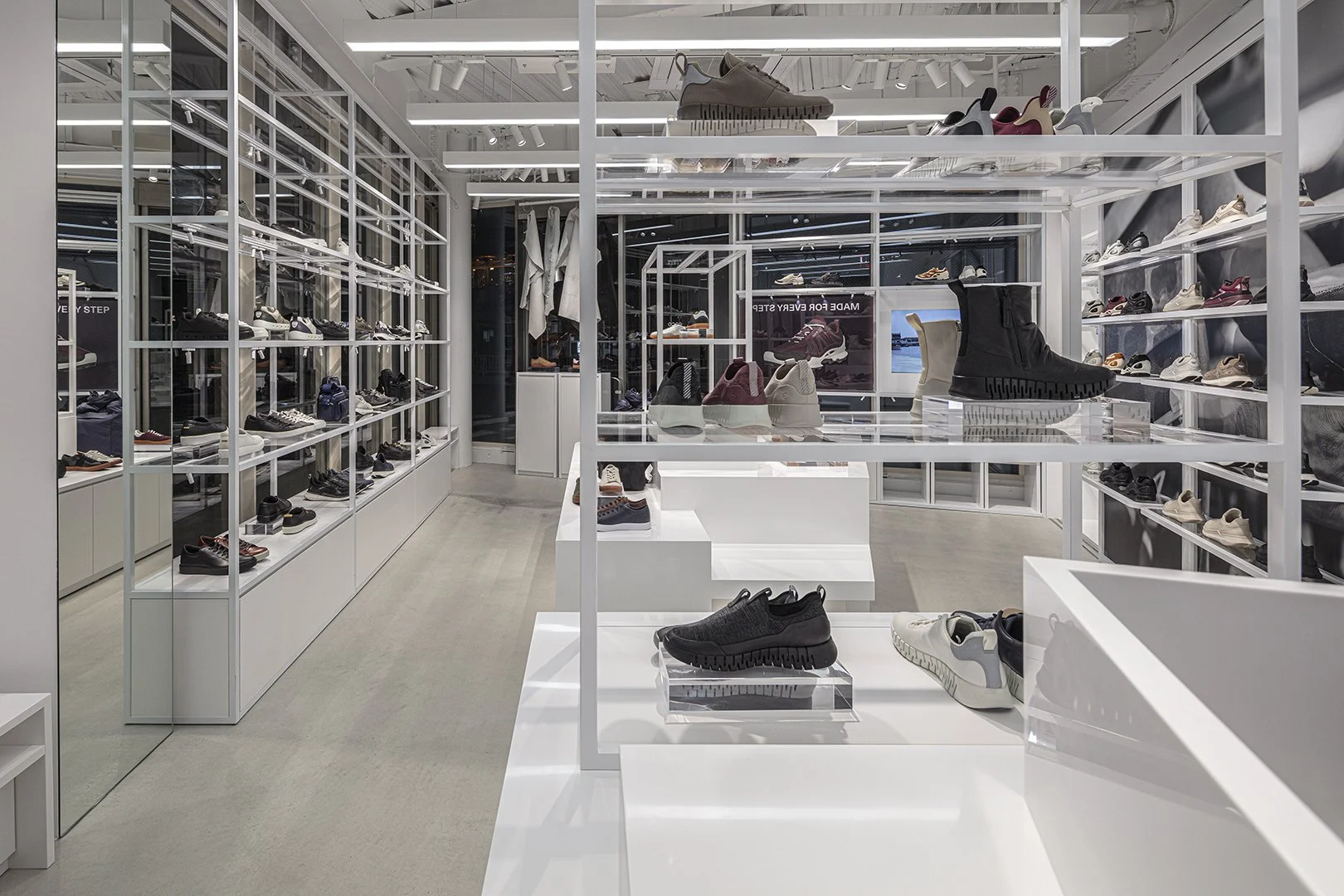
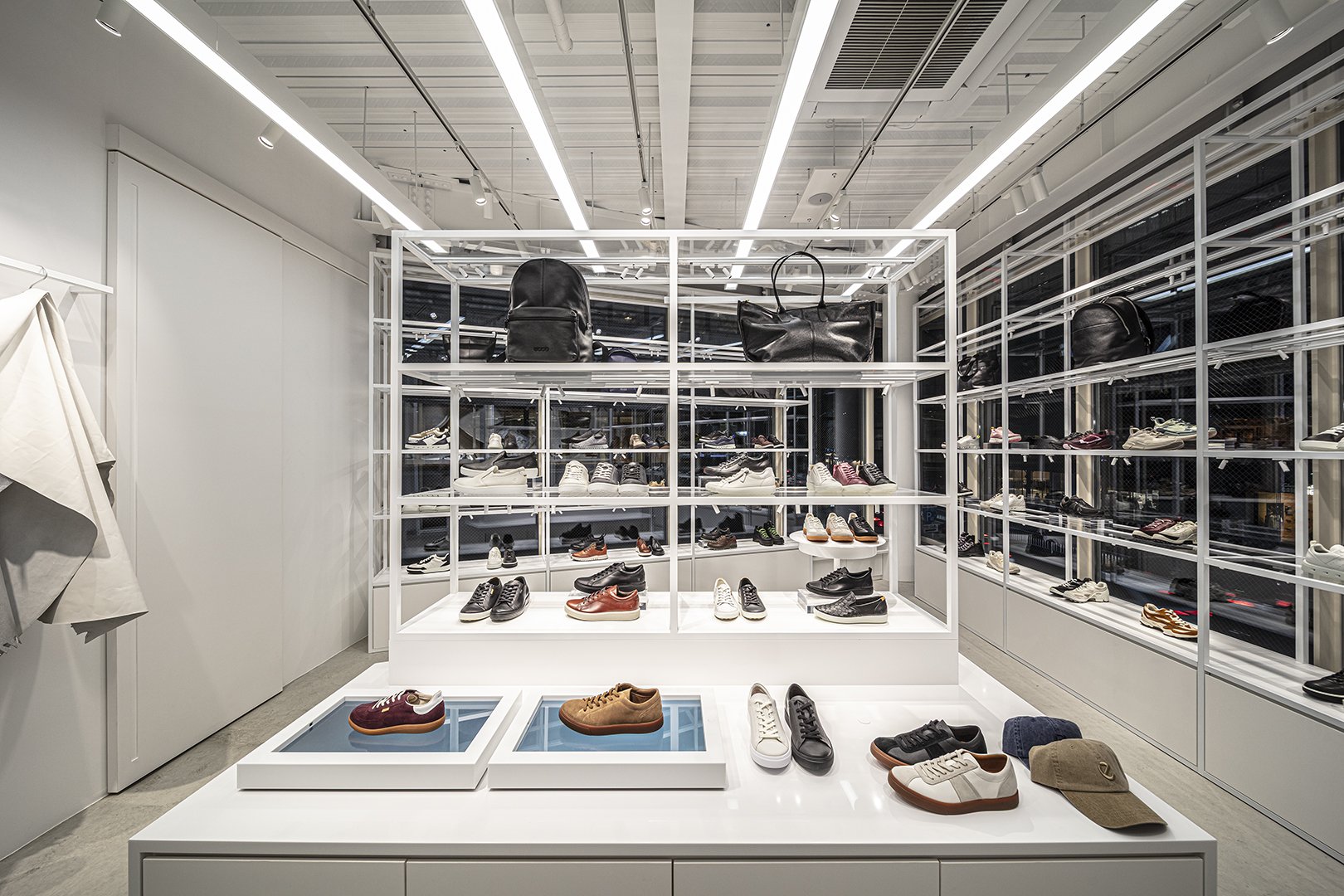
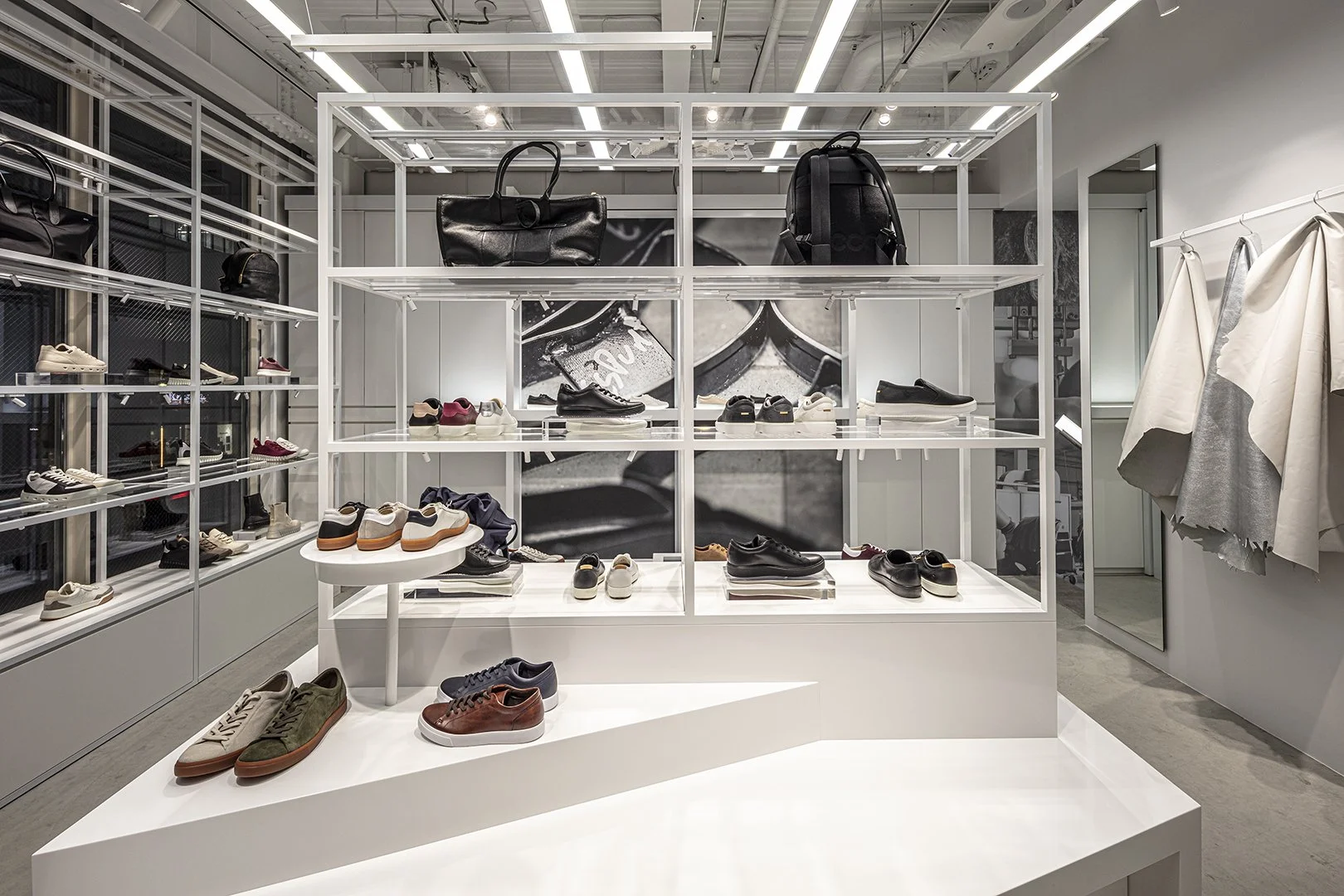
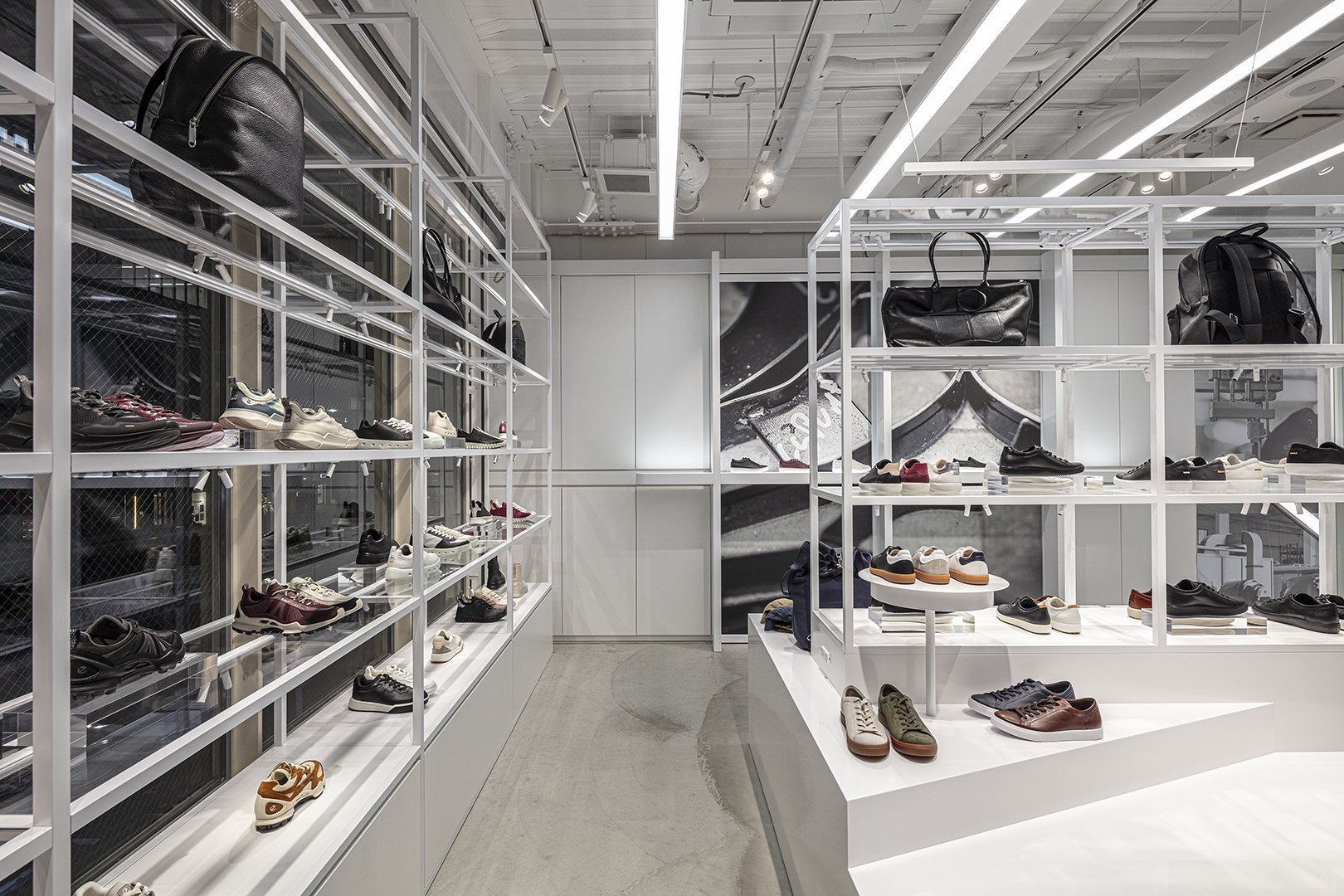
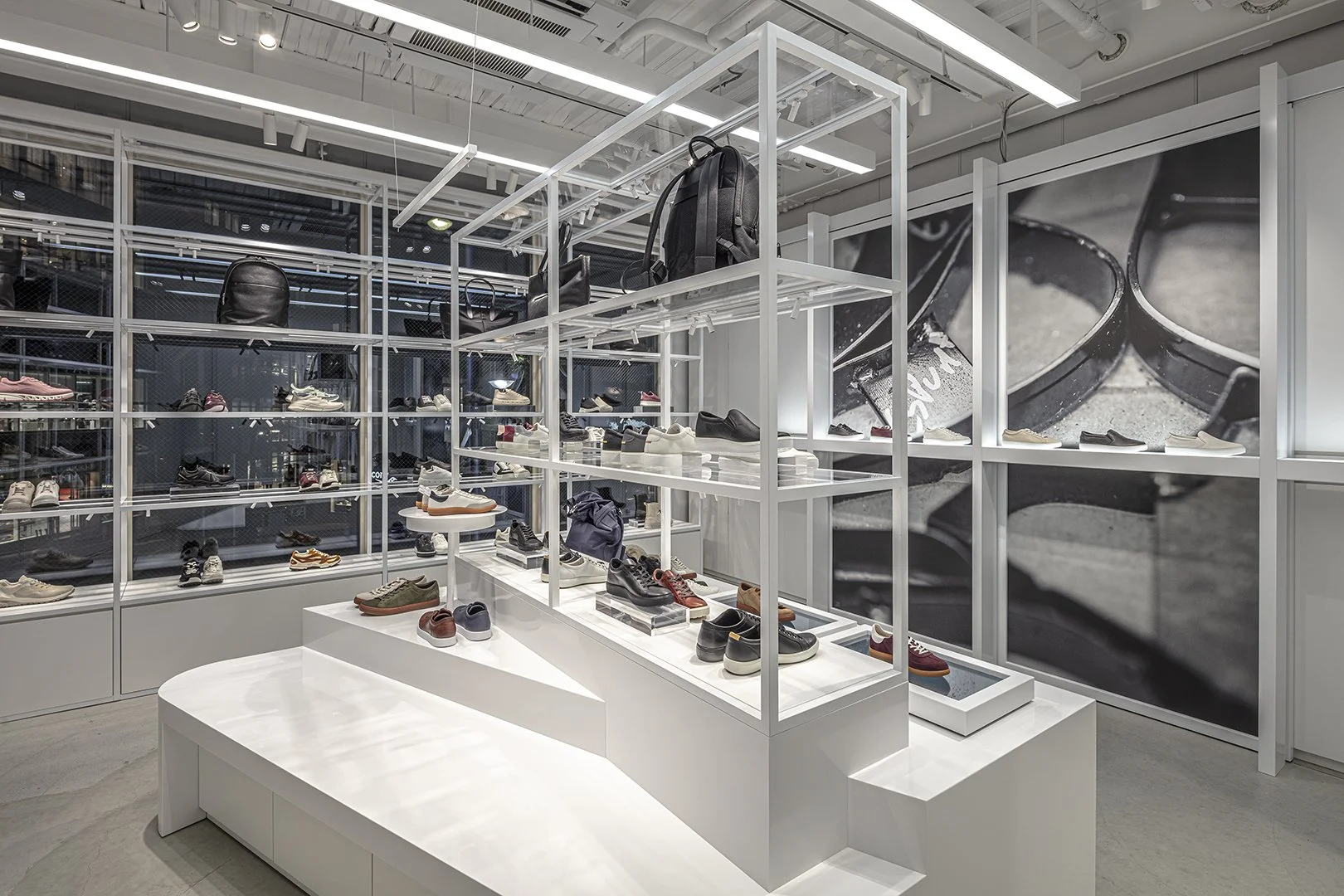
The proposal was immediately embraced by the client, and the design development moved forward under the ECCO Lab concept. One of the most striking features is the precisely organised grid based shoe shelving system. Fujiwara notes that in most footwear retail environments, shallow shelves aligned to the width of the shoes are typically arranged along the walls. In contrast, his team introduced deeper shelving to allow for more flexible display arrangements. During site visits with ECCO’s visual merchandising team, they also identified a recurring issue in which individual products could not be evenly lit, leaving parts in shadow. To address this, ultra-compact adjustable spotlights, each no larger than a fingertip, were integrated into every shelf, allowing each product to be illuminated individually.
The shelving components are standardised using 25 mm square sections, within which a slim dedicated wiring duct for the spotlights is concealed. This approach achieves both a flexible lighting system and a highly ordered visual appearance. Fujiwara credits the realisation of this detail to the careful work of the contractor, Kinso. For selected product displays, thick transparent acrylic blocks are used for the risers, referencing laboratory equipment. The shelves themselves are also made from highly transparent acrylic, creating a clear and colourless expression that would be difficult to achieve with glass.
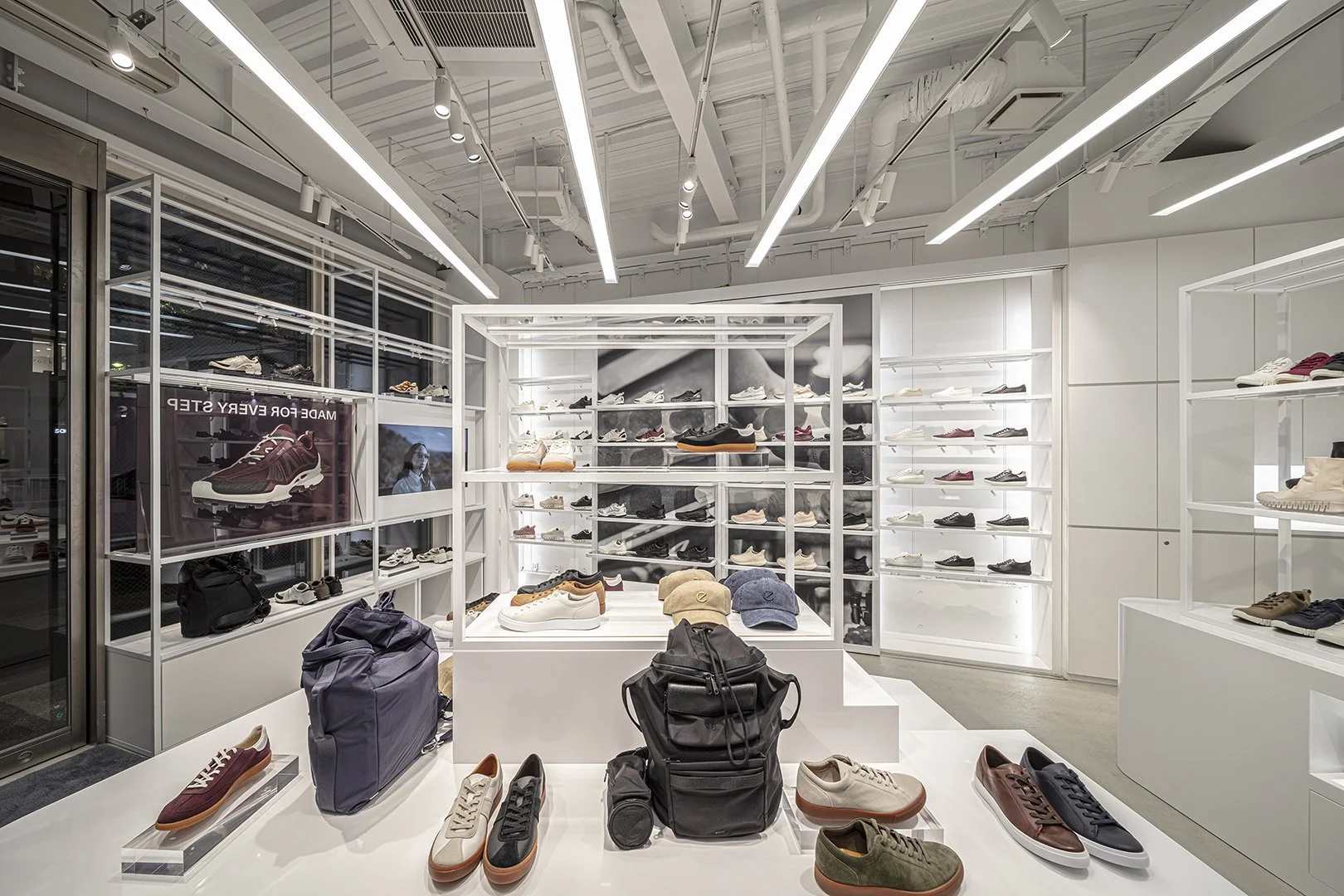
The display table that forms the base of the shelving system is equally distinctive. Responding to the trapezoidal floor plate, circulation is arranged along the perimeter, while the inner zone defines the outline of the fixture. Fujiwara describes the variation in height across the table as being developed intuitively. In one area, the form becomes a bench for trying on shoes, with storage incorporated below. While sculptural in appearance, the element also performs as a highly functional piece of retail infrastructure.
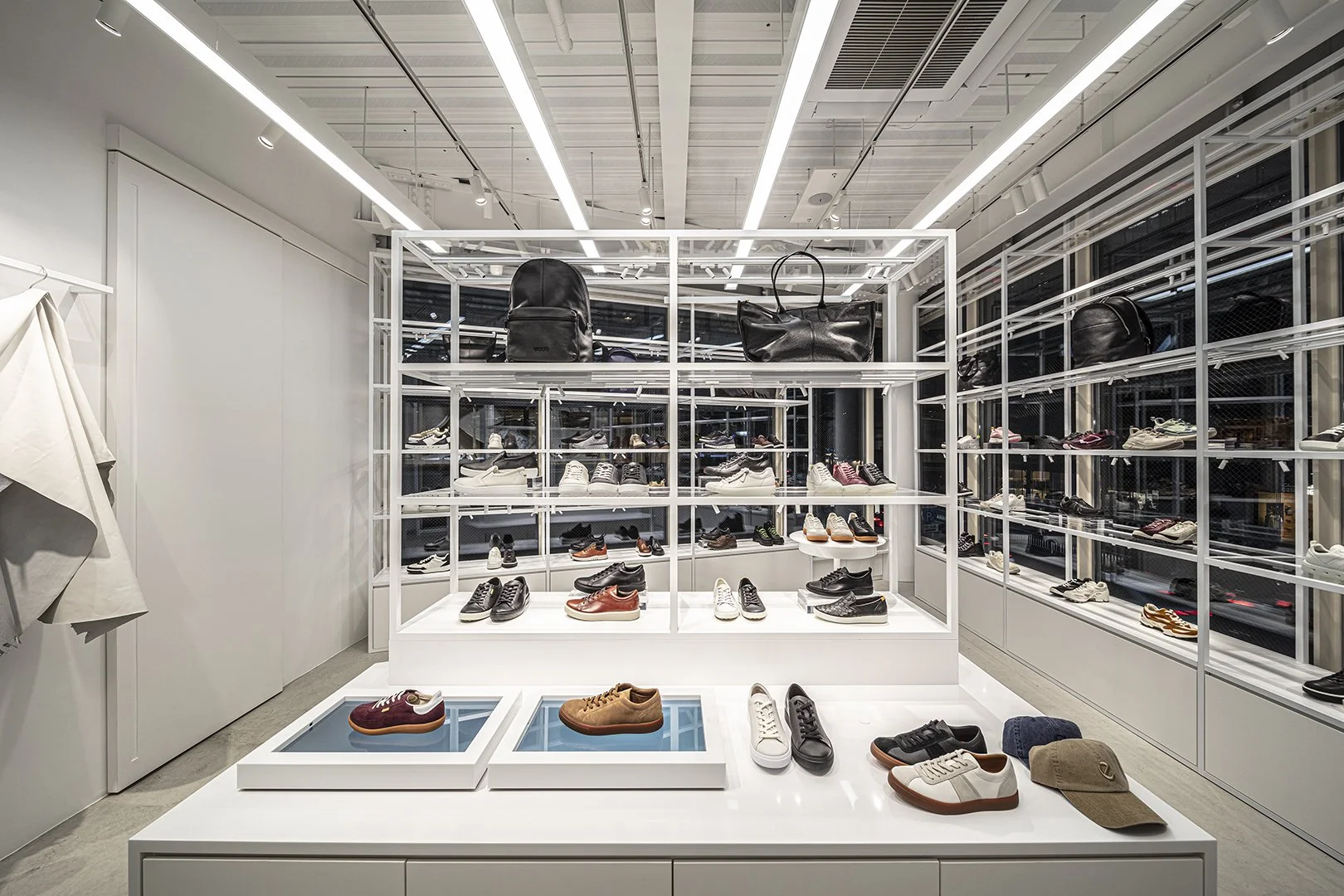
The two interactive monitors are programmed to trigger video playback the moment a shoe displayed above is picked up.
Two interactive monitors placed on top of the upper floor fixtures are another key feature. Fujiwara explains that these were conceived as a form of media within the city, introducing a sense of movement into the laboratory like space. The video content, inspired by the background of product development, explores water as a theme. Four original videos were produced in collaboration with students and graduates from his laboratory at Tokyo Metropolitan University, where he teaches.
The system is programmed so that a short video plays for several seconds the moment a customer picks up a shoe displayed beneath the monitor, creating an unexpected and engaging experience. Using ultra compact sensors, this interactive system has been well received by the client, who has expressed interest in introducing it to the ground floor as well.
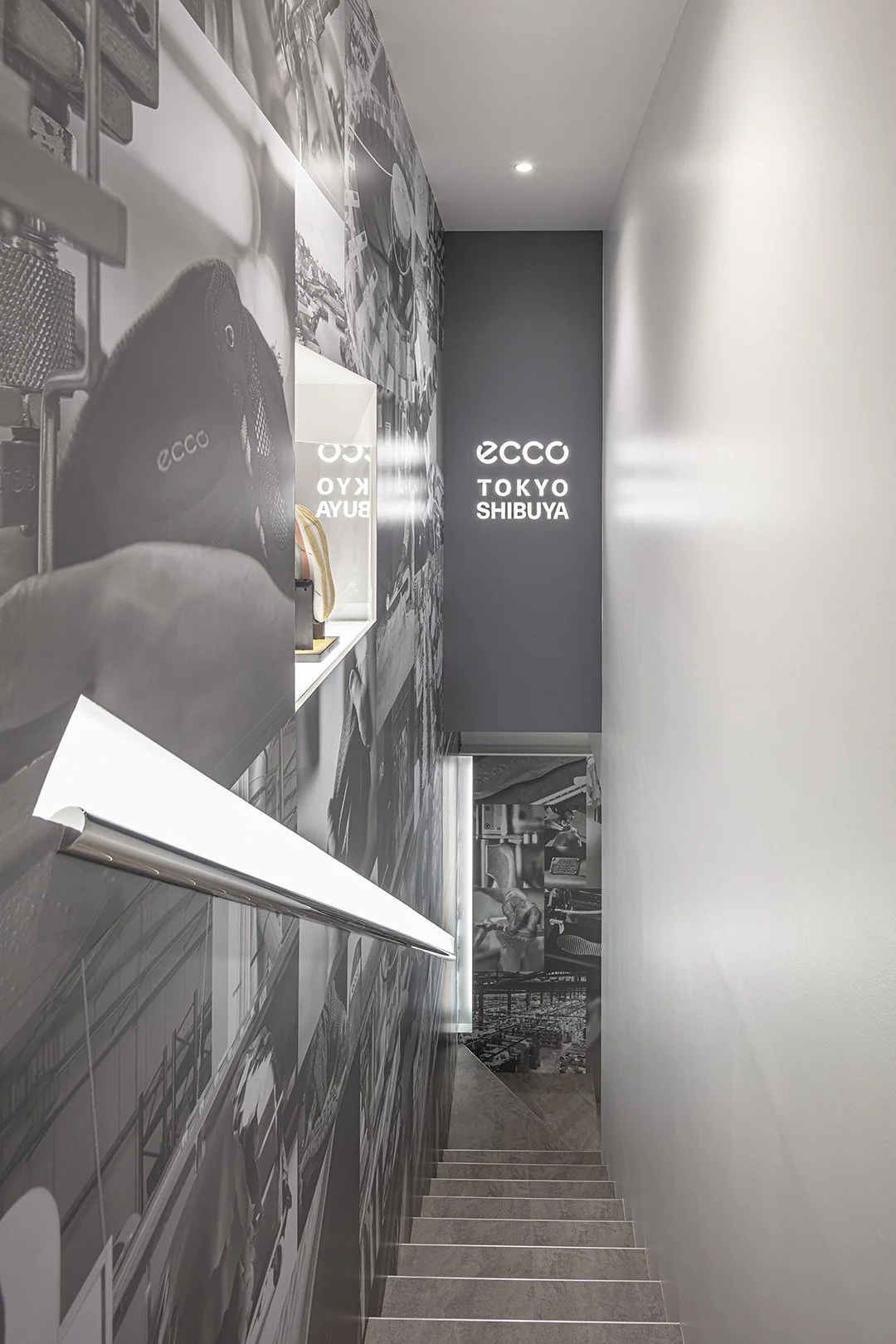
The stairwell connecting the floors offers a more tactile expression of the brand’s craftsmanship. Details such as mirror polished stainless steel handrails and integrated lighting within recessed sections reinforce the material language of the laboratory concept down to the finest level.
In this Shibuya flagship, a designer experienced in fashion retail has reinterpreted the brand’s identity through space, resulting in an interior that both articulates and extends ECCO’s values.
DETAIL
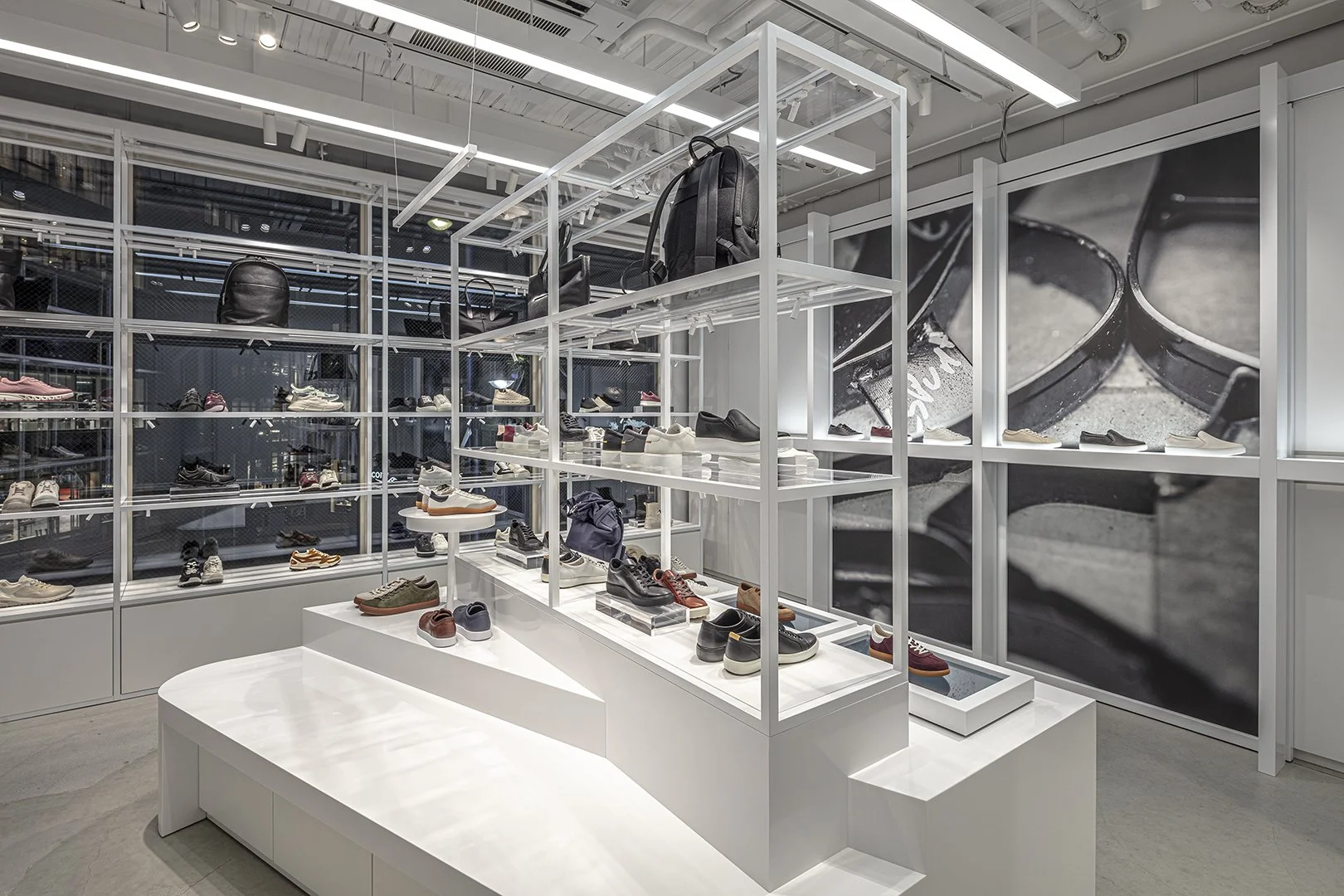
The shelving, constructed from 25 mm square steel pipes, incorporates compact spotlights. The front of the display table functions as a bench.
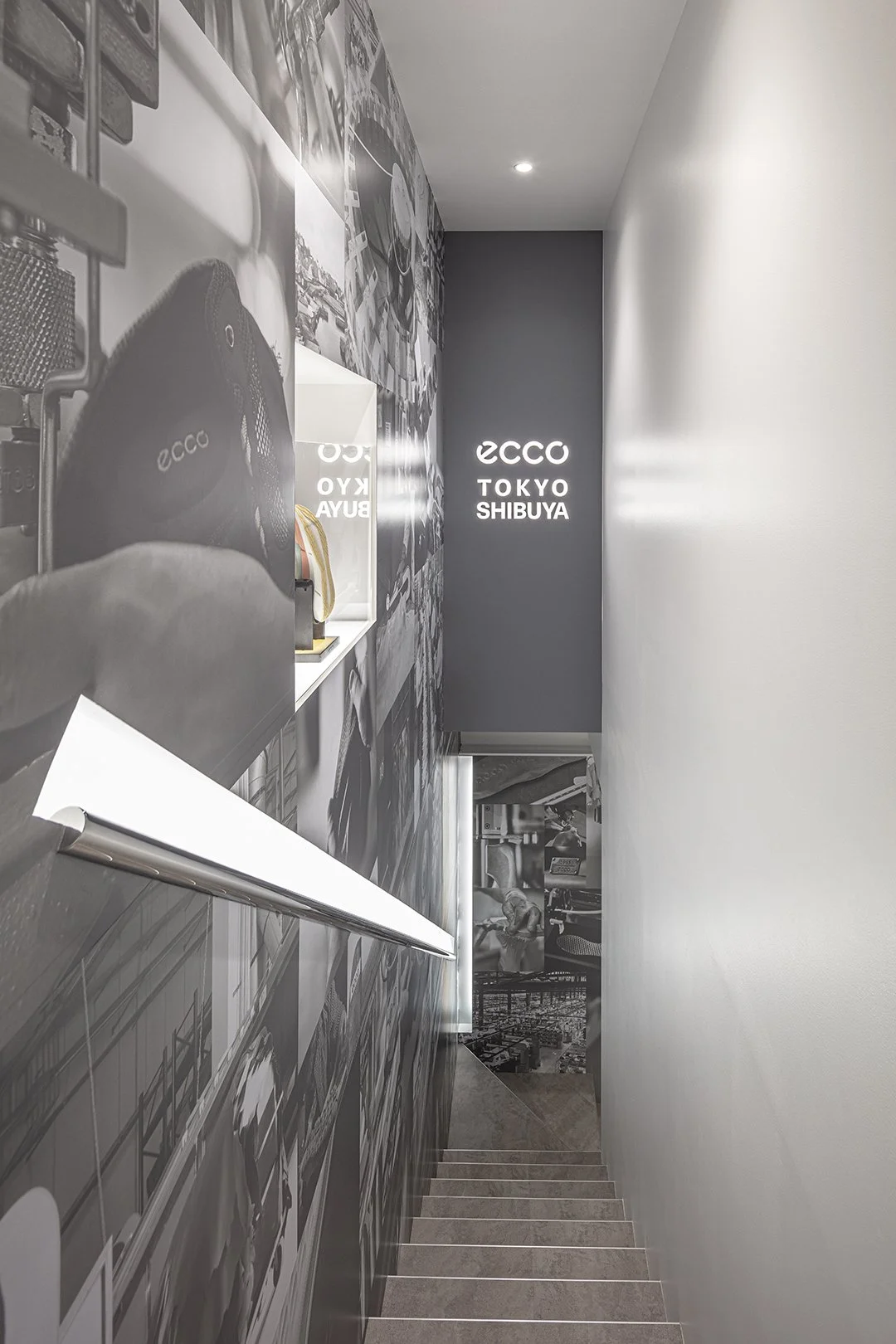
The stairwell showcases photographs that express ECCO’s craftsmanship, while the handrail is rendered in mirror-polished stainless steel.
CREDIT
Name: ECCO Tokyo Shibuya
Designer: Keisuke Fujiwara / Keisuke Fujiwara Design Office + Ko Numano / Pond Design Laboratory
Internatction Monitor Engineer: Takuya Suda
Videography: Nanako Toriu
Lighting Design: Yu Sakurai
Construction: Kinso
・
Location: 6-23-1 Jingumae Shibuya-ku, Tokyo
Owner: ECCO Japan Co., Ltd.
Completion: September 2025
Floor area: 93.07 sqm
Main use: shop
・
Material
Floor: mortar + dust-proof coating
Wall: PB t12.5 + AEP, partially applied inkjet-printed wall covering
Ceiling: existing deck plate + AEP ceiling border/Bonderized steel sheet with melamine baked finish
Fixtures: frame/ 25mm square steel pipe with baked-on finish base/ Corian + melamine-faced board
Lighting fixtures: under-shelf spotlights / Micro Light Cannon (Tokistar)
Stair handrail: stainless steel(φ38 mm) mirror finish





_