THE UNDETERMINED LINE by Shizuki Toya
Shibaura Institute of Technology | Faculty of Architecture | Department of Architecture | SA Course
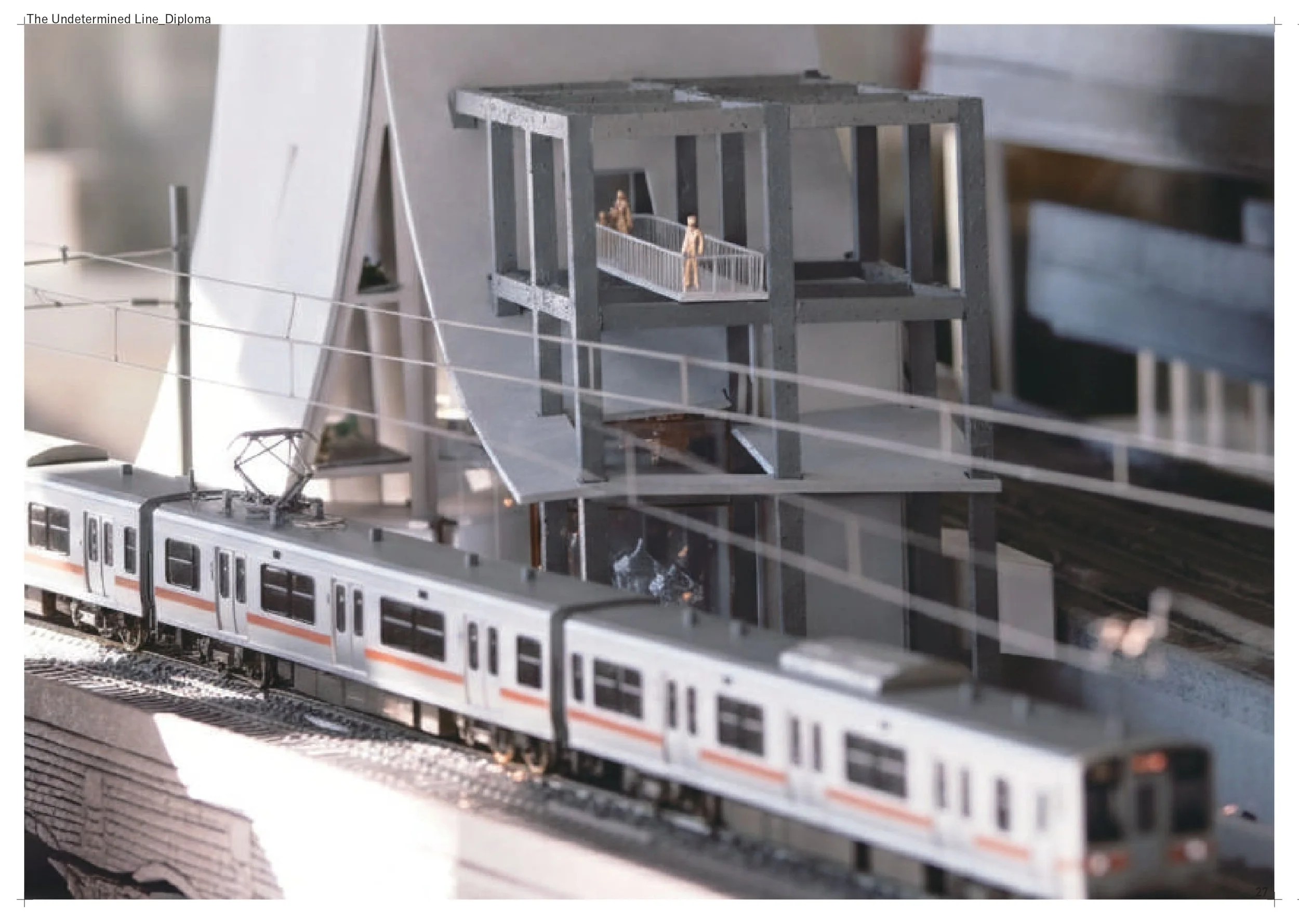
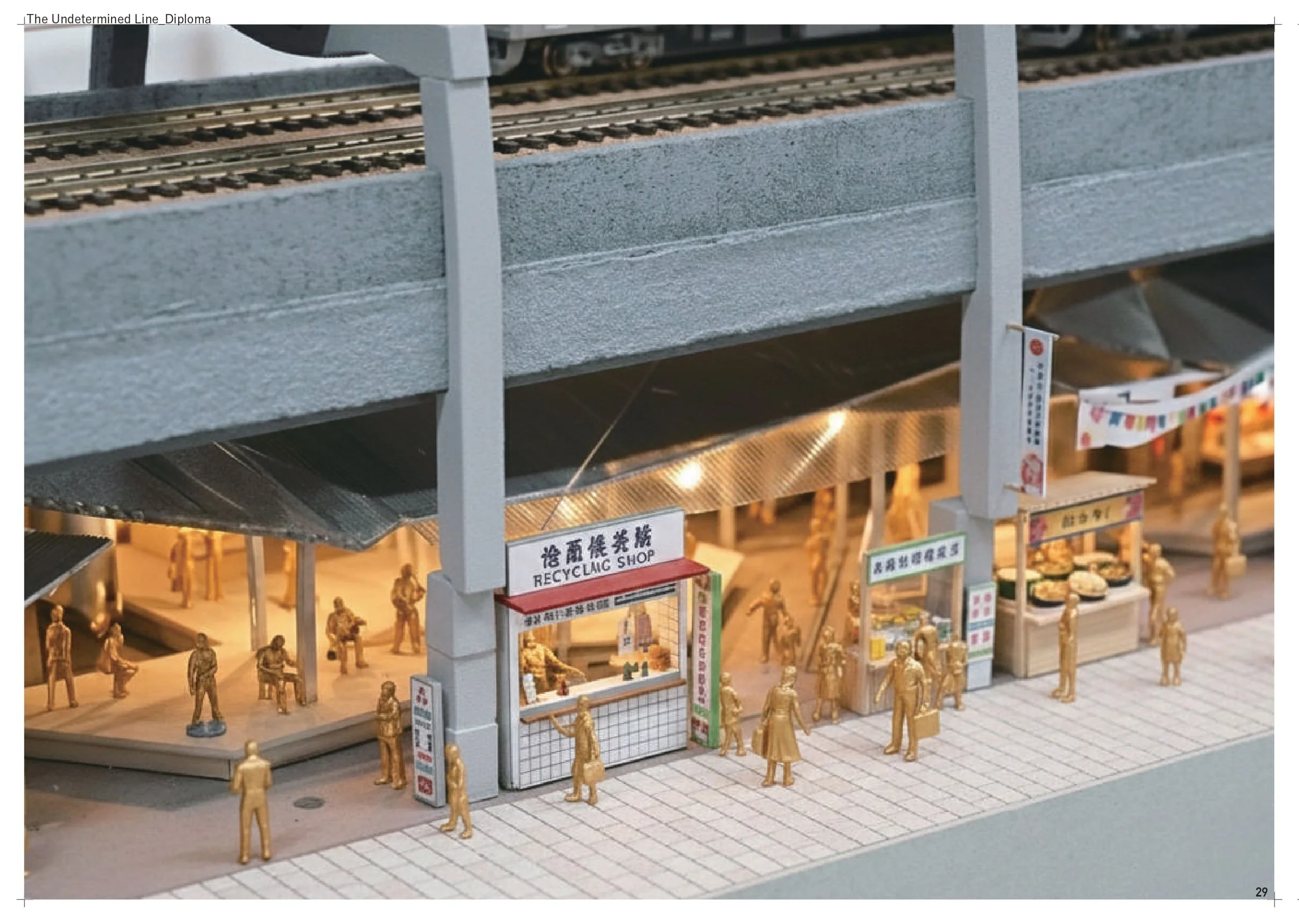
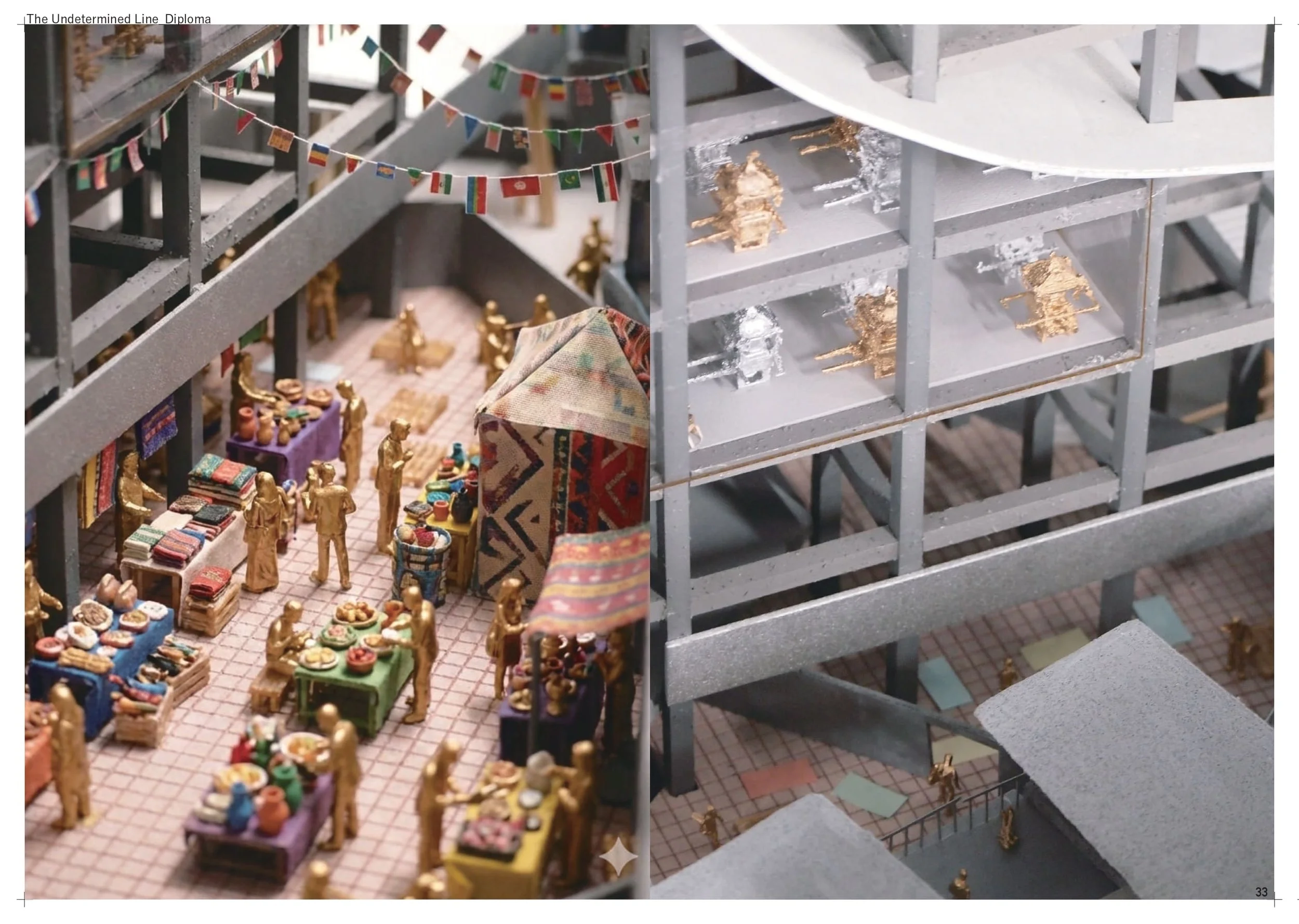
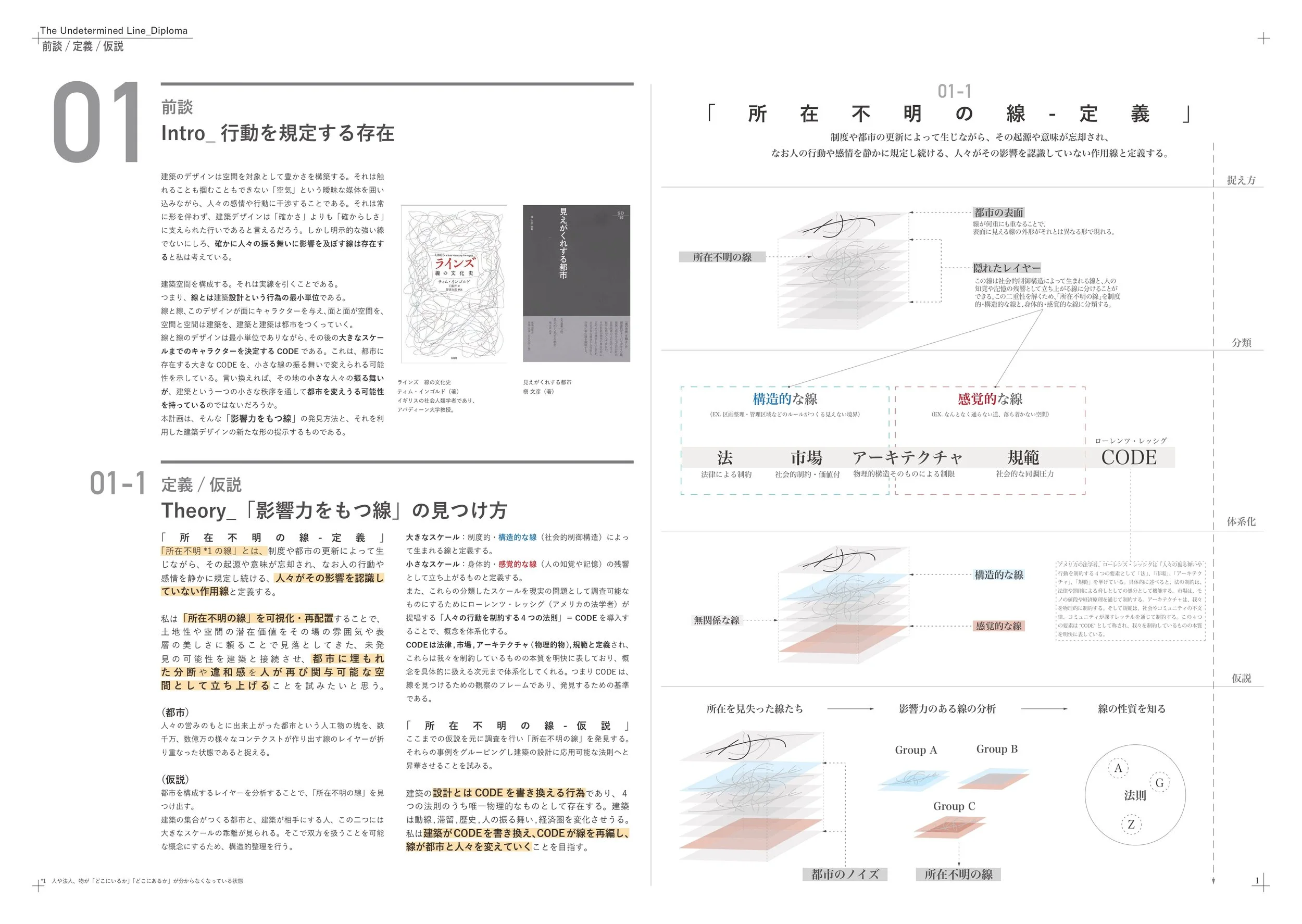
The aim is to create architecture that emerges from the extension of existing relationships and continues to generate those relationships. I define ÅgUnlocated LinesÅh as lines of influence produced through institutional and urban transformations that regulate human behavior and emotions while the intention behind them remains unclear. This project attempts to reinterpret constraintsÅ\traditionally regarded as noiseÅ\as resources and reorganize them architecturally.
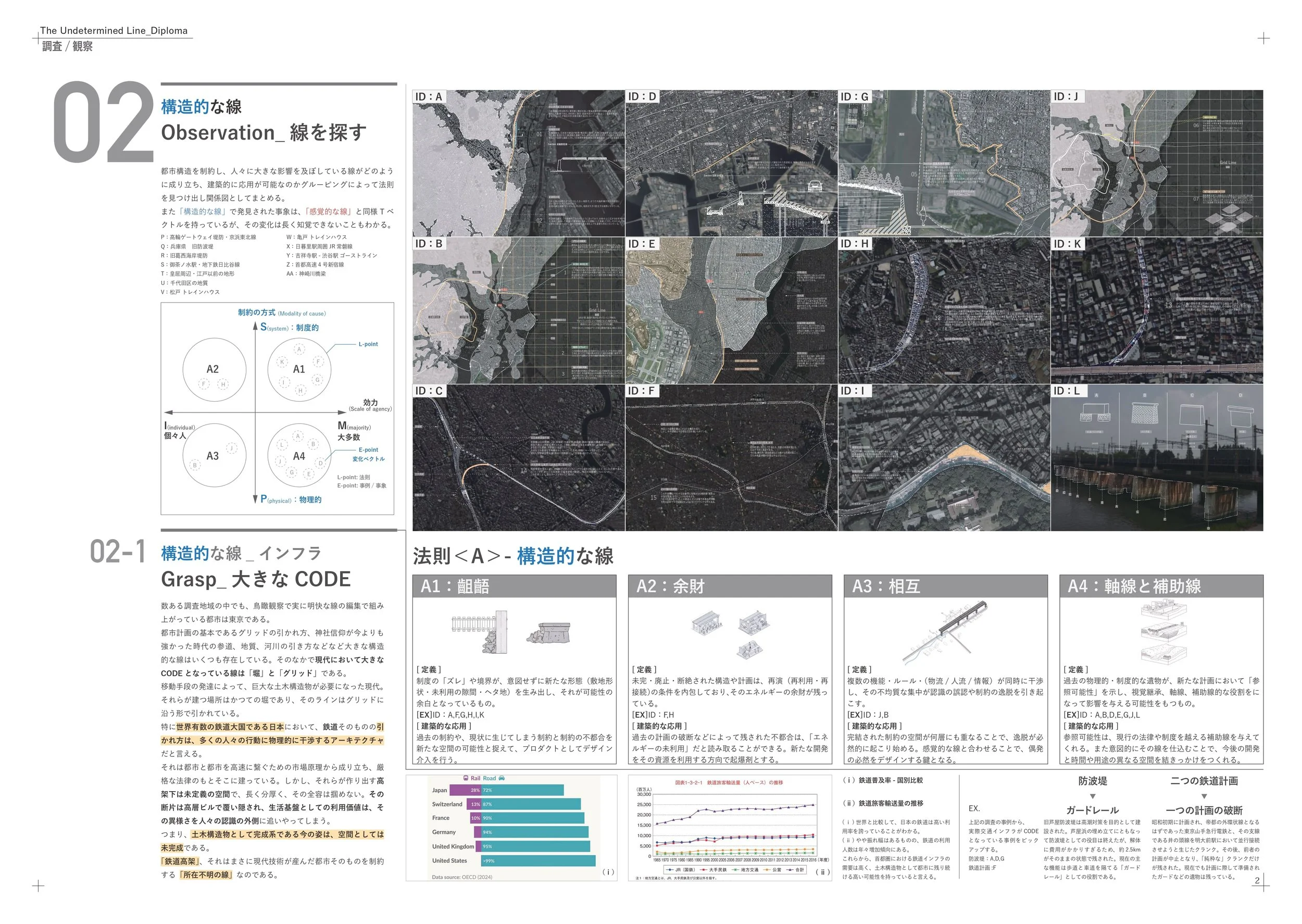
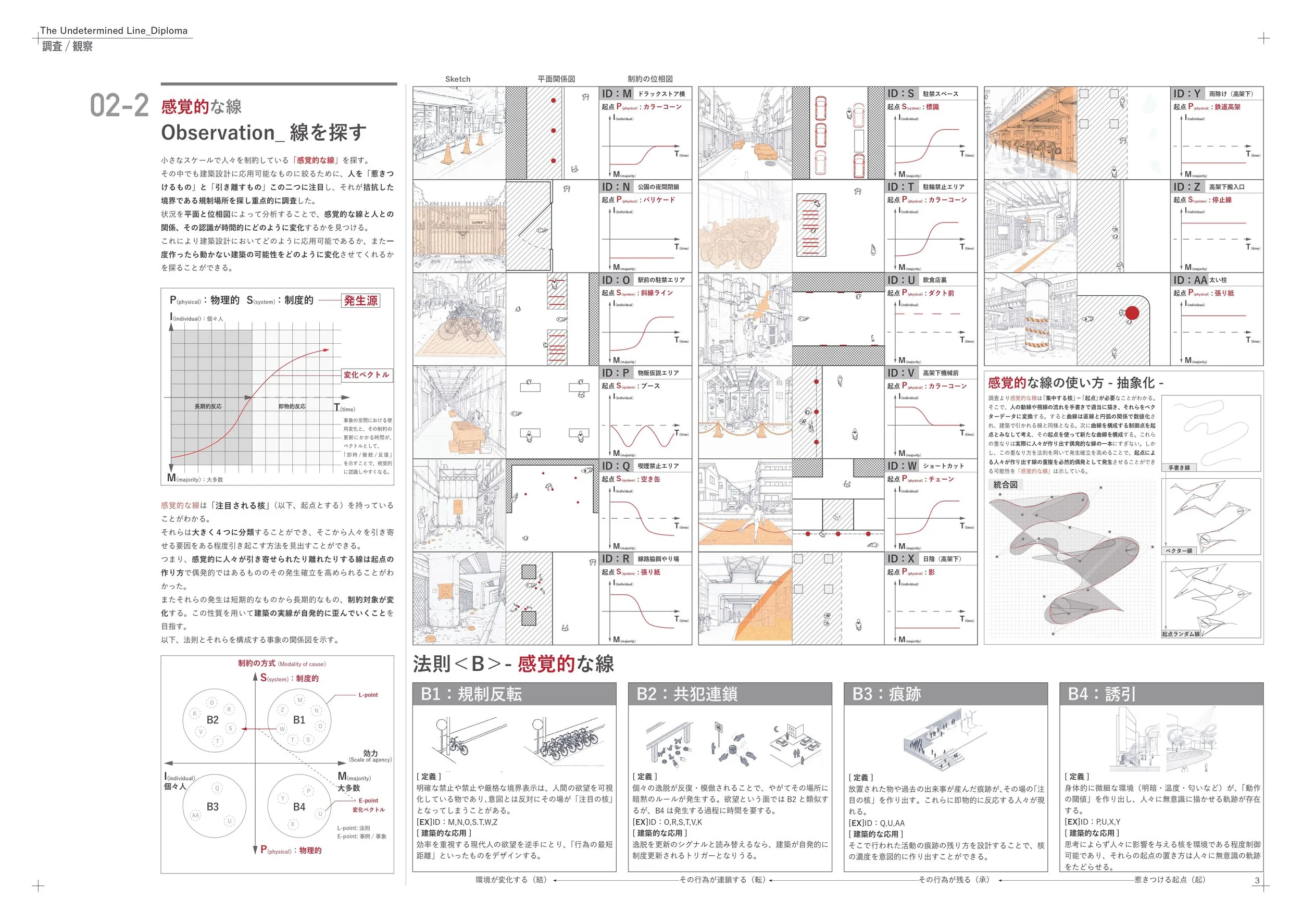
As a theoretical foundation, the project introduces the concept of the four modalities of regulation (CODE) proposed by the American legal scholar?Lawrence Lessig. Using this framework, the multilayered structures embedded within the city are analyzed. From this analysis, lines of influence are extracted and organized as Åglaws,Åh functioning as filters for identifying these operative lines.
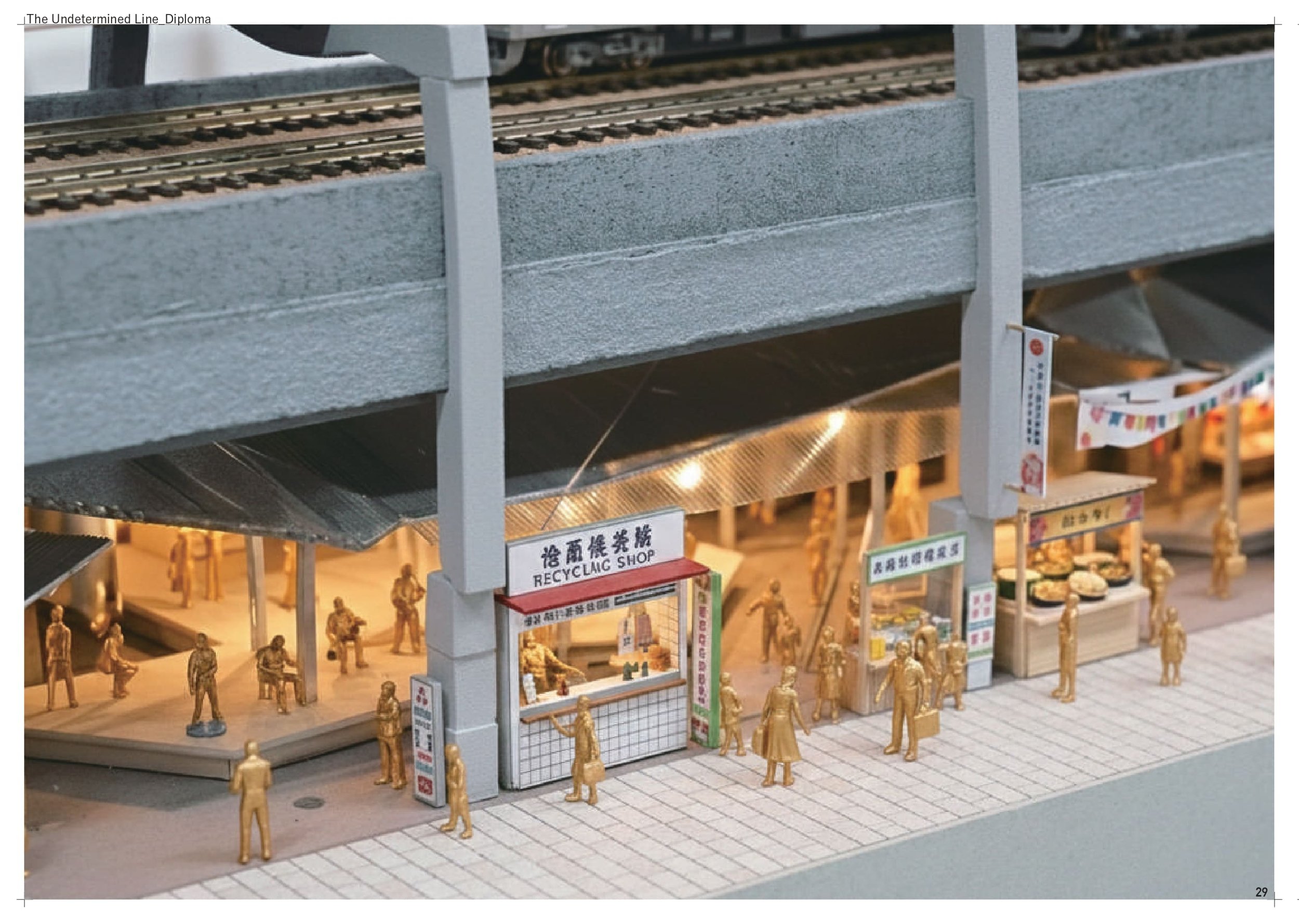
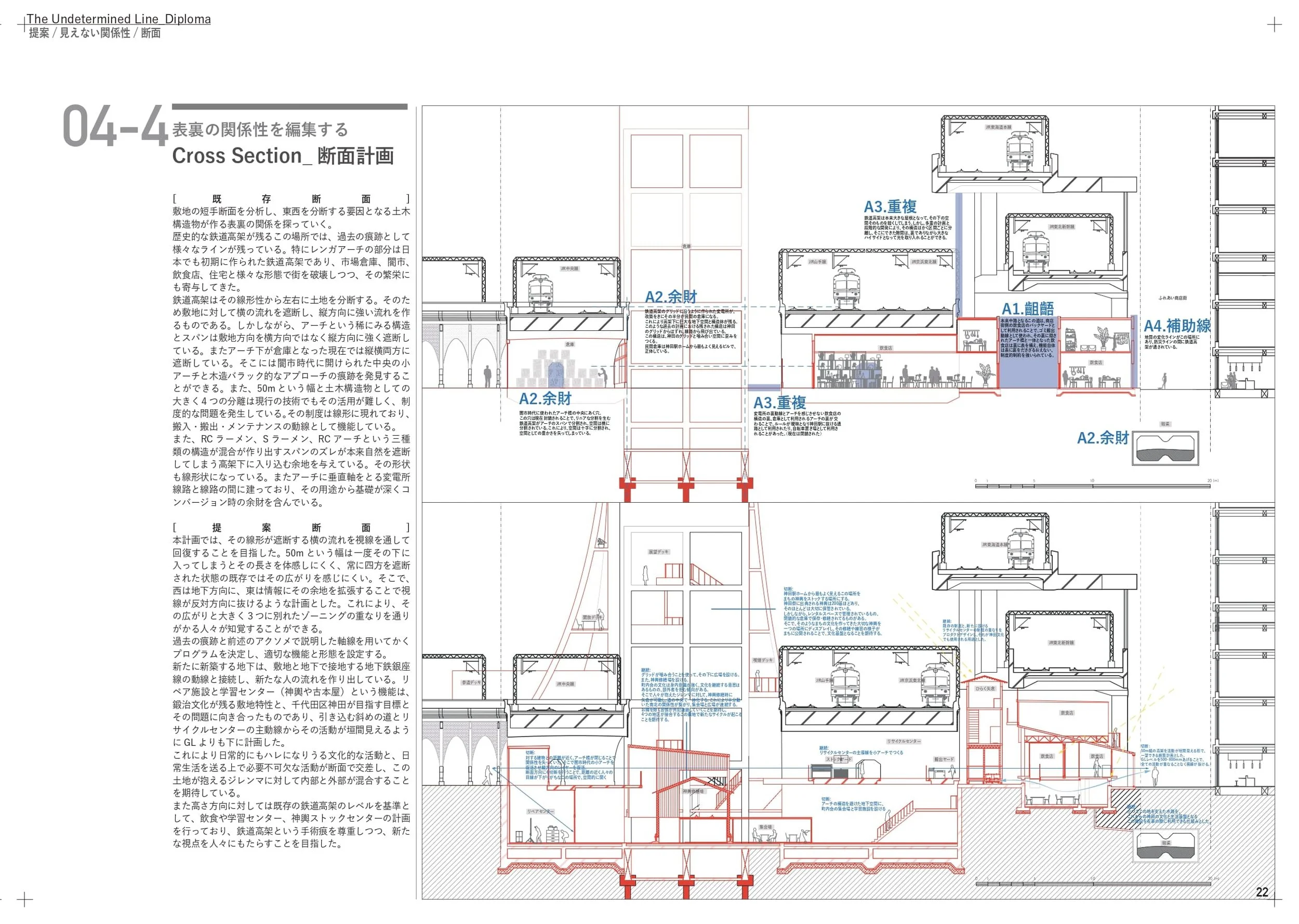
The investigation reveals that one of the most powerful regulatory codes shaping the city is the railway viaduct. While the viaduct is complete as civil infrastructure, it remains undefined as a spatial entity. The project site is located where the oblique grid centered on?Edo Castle?intersects with the orthogonal grid developed outside the castle. It was once the boundary between private railways and the national railway system. With the privatization and elevation of the railway, orthogonal infrastructure was inserted, producing an east?west division. The project focuses on a fragment beneath this viaduct where this division persists.
Diagram:
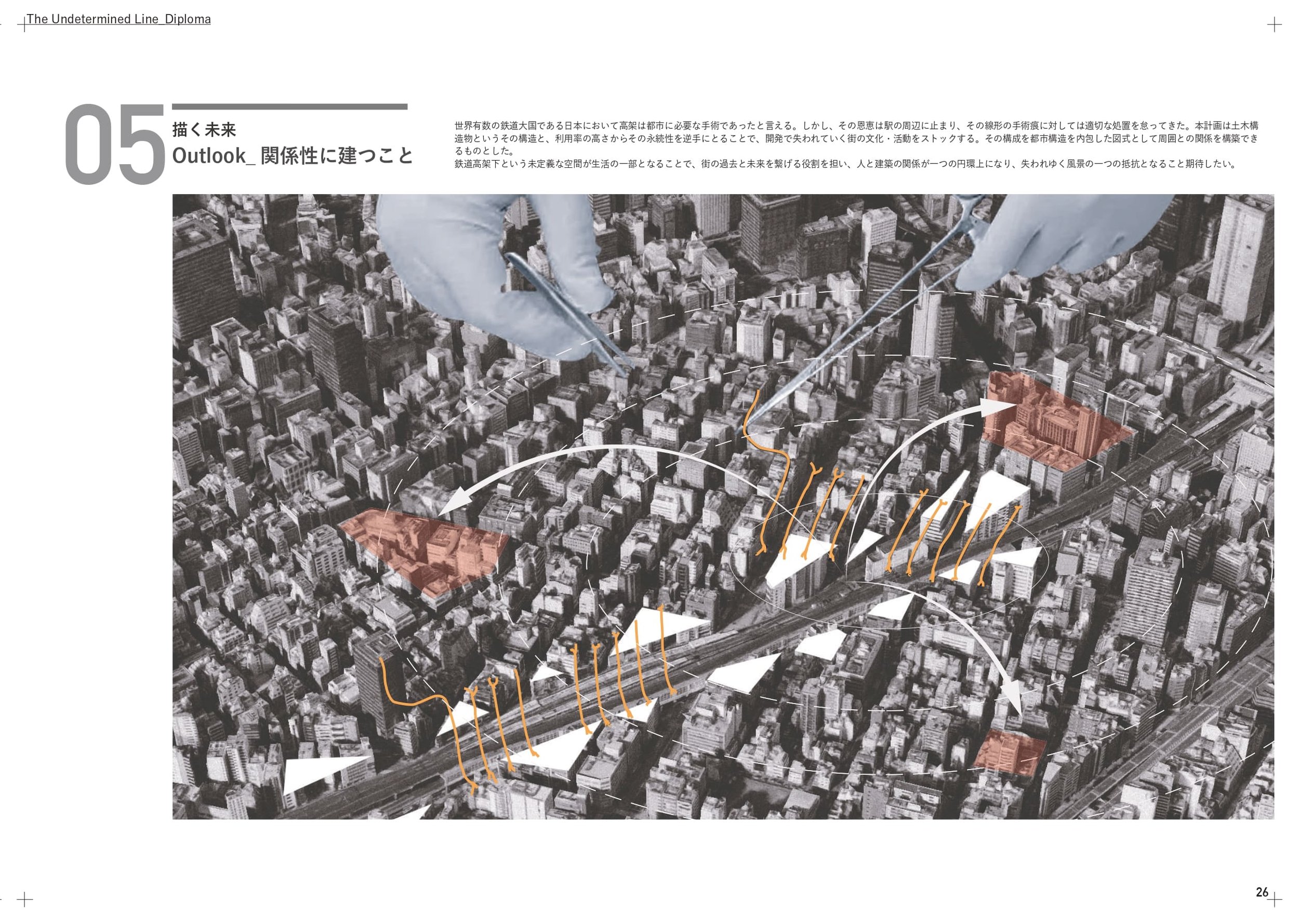
To restore the relationship between the town and triangular plots generated along the railway line, existing streets are extended into the site, creating triangular parcels within it. When these triangular plots face one another, they are treated as a single urban block. By elevating the hierarchy of the streets drawn into the site, the adjoining road functions as a secondary urban route.
Project:
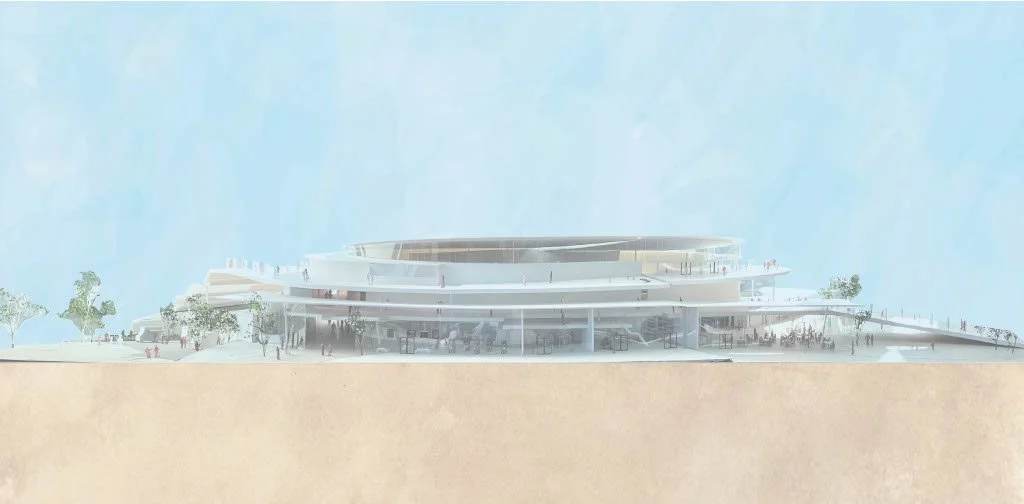
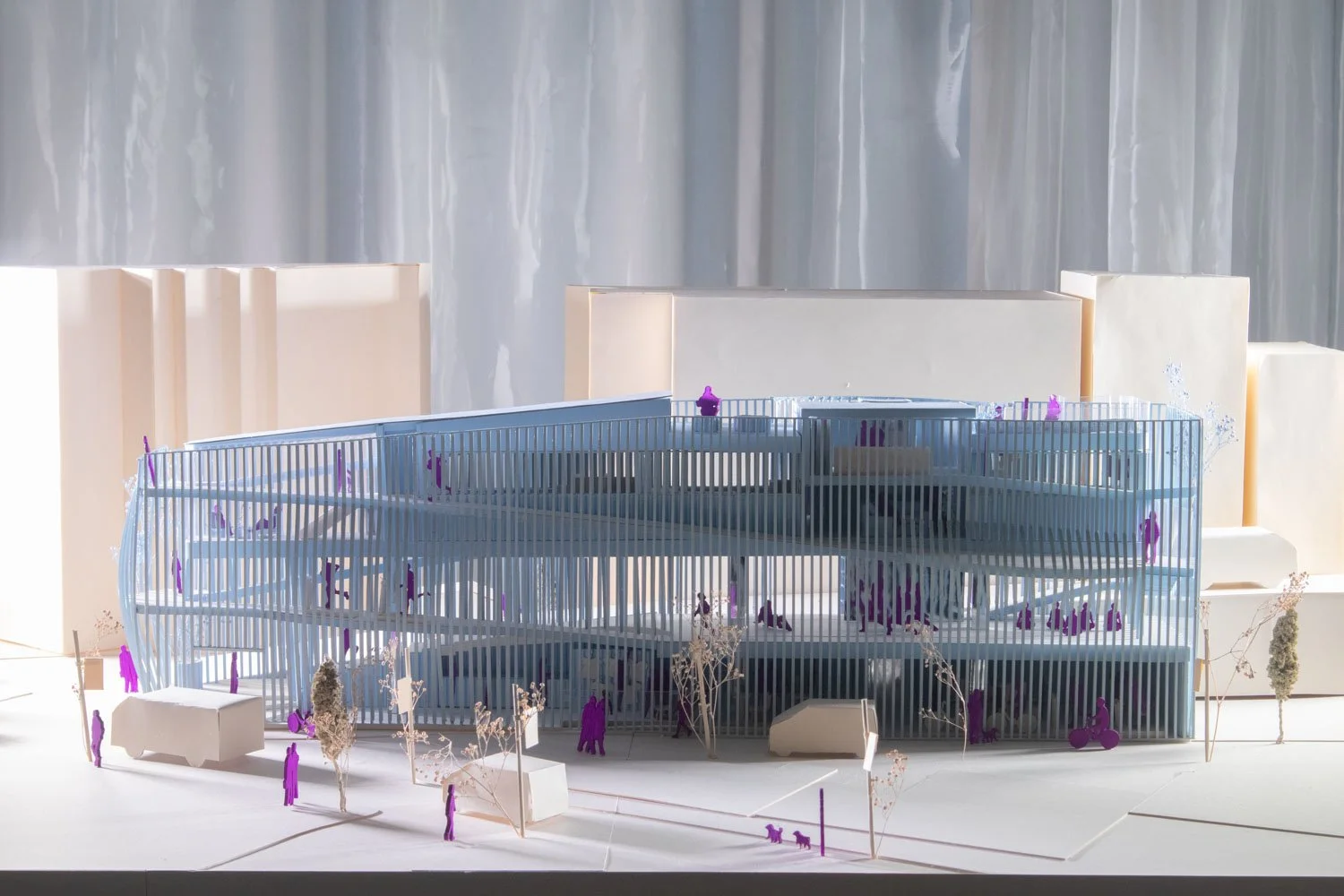
Lines generated by geological conditions, former pilgrimage routes, traces of wartime and postwar black markets, the institutional structure of the drinking district, disaster-prevention lines, and temporal patterns of use are analyzed through the identified Åglaws,Åh determining the buildingÅfs form and program.
In this districtÅ\where one of JapanÅfs three major festivals is heldÅ\the project also addresses the externalization of portable shrine storage, a symbolic element of the festival, and the dilemma of cultural succession embedded within its strong internal community culture. Through architecture and temporary structures that traverse everyday life and extraordinary events, the project aims to connect diverse activities and phenomena.
The siteÅfs historical culture of market streets, frequent gatherings for festival preparation, and its position as a junction among five neighborhood communities situate this proposal as an extension of everyday urban life.
By responding to the railway viaductÅ\an urban surgical scarÅ\the project turns its permanence into an advantage, using it as a framework to store and sustain local cultural practices gradually disappearing through redevelopment. Embedding urban structure within the architectural diagram and maintaining relationships with the surrounding context is proposed as resistance against the loss of urban landscapes.
words: Shizuki Toya
CREDIT
title: The Undetermined Line
student name: Shizuki Toya
school: Shibaura Institute of Technology, Faculty of Architecture, Department of Architecture, SA Course
year: 2026
category: Interior Design

RELATED POST
#STUDENT