URBAN PERMEATION AND CONVERGENCE by Suzuna Okabe
Tokai University | School of Architecture and Urban Planning | Department of Architecture
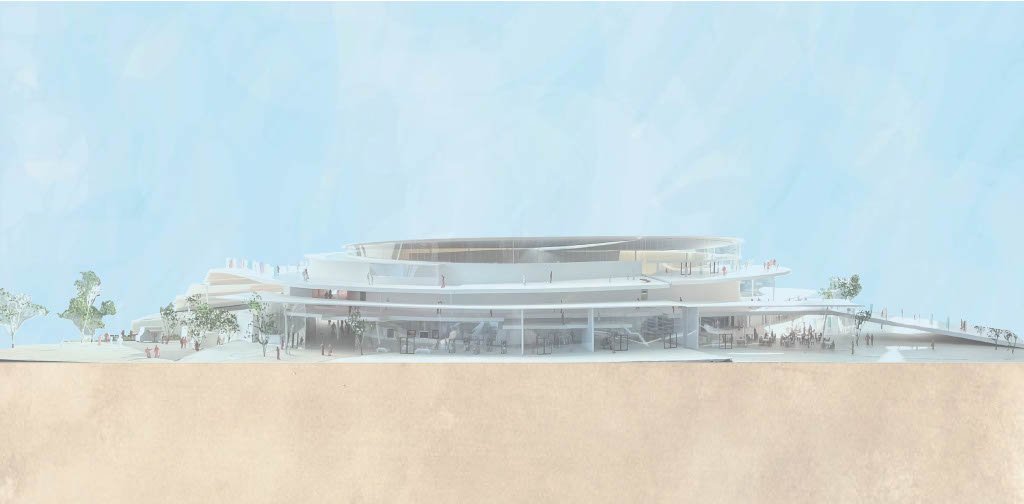
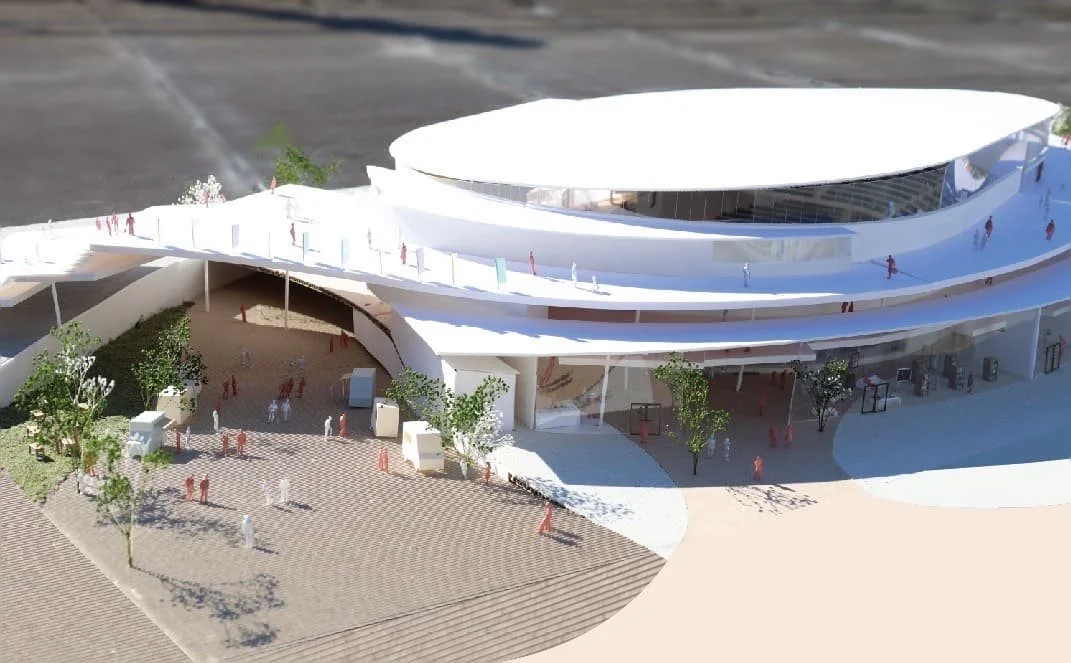
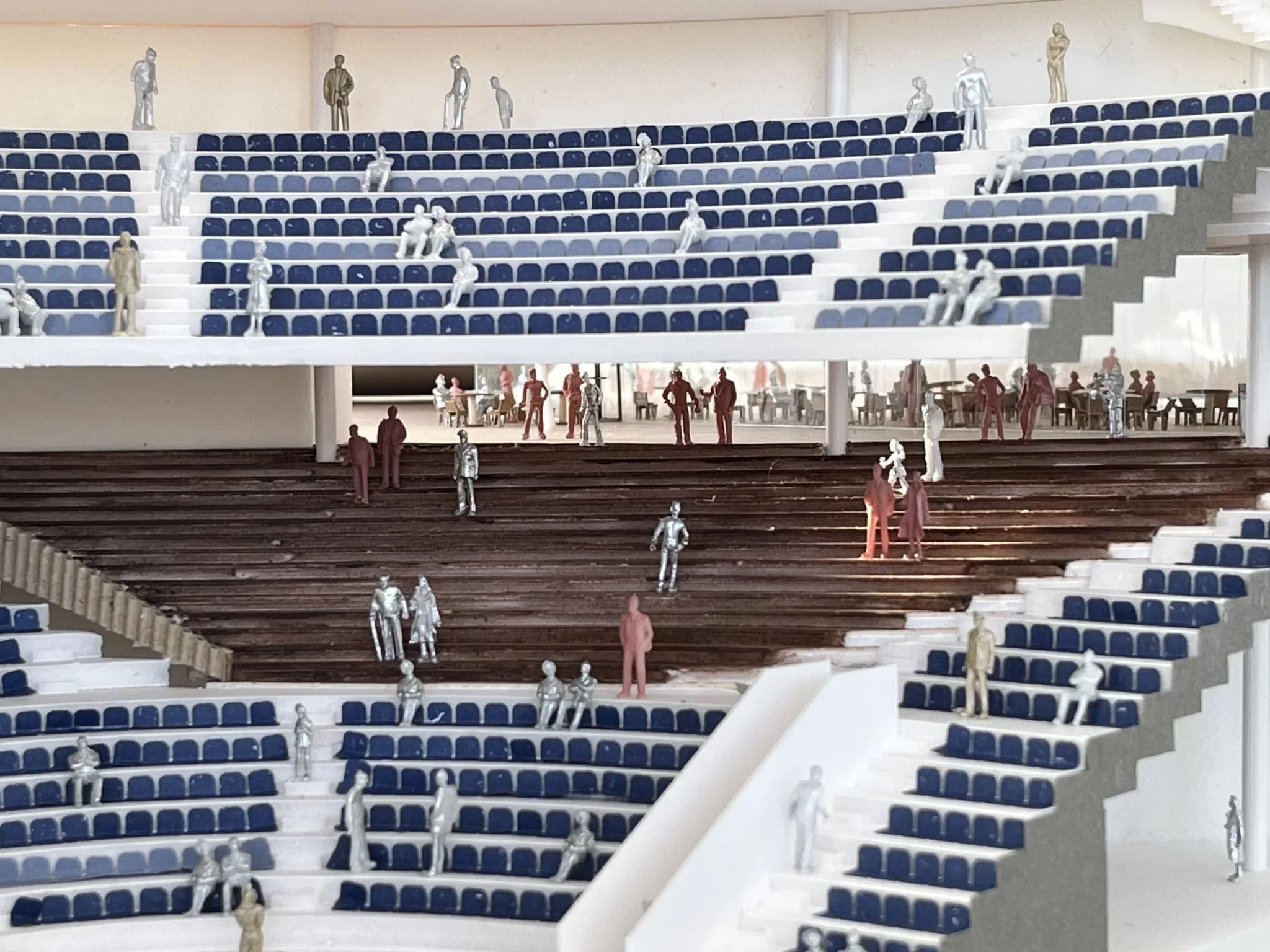
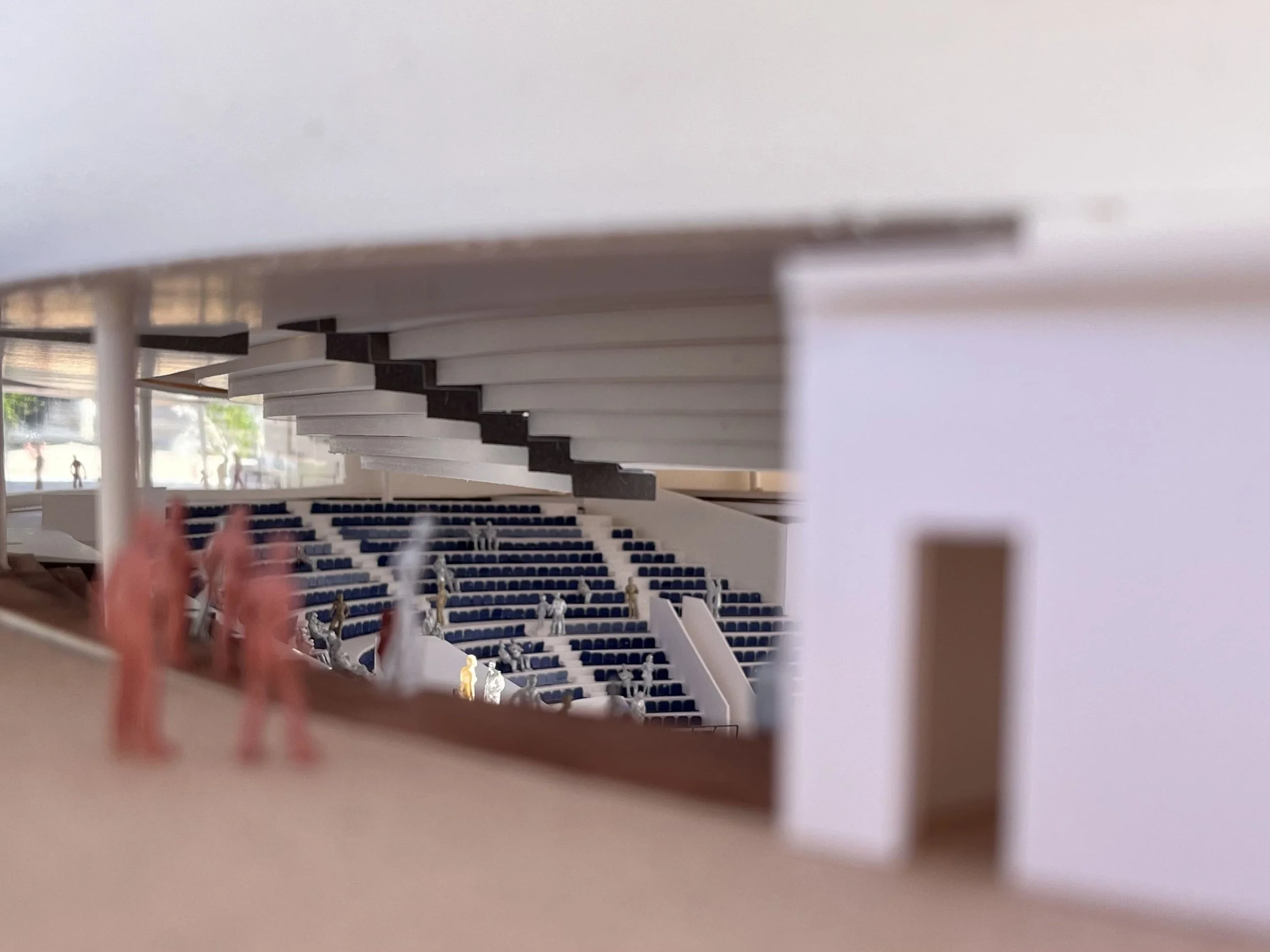
Many recently developed arena facilities prioritize seating capacity and staging performance for events, while their use by local communities during ordinary times remains limited. Although some arenas incorporate considerations for function or local culture—such as Ariake Arena or Okinawa Arena—they often become large, single-purpose buildings detached from the everyday lives of residents. As a result, opportunities for daily use and for building relationships between the facility and the surrounding community remain insufficient.
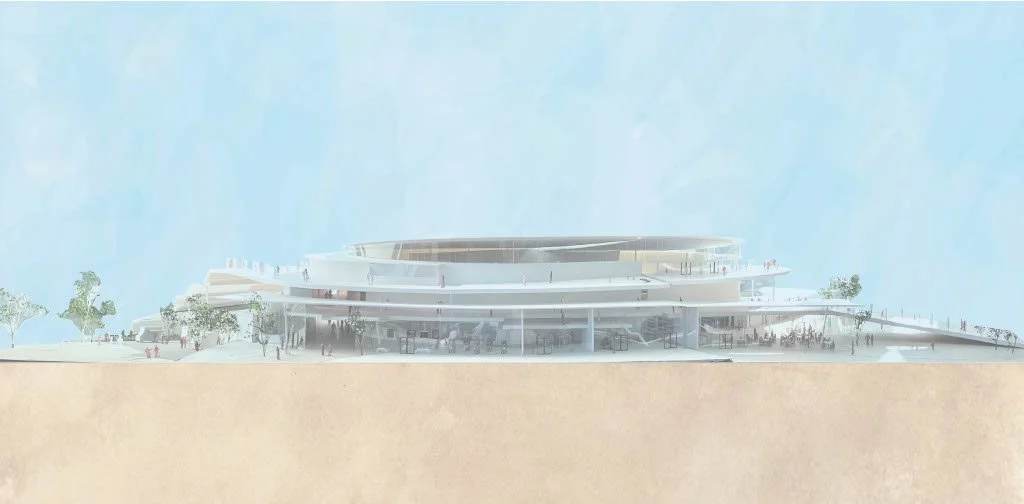
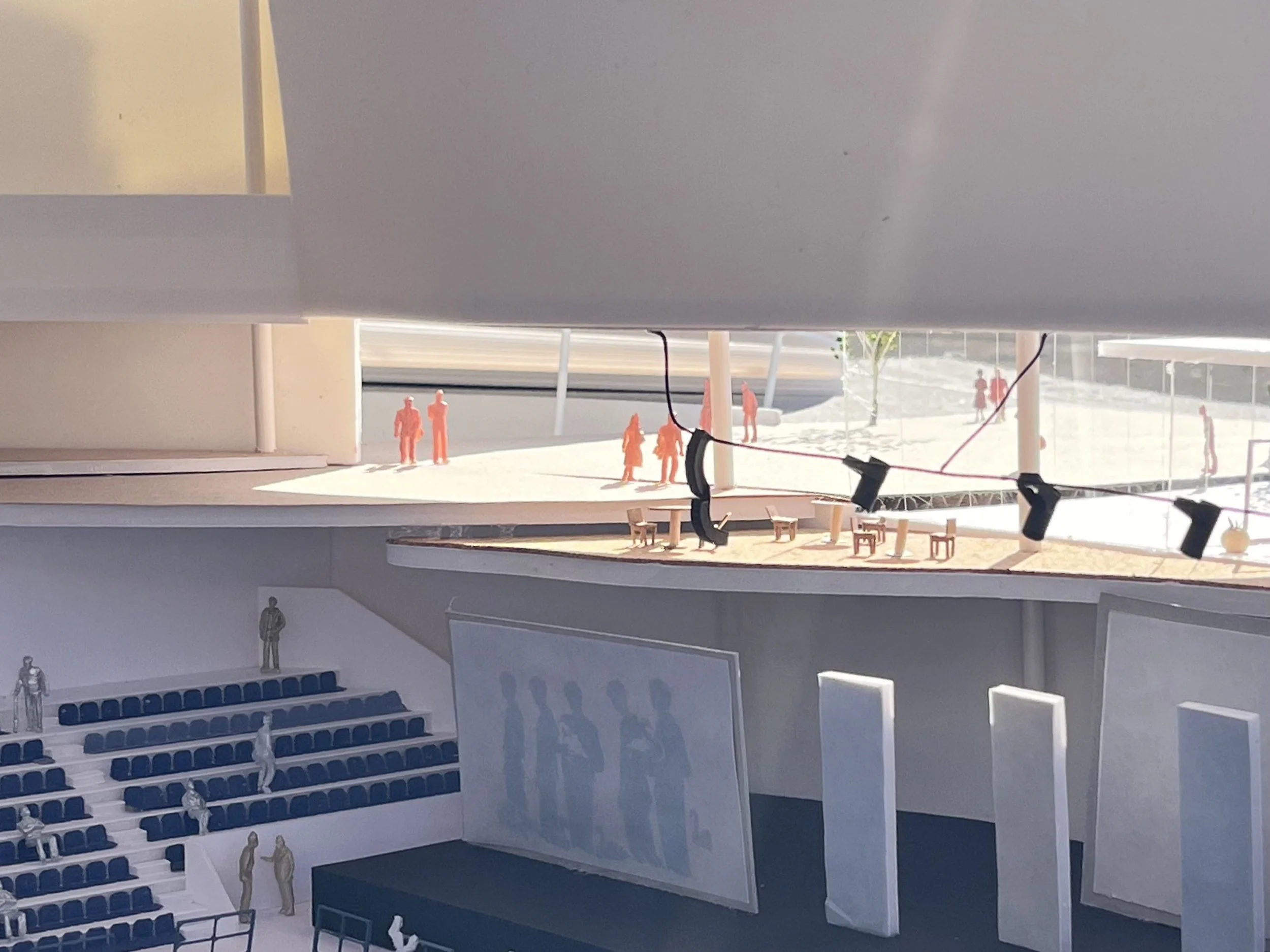
In response, this project reconsiders the conventional model of arena facilities that have been separated from the everyday life of residents. Through spatial composition and circulation planning, it proposes an arena where extraordinary event experiences and ordinary community activities coexist in continuity.
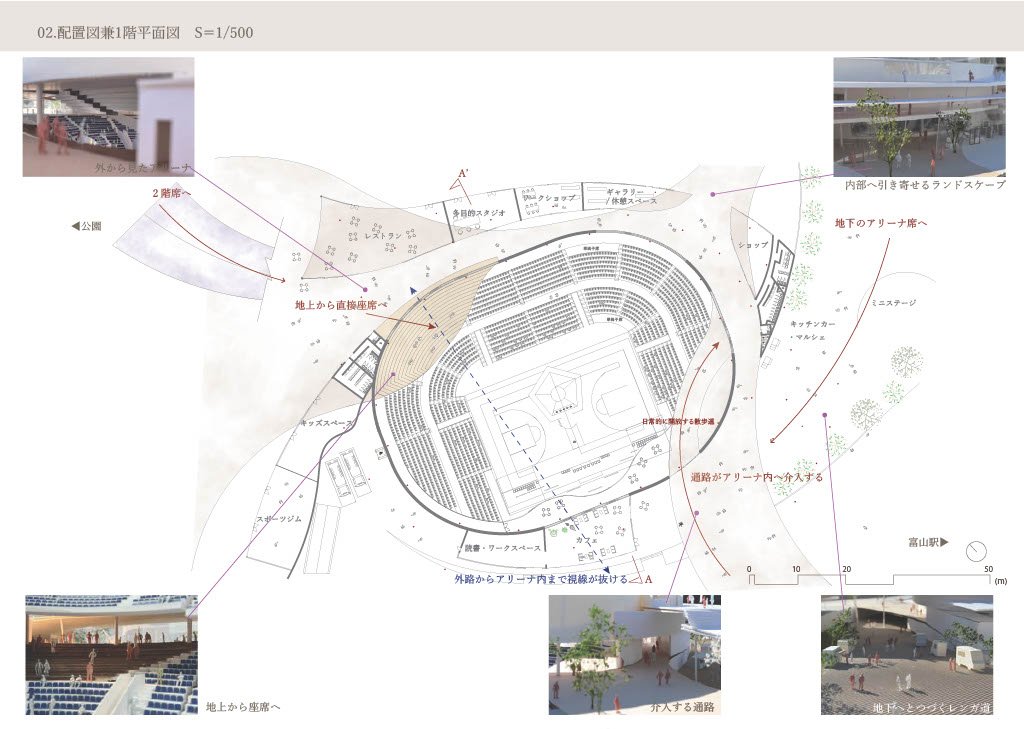
The proposed site is located on the southeast side of Kansui Park in Toyama City, Toyama Prefecture. Toyama faces urban challenges that call for the creation of places where people can casually gather in daily life and where diverse activities across generations can emerge. Positioned at the starting point of a public transportation axis and adjacent to the station, the park, and existing public facilities, the site has the potential to receive flows of people and distribute them throughout the surrounding area.
Through the following three spatial strategies, the arena is positioned as architecture that connects seamlessly with everyday urban space. By creating a place that absorbs diverse activities while blending into the surrounding environment, the project aims to reduce the physical and psychological distance between the arena facility and the local community.
1. Convergent circulation planning
The entire facility is organized as a convergent form that gathers flows of people from multiple directions, thereby dispersing visitor circulation. This allows for efficient crowd management during events while strengthening continuity with surrounding urban elements such as the park and the station. The arena thus functions as a hub that receives and connects flows of people from both inside and outside the community.
2. A layout that maximizes the benefits of mixed uses
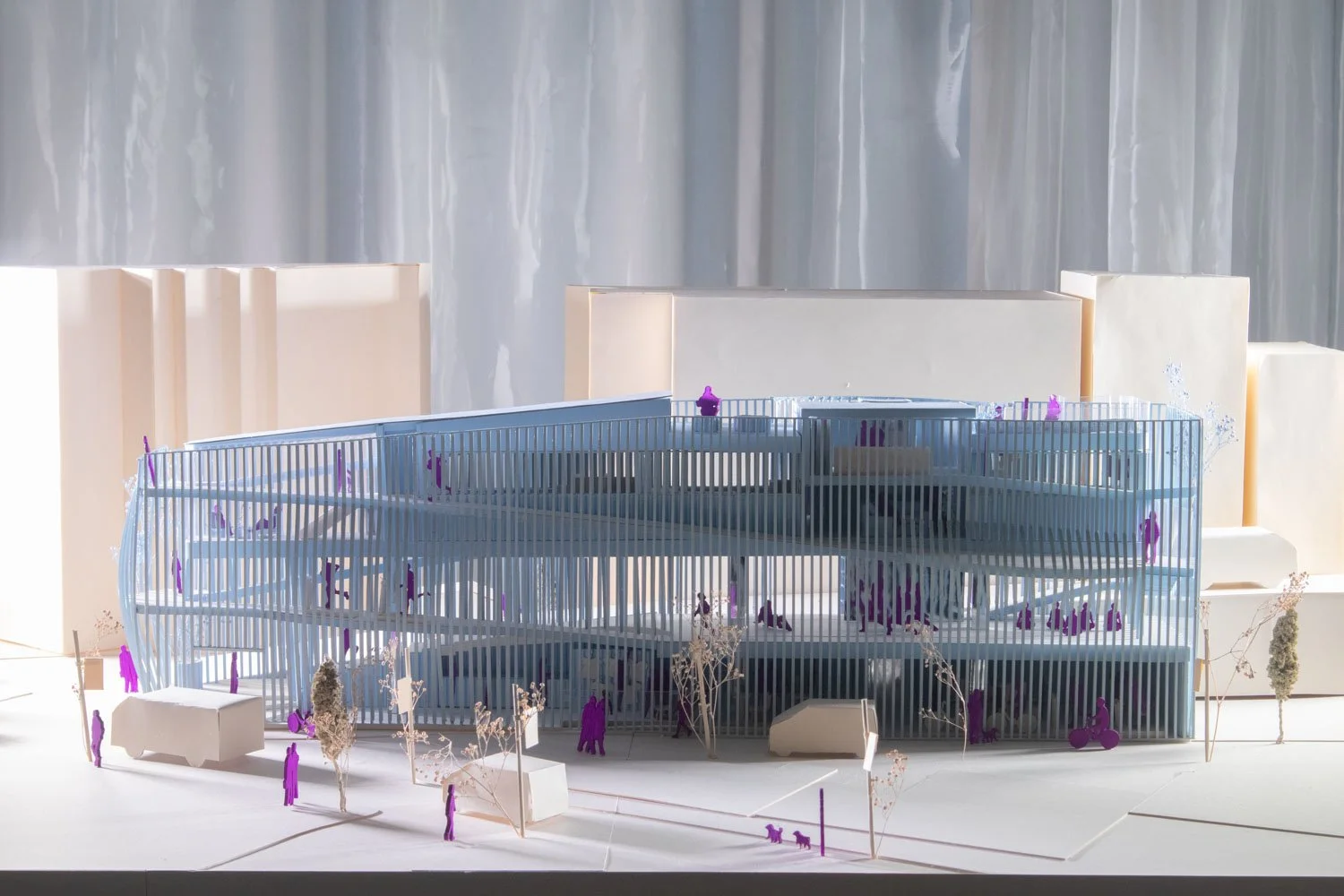
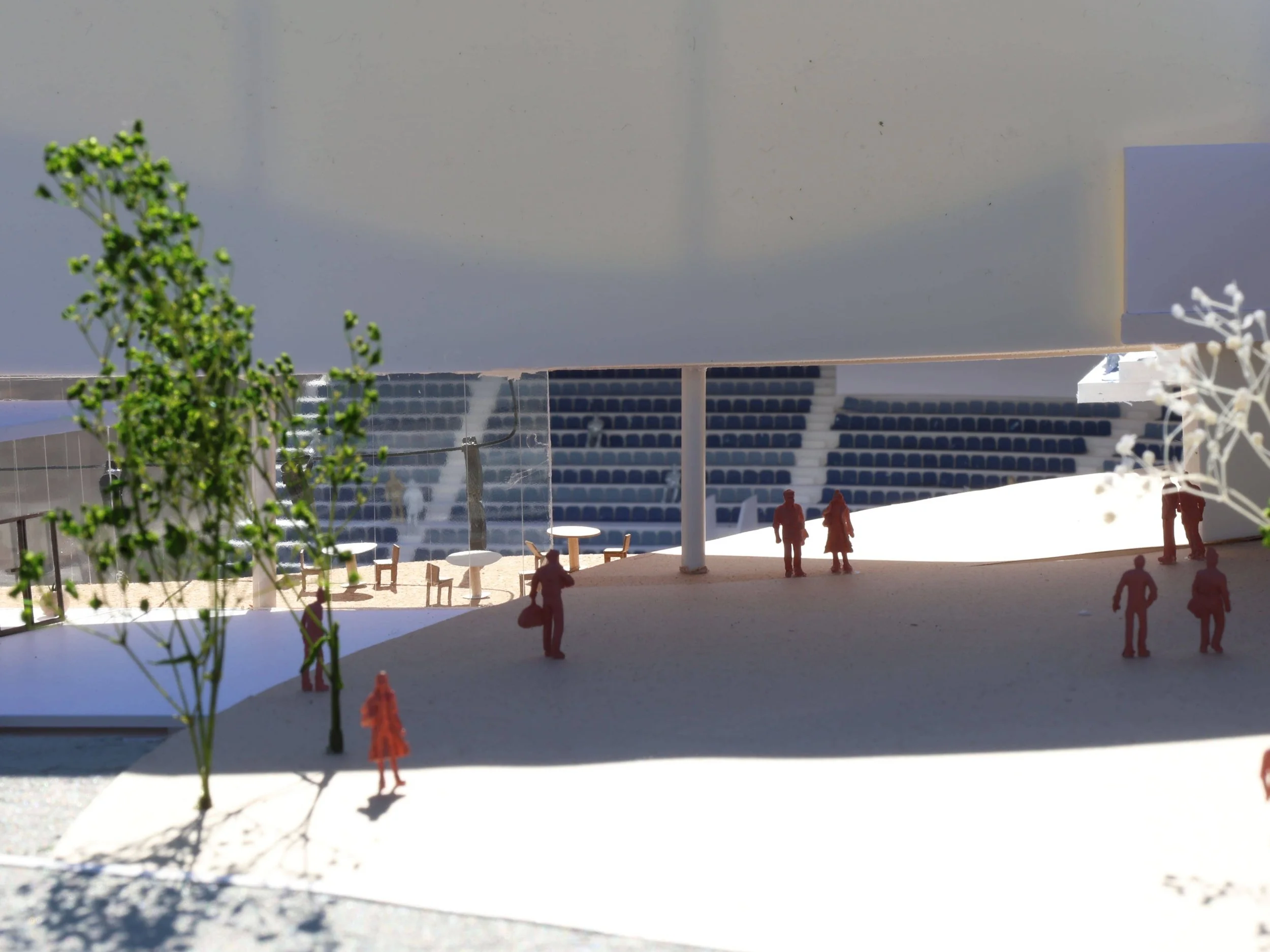
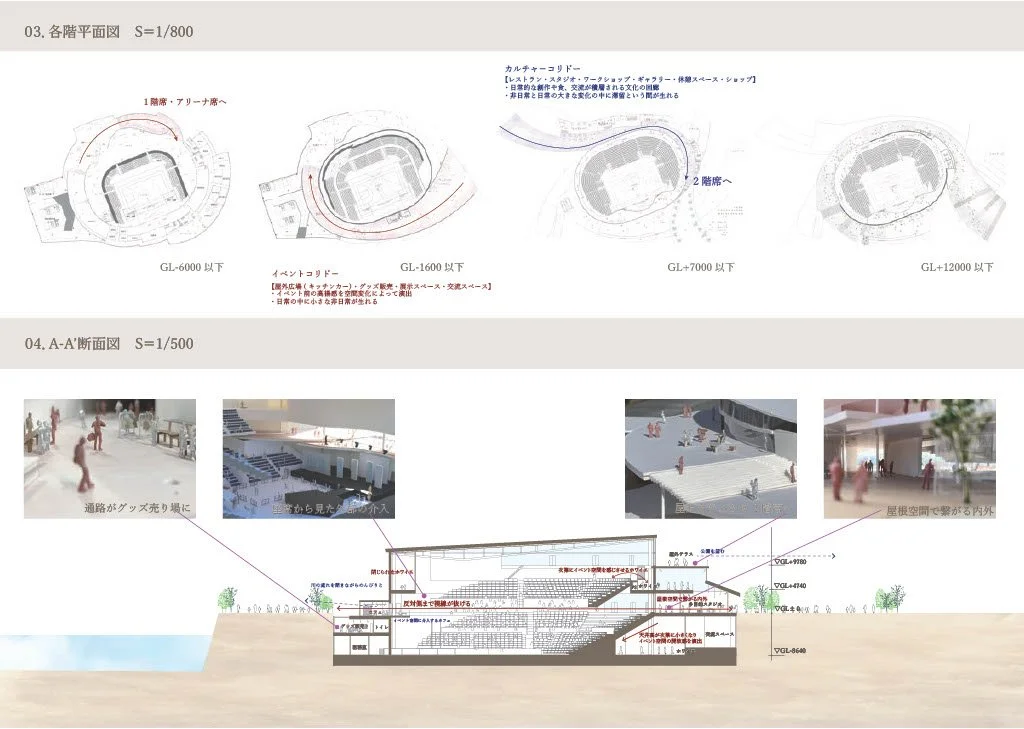
Functions such as restaurants and sports gyms—often placed in adjacent buildings or separate structures in conventional arenas—are arranged along the primary circulation routes leading to the arena. In addition, corridors are allowed to actively penetrate the arena space, with parts of them incorporated as seating areas. This approach blurs the boundary between circulation space and spectator space.
3. A sectional design that integrates with the environment
Low-rise, human-scale spaces are arranged in stages along the outer perimeter. These spaces create a buffer zone between the large interior volume and the surrounding city, mitigating the imposing presence of the massive structure.
Through these strategies, the project reconstructs the arena as an urban hub that people can visit even in everyday situations. By reorganizing flows of people through circulation networks connected to public transportation and the park, previously fragmented activities are reconnected, aiming to create a new urban node for Toyama City.
words: Suzuna Okabe
CREDIT
title: Urban Permeation and Convergence
student name: Suzuna Okabe
school: Tokai University, School of Architecture and Urban Planning, Department of Architecture
year: 2026
category: Interior Design

RELATED POST
#STUDENT