UNIT PALLET by Kakeru Fukukawa
Tokyo Polytechnic University / Department of Design Space / Product Design Lab
Unit pallet
A proposal for furniture systems developed from pallets as modular units
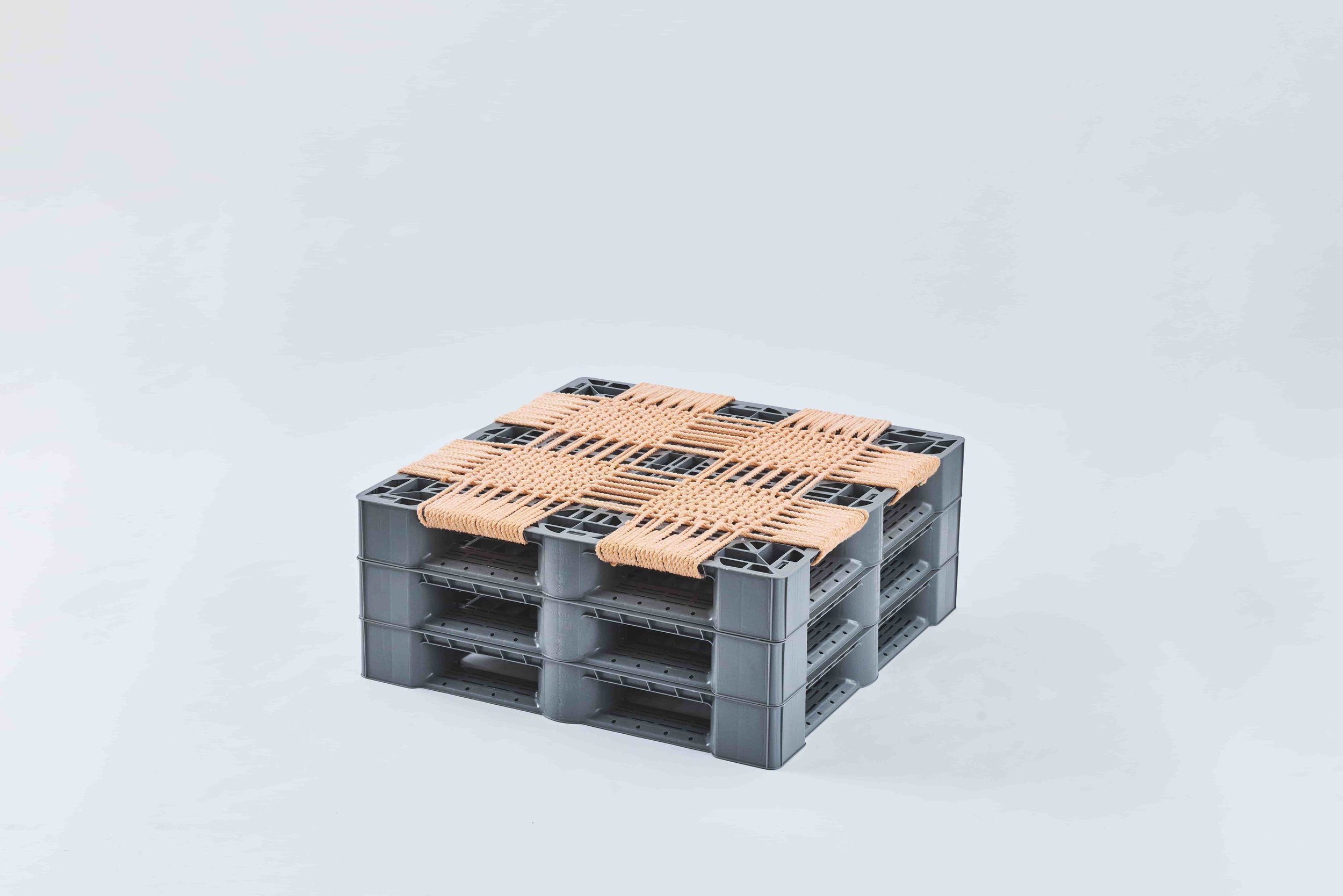
This project reinterprets the plastic pallet not as a finished industrial product but as the smallest unit for constructing space. Rather than treating the pallet as a complete object, it is understood as a structural module from which spatial compositions can emerge. Pallets already possess standardized dimensions and sufficient durability as industrial materials. By introducing simple rules for their use, these qualities can be translated into units suitable for human-scale environments.
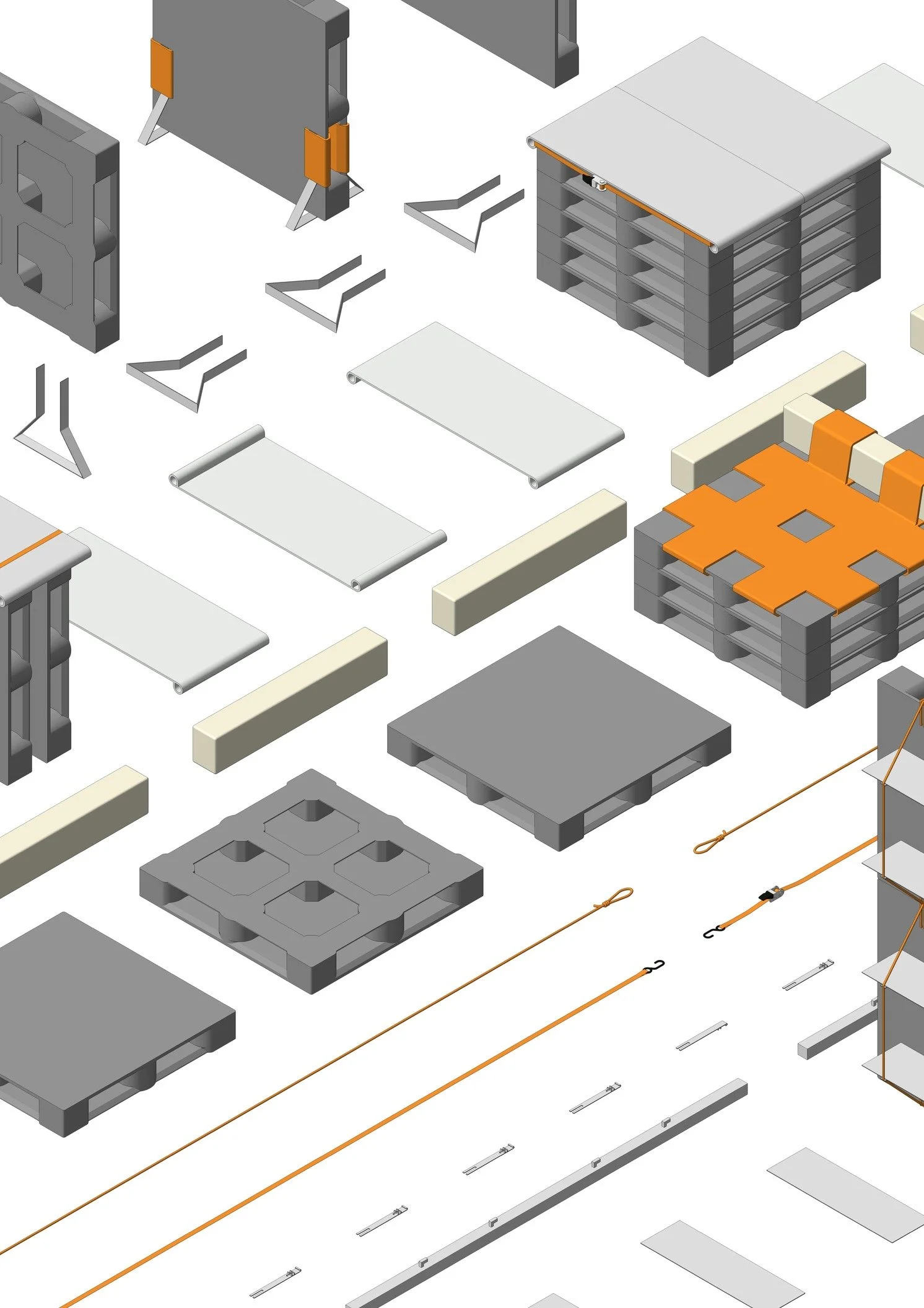
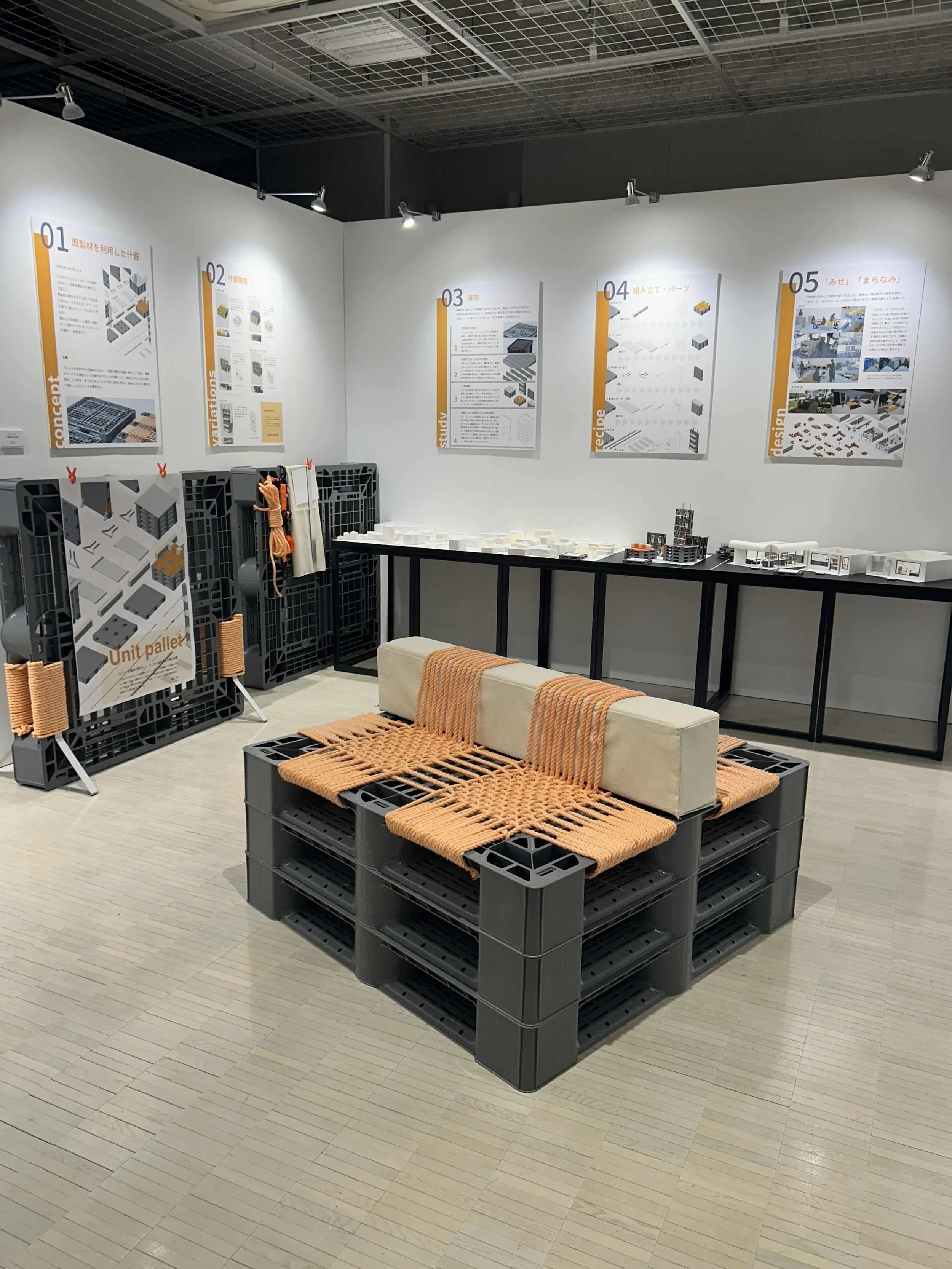
The design explores furniture systems based on basic operations such as stacking pallets and connecting them with additional parts. These simple operations function as design rules and form the central theme of the project. When pallets are assembled and placed in space, their dimensions naturally correspond to human actions such as sitting, leaning, and gathering. Through this process it became clear that the pallet already contains an inherent scale suitable for furniture and spatial use.
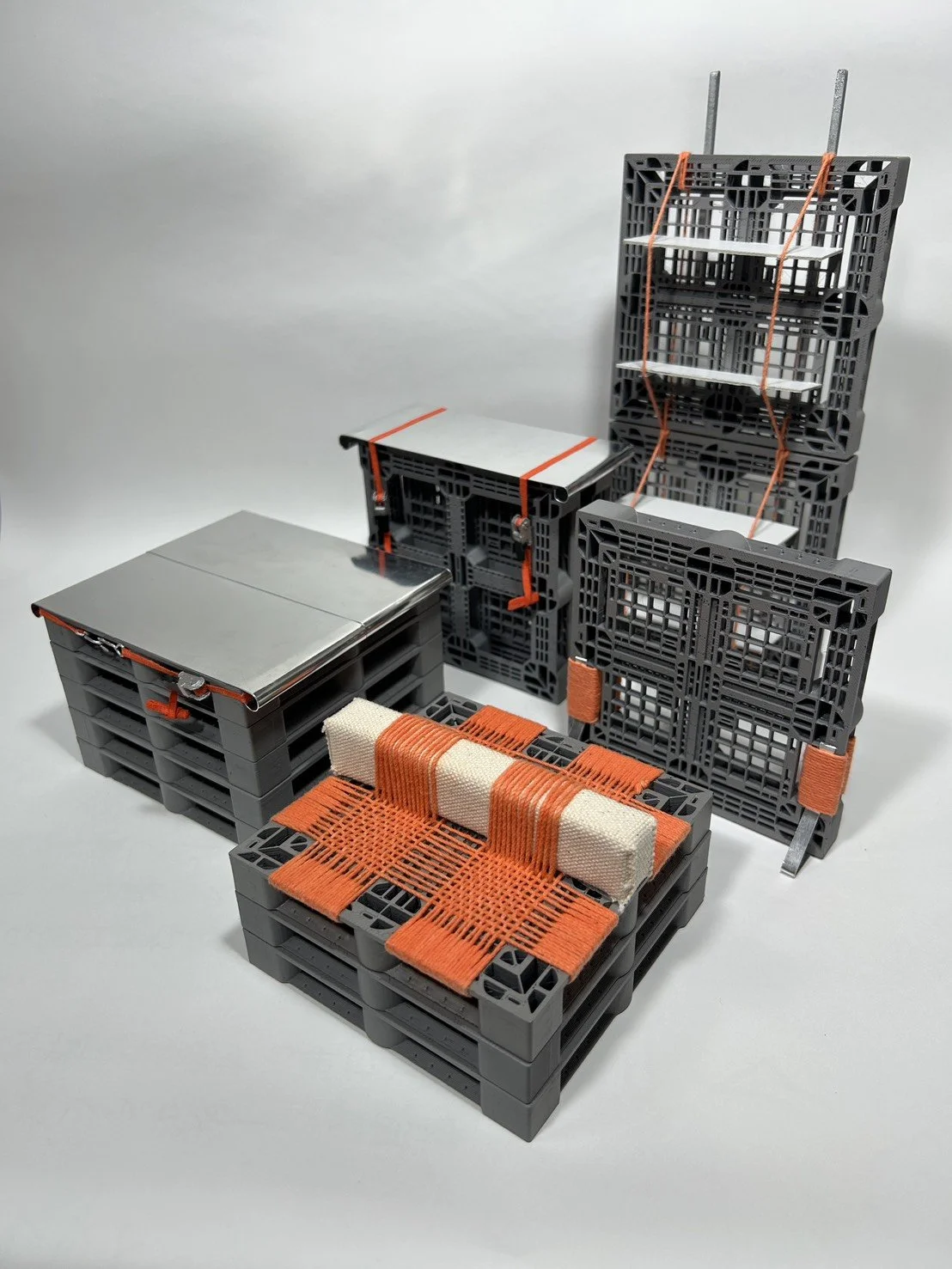
The orientation of the pallets, the elements combined with them, and the methods of connection were carefully examined. In order to preserve flexibility, the pallets themselves remain unmodified, allowing them to be repeatedly assembled, disassembled, and reconfigured. At the same time, the original advantage of palletsムtheir light weight, which allows each unit to be carried by handムwas intentionally maintained. Based on these principles, five fundamental furniture types were developed: stools, tables, partitions, counter tables, and racks.
Connections using ropes and belts introduce a new layer of value to this ready-made material. In particular, the rope weaving applied to the stools functions as a structural cushion while visually softening the industrial character of the pallet. This intervention adds a tactile and handcrafted quality to the object. During the making process, the act of slowly weaving the rope felt like a transformation in which a mass-produced industrial product becomes something integrated into everyday human life.
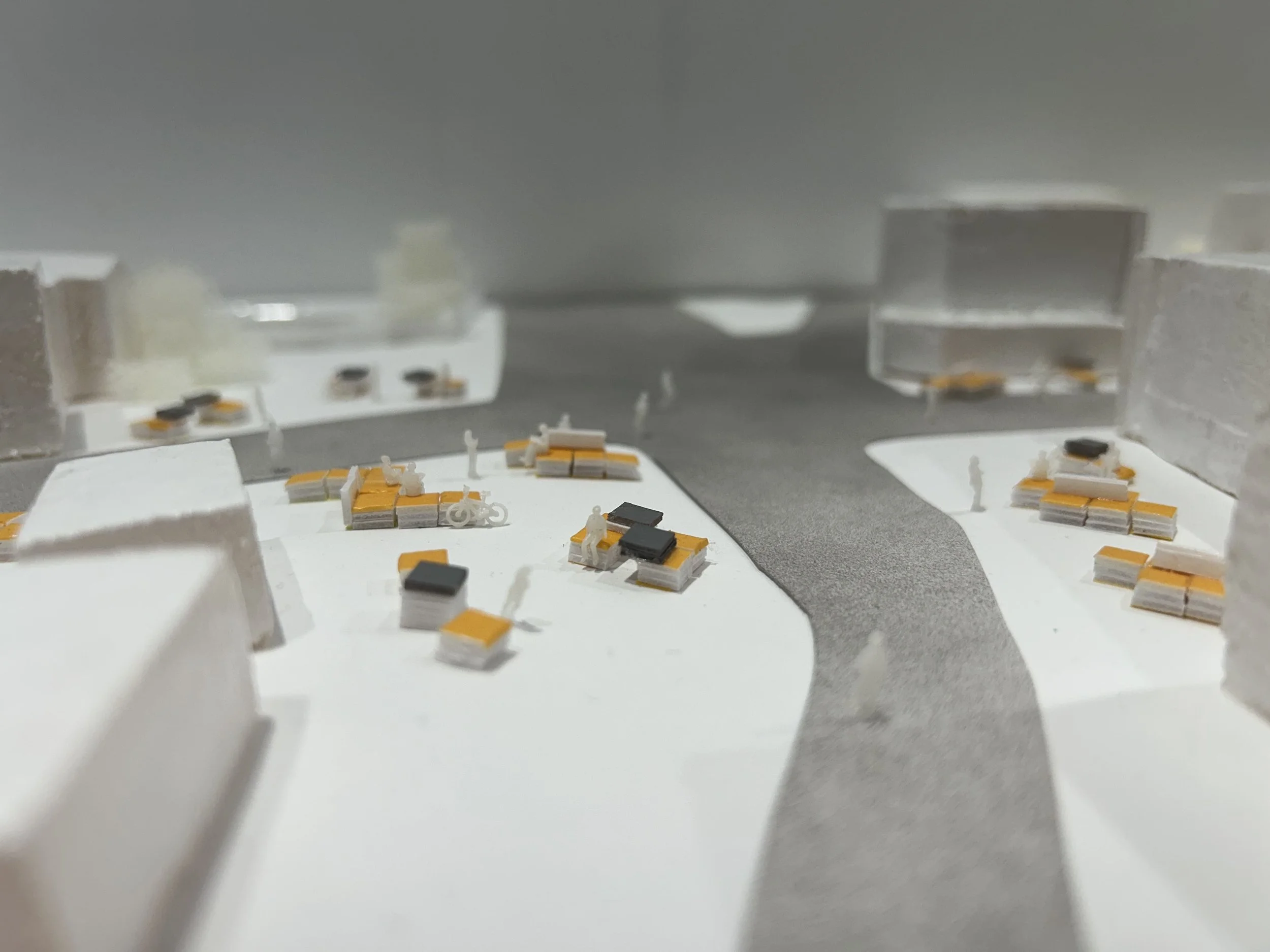
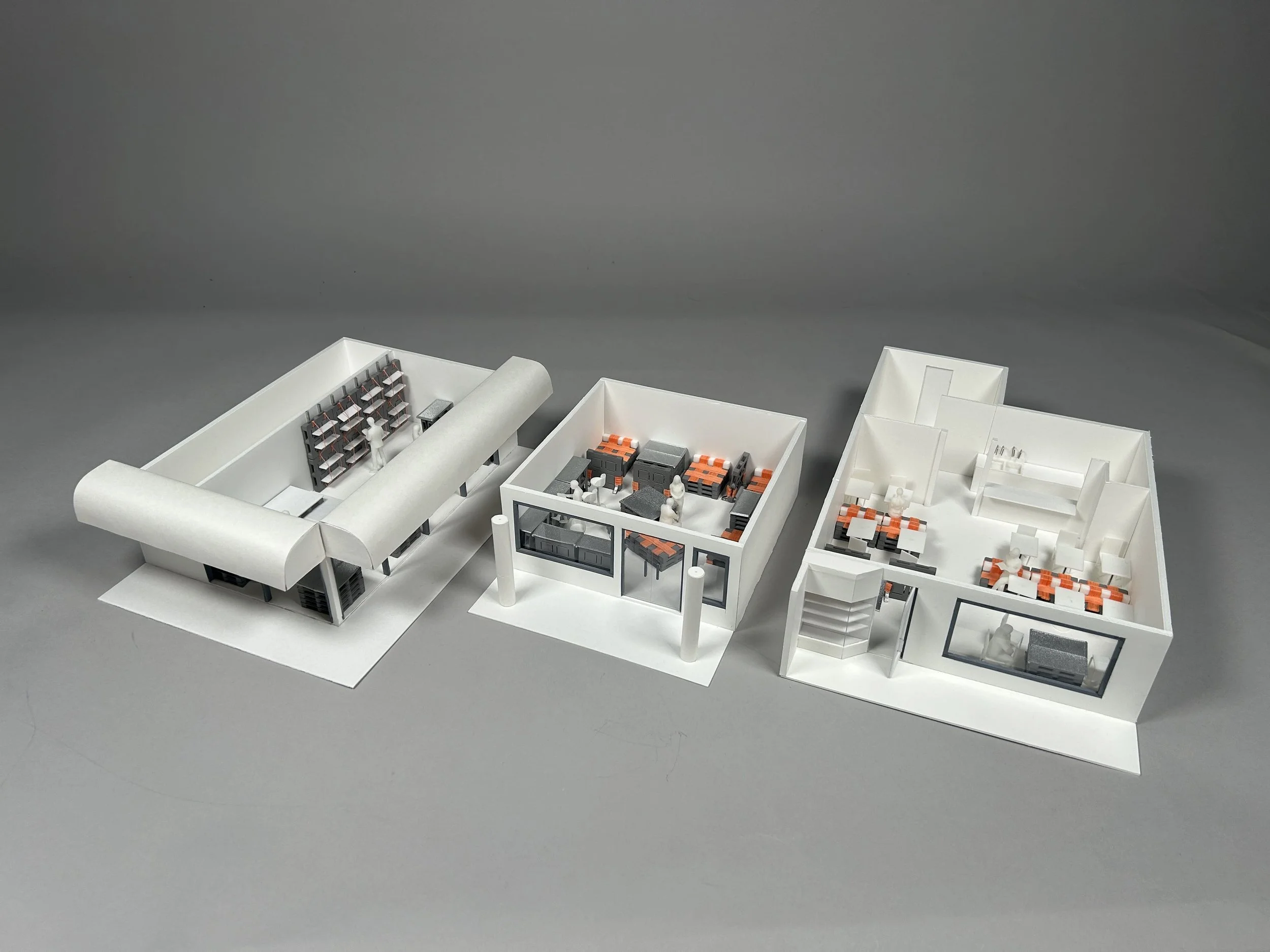
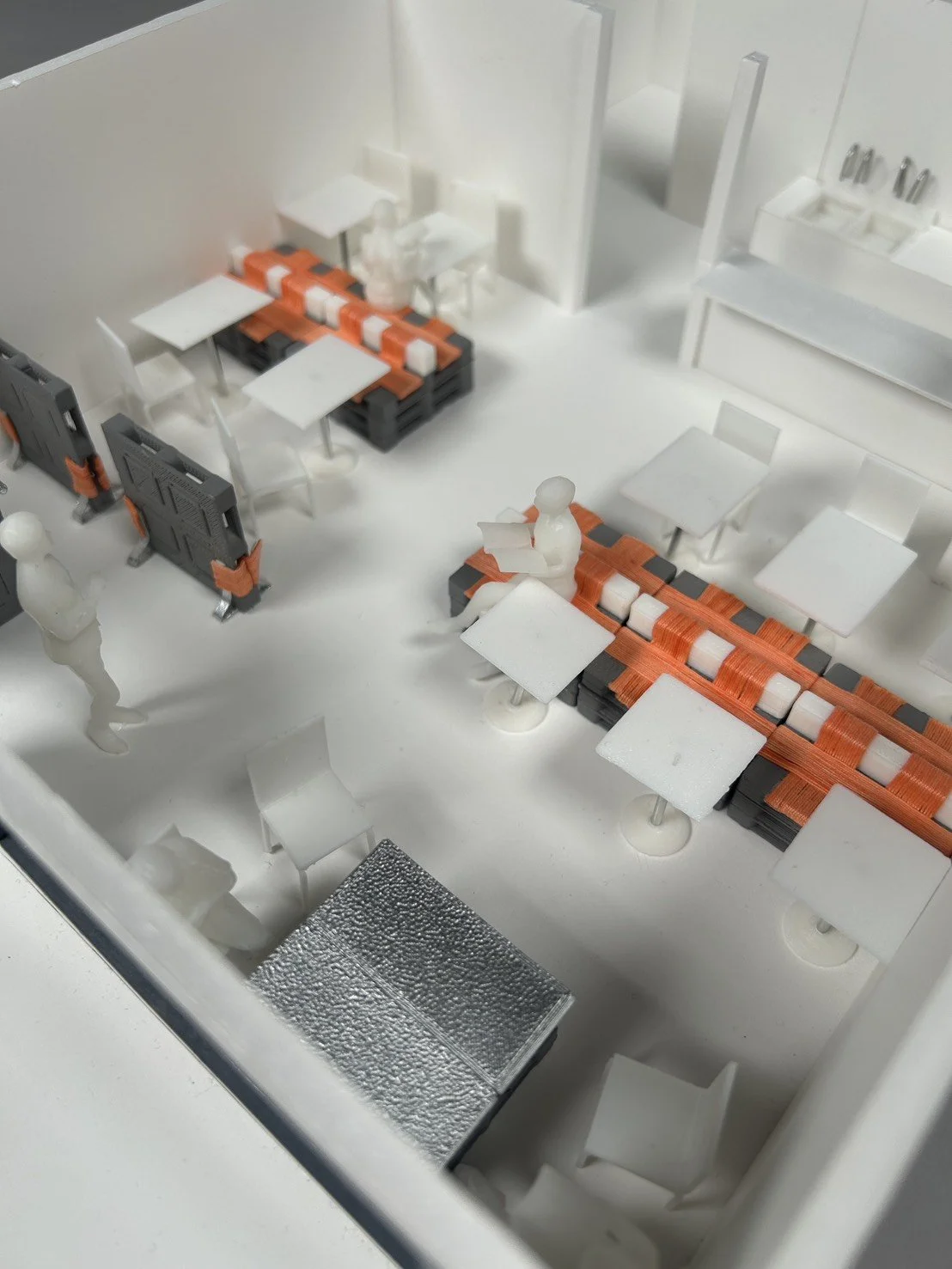
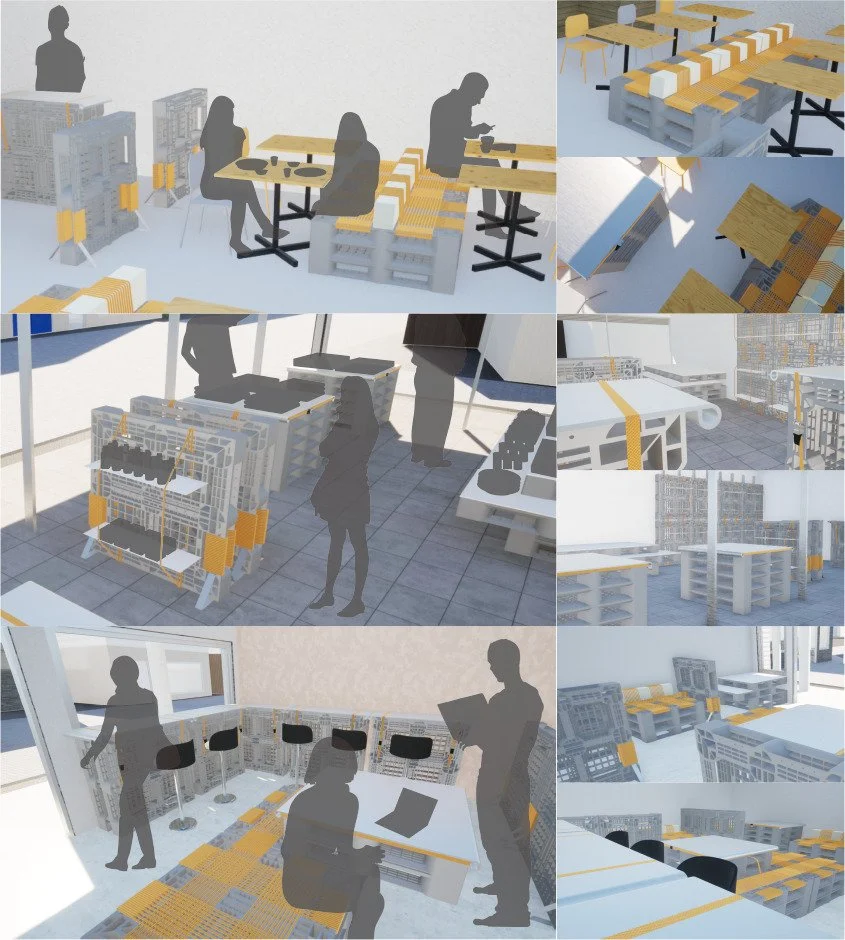
The furniture system is designed to expand into both shops and the surrounding streetscape. The imagined setting is a shopping street where the boundary between store and public space overlaps. Within the “shop” environment, three scenarios were considered: retail stores, or restaurants, and workspaces. In retail spaces, pallets stacked to waist height with tabletops become display shelves, while vertically mounted pallets can support additional shelving. In restaurants, stools can be arranged as bench seating. With a stool height of 450 mm and a table height of 750 mm, the furniture can also be combined with standard chairs and tables.
In the “streetscape” the furniture can be placed in front of shops or on vacant lots, softening the boundary between the street and the store. They can function as places for neighborhood conversations, play areas for children, or flexible furniture for outdoor events. Through these uses, the system encourages interaction, activates underused spaces, and supports the vitality of shopping streets.
Using relatively inexpensive pallets and simple assembly methods, Unit Pallet proposes a flexible furniture system capable of generating lively environments, from interior spaces to community events.
words: Kakeru Fukukawa
CREDIT
title: Unit Pallet
student name: Kakeru Fukukawa
school: Tokyo Polytechnic University, Department of Design Space, Product Design Lab
year: 2026
category: Interior Design

RELATED POST
#STUDENT